

.png)
Bank-Free Business Operations: How Self-Custody Merchant Accounts Are Changing the Payment Game
- [[[Free!!]<<<<]] Watch: 스포르팅 - 토트넘 Live Stream 13 September 2022
- 3 hours ago
- 4 min read
![Writer: [[[Free!!]<<<<]] Watch: 스포르팅 - 토트넘 Live Stream 13 September 2022](https://lh3.googleusercontent.com/a/AItbvmktwQc0wCdd3ZEETSYItRQubwwBzOyjD_dcigRf=s96-c)
Traditional payment processors control your money. They hold funds for days. Charge hidden fees. Freeze accounts without warning.
Self-custody merchant accounts flip this model entirely.
The Old Payment Model Is Broken
Here's what merchants deal with today:
2.9% + $0.30 per transaction
Chargeback fees adding 15-20% to disputes
Cross-border premiums of 3-5%
Currency conversion markups at 2-3%
2-5 business day settlement delays
Account freezes without explanation
Industry-based discrimination
Do the math on $100,000 monthly volume. You're bleeding $35,000+ annually.
That's just base costs. Add chargebacks, international fees, currency conversion. The number climbs fast.
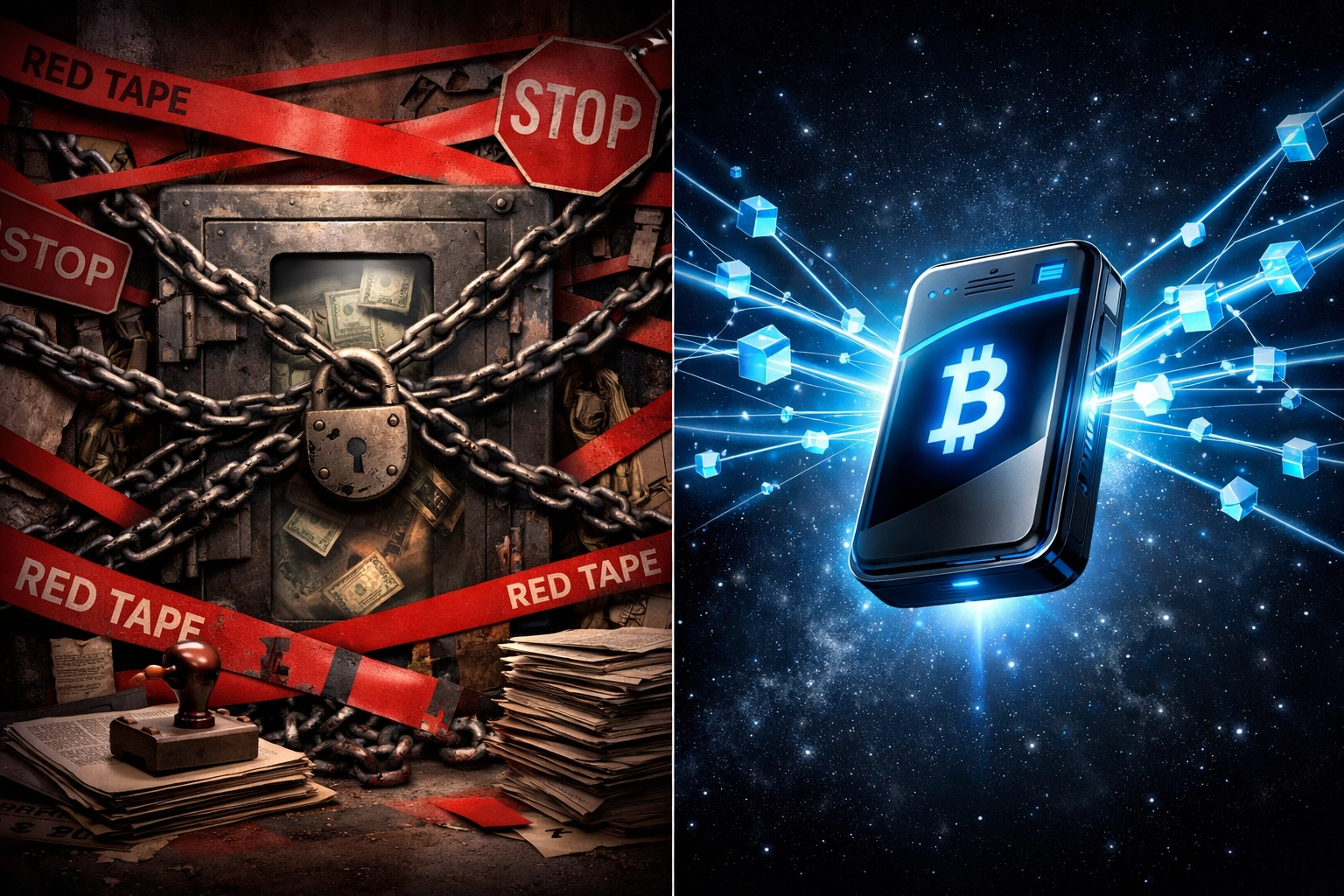
How Self-Custody Changes Everything
With self-custody merchant accounts, funds hit your wallet directly. No intermediary. No waiting period. No permission required.
Customer pays. Blockchain confirms in seconds to minutes. You control the private keys immediately.
The difference is fundamental:
Traditional processors hold your money. They decide when you access it. They set the fees. They control the relationship.
Self-custody means you own it. Completely. From the moment payment arrives.
Larecoin built this into the core architecture. Merchants maintain full control. Every transaction settles directly to your wallet. No third-party custody. No bureaucratic approval process.
The Cost Breakdown That Changes Business Math
Traditional payment processing costs 50%+ annually when you account for everything. Self-custody runs on blockchain gas fees: pennies per transaction.
Real cost comparison:
Traditional: 2.9% + $0.30 + chargebacks + cross-border premiums
Self-custody: Gas fees only (typically $0.05-0.50)
Monthly volume of $100,000 with traditional processors: $3,000-4,000 in fees Same volume with self-custody: $100-300 in gas costs
The savings compound. No monthly minimums. No setup fees. No PCI compliance costs. No gateway charges.
Solutions like NOWPayments and CoinPayments offer crypto acceptance but still operate custodial models. They hold your funds. Set withdrawal limits. Control the timing.
Larecoin's self-custody approach eliminates this entirely.
Who Benefits Most From Bank-Free Operations
High-risk merchants face constant payment processor discrimination. Adult content. CBD products. Political fundraising. International remittance.
Traditional processors either reject you outright or charge 5-8% fees with rolling reserves.
Self-custody doesn't care about your industry. Blockchain processes all transactions equally.
International businesses get hammered on cross-border fees. Currency conversion. Banking restrictions. Compliance overhead.
With self-custody merchant accounts, you accept payments from 180+ countries. No conversion fees. No banking relationships required. No geographical restrictions.
High-volume operations watch percentage-based fees devour profit margins. When you process millions monthly, 2.9% becomes a massive operating expense.
Gas fees don't scale with transaction size. $100 payment costs the same as $100,000.
Emerging market businesses lack access to traditional banking infrastructure. Self-custody enables complete participation without institutional gatekeepers.
The Security Trade-Off You Need To Understand
Traditional processors handle security but control access. Self-custody flips this responsibility entirely to you.
You manage the private keys. You secure the wallet. You implement the backup strategy.
Best practices for enterprise self-custody:
Hardware wallets for operational funds
Multi-signature requirements for large transfers
Encrypted offline private key backups
Separate hot/cold wallet architecture
Time-locked withdrawal mechanisms
Larecoin provides enterprise-grade security tools. Multi-signature smart contracts. Time-locked withdrawals. NFT receipts for accounting transparency.
The NFT receipt system creates immutable transaction records. Every payment generates a unique NFT receipt containing transaction metadata. Automatic accounting reconciliation. Permanent audit trail.
This beats traditional processors' CSV exports significantly.

LUSD Stablecoin Benefits For Business Operations
Cryptocurrency volatility concerns merchants. Price fluctuates. Value uncertain.
LUSD stablecoin solves this. Algorithmic stability. Overcollateralized. No central authority controlling the peg.
Accept payments in LUSD. Maintain stable purchasing power. Eliminate exchange rate risk. Keep funds in crypto ecosystem without volatility exposure.
Traditional stablecoins require trust in centralized issuers. LUSD operates through decentralized collateral mechanisms. You're not trusting Tether or Circle to maintain backing.
The receivables token feature adds another layer. Convert incoming payments to tokenized receivables. Trade them. Use as collateral. Access liquidity without selling underlying assets.
Complete Bank-Free Business Stack
Self-custody enables operations without any banking relationship:
Accept payments: Direct wallet deposits from customers globally Pay vendors: Send crypto payments to suppliers Manage payroll: Stablecoin disbursements to team members Store reserves: DeFi protocols for yield generation Access credit: Collateralized crypto loans without credit checks
This represents genuine financial sovereignty. You operate entirely outside traditional banking infrastructure.
Compare to NOWPayments: They require bank accounts for fiat conversion. CoinPayments holds your funds until withdrawal. Triple-A operates custodial wallets.
Larecoin's architecture supports complete bank-free operations from payment acceptance through business operations.

The Global Reach Advantage
Traditional payment processors restrict access based on geography. Stripe operates in 46 countries. PayPal in 200+ but with massive limitations.
Self-custody merchant accounts work everywhere blockchain works. 180+ countries immediately accessible. No approval process. No country-specific restrictions.
A merchant in Lagos accepts payment from Tokyo. Settlement happens in minutes. No intermediary. No cross-border fees. No currency conversion.
This levels global commerce entirely. Small businesses compete with enterprises on payment infrastructure.
When Self-Custody Isn't Optimal
Small-volume merchants processing $5,000 monthly might prefer simplicity. Traditional processors handle security. Provide customer support. Manage compliance.
Self-custody demands technical competence. Security responsibility. Backup management.
If you value convenience over sovereignty, traditional processors make sense.
But for businesses serious about:
Reducing fees by 50%+
Eliminating banking dependencies
Accepting global payments without restrictions
Maintaining complete fund control
Operating in high-risk industries
Self-custody merchant accounts represent the only viable solution.
The Implementation Reality
Setting up self-custody payments requires:
Secure wallet generation
Backup strategy implementation
Payment integration to website/POS
Staff training on crypto fundamentals
Accounting system integration
Larecoin streamlines this process. Merchant dashboard with built-in wallet management. NFT receipt integration for automatic accounting. LUSD stablecoin acceptance. Receivables token features.
Compare implementation to competitors: NOWPayments requires API integration with custodial wallets. CoinPayments demands account approval and verification delays.
Larecoin provides true self-custody from day one.
The Financial Sovereignty Endgame
Banks freeze accounts. Processors change terms. Governments impose capital controls.
Self-custody removes institutional permission entirely. You control the keys. You control the funds. You control the business operations.
This isn't theoretical. Cannabis businesses operate entirely bank-free using self-custody. International remittance companies bypass SWIFT. Political organizations circumvent payment processor censorship.
The infrastructure exists today. Mature. Battle-tested. Ready for mainstream adoption.
Traditional payment rails served the centralized era. Self-custody merchant accounts define the decentralized future.
Your business either adapts or pays the 50%+ premium to operate on legacy infrastructure.
The choice is clear.
Learn more about reducing merchant interchange fees and how Larecoin enables true financial sovereignty for businesses worldwide.
Comments