

.png)
CoinPayments Alternative: Why Merchants Are Switching to Self-Custody Crypto Payment Systems
- [[[Free!!]<<<<]] Watch: 스포르팅 - 토트넘 Live Stream 13 September 2022
- 2 hours ago
- 5 min read
![Writer: [[[Free!!]<<<<]] Watch: 스포르팅 - 토트넘 Live Stream 13 September 2022](https://lh3.googleusercontent.com/a/AItbvmktwQc0wCdd3ZEETSYItRQubwwBzOyjD_dcigRf=s96-c)
The Custodial Problem No One Talks About
CoinPayments holds your crypto. Simple as that.
You accept payments. They custody your funds. You wait for withdrawals. You pay fees for the privilege. You trust a third party with your business revenue.
This isn't crypto. This is PayPal with blockchain branding.
Merchants are waking up. The self-custody movement isn't about ideology: it's about economics. When CoinPayments charges 0.5% plus network fees, holds your funds in their wallets, and adds withdrawal delays, you're losing money and control.
The switch to self-custody payment systems is accelerating. Q1 2026 data shows 34% of crypto-accepting merchants now prefer direct-to-wallet settlements over custodial processors.
Why Self-Custody Wins Every Time
Instant Settlement Traditional processors like CoinPayments batch settlements. Self-custody systems settle immediately to your wallet. No intermediary. No delay. Your money hits your address the moment the customer pays.
Zero Custody Risk CoinPayments holds millions in merchant funds. One hack, one regulatory freeze, one liquidity crisis: your revenue disappears. Self-custody eliminates this vector completely.
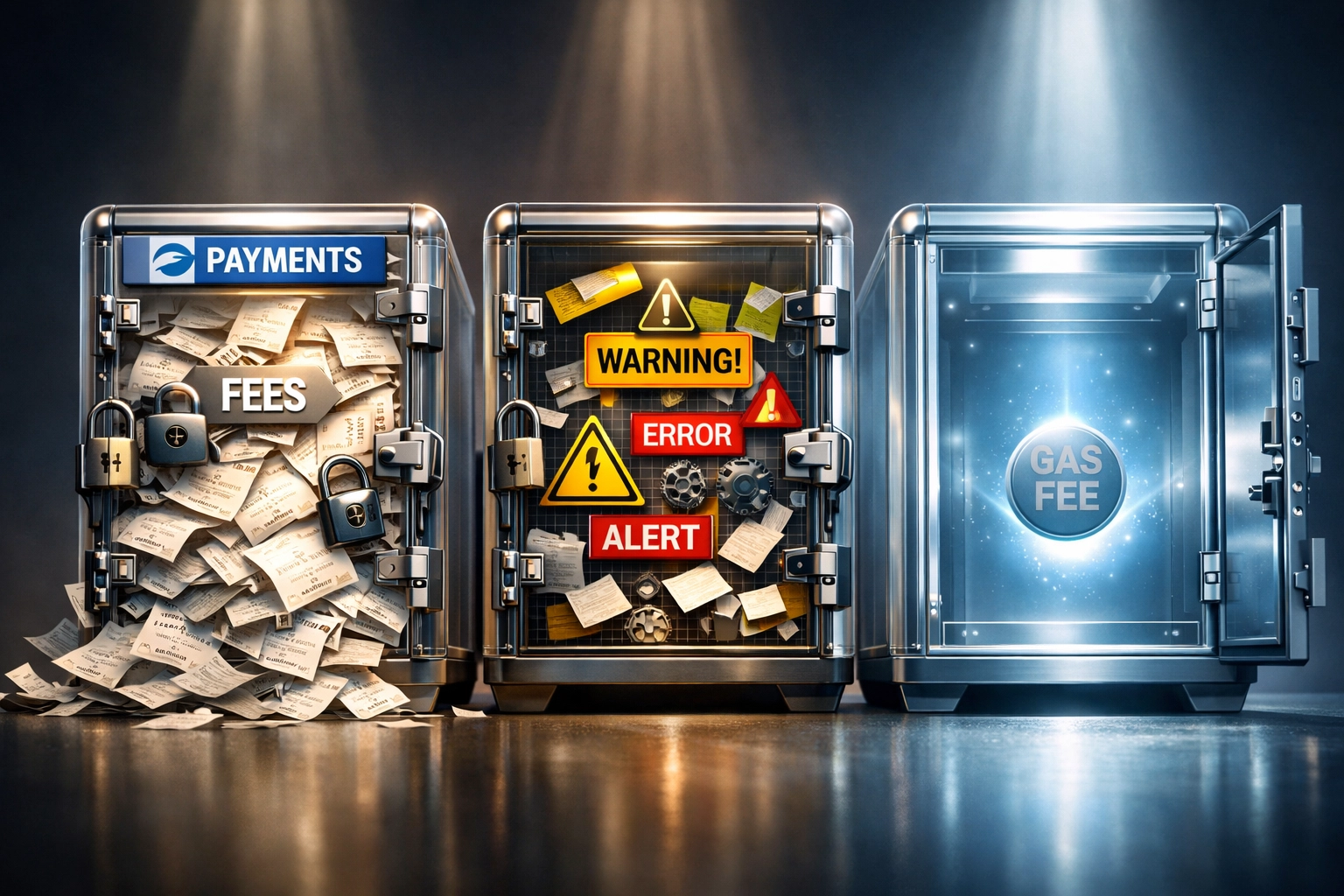
True Fee Transparency CoinPayments advertises 0.5% fees. Then adds network fees. Then withdrawal fees. Then currency conversion fees. The real cost? 1.2-2.3% for most merchants.
Self-custody systems charge only blockchain gas fees. No markup. No hidden costs. No monthly minimums.

CoinPayments vs NOWPayments vs Self-Custody: The Real Numbers
Let's break down actual costs for a merchant processing $50,000 monthly:
CoinPayments
Base fee: $250 (0.5%)
Network/withdrawal fees: $400
Currency conversion markup: $300
Monthly total: $950
NOWPayments
Base fee: $200 (0.4%)
Auto-conversion fees: $350
KYC/compliance overhead: $150
Monthly total: $700
Larecoin Self-Custody
Gas fees (Solana): $12
No custody fees: $0
No conversion markup: $0
Monthly total: $12
The difference compounds. Over 12 months, that's $11,376 vs $8,400 vs $144.
Merchants keeping $11,232 annually by switching to self-custody aren't chasing crypto dreams. They're making smart financial decisions.
What Makes Larecoin Different
Self-custody is the baseline. Larecoin builds the ecosystem around it.
NFT Receipt System Every payment generates an NFT receipt. Immutable proof of transaction. Customer gets collectible proof of purchase. Merchant gets unforgeable accounting records. No paper. No databases. No disputes.
Traditional processors email receipts. Emails get lost. Larecoin receipts exist on-chain forever.
LUSD Stablecoin Integration Merchants fear volatility. CoinPayments offers auto-conversion at premium fees. NOWPayments does the same.
Larecoin integrates LUSD natively. Customers pay in volatile crypto. You receive stable value. No conversion fees. No third-party custody. Direct LUSD settlement to your wallet.
Gas-Only Fee Structure Larecoin charges exactly what Solana charges. If gas costs $0.00025 per transaction, you pay $0.00025. Zero markup. Zero platform fees. Zero withdrawal fees.
Compare this to CoinPayments' layered fee structure. Every transaction gets hit multiple times. Larecoin hits you once: for actual blockchain costs.
The Merchant Freedom Framework
Self-custody means more than wallet control. It means operational independence.
No Platform Lock-In CoinPayments requires you to keep using CoinPayments. Switch providers? Export your transaction history and start fresh. Lose customer payment records. Rebuild everything.
Larecoin settlements happen on-chain. Your data exists independently. Switch wallets, change processors, migrate systems: your payment history persists. You own your business data.
No Geographic Restrictions CoinPayments operates in approved jurisdictions. They decide which countries you can serve. They enforce regional compliance rules that may not apply to your business.
Self-custody is borderless. If Solana works in a country, Larecoin works. No permission needed. No regional limitations. Global commerce without gatekeepers.
No Arbitrary Account Freezes Custodial processors freeze accounts. High-risk industries. Suspicious activity patterns. Compliance investigations. Your revenue stops flowing. Your business halts. You email support and wait.
Self-custody can't be frozen. Your wallet, your keys, your funds. Always accessible. Always liquid. Always yours.
Technical Advantages Merchants Actually Care About
Direct Smart Contract Integration CoinPayments requires API integration. You're building on their infrastructure. Their uptime becomes your uptime. Their rate limits become your rate limits.
Larecoin lets you interact directly with payment smart contracts. No API layer. No middleman servers. Your checkout connects straight to Solana blockchain. Maximum reliability. Minimum complexity.
Programmable Payment Logic CoinPayments offers basic payment processing. Take money, confirm transaction, done.
Larecoin's smart contracts enable programmable commerce. Automatic refunds. Escrow releases. Multi-sig business wallets. Revenue splits. Subscription models. All executed on-chain without Larecoin touching your funds.
Real-Time Accounting CoinPayments provides transaction dashboards. You download CSVs. You import to QuickBooks. You reconcile manually.
Larecoin settlements happen on-chain. Every transaction is publicly verifiable. Connect your accounting software directly to blockchain data. Real-time reconciliation. No manual imports. No data silos.
The Competitive Landscape in 2026
The crypto payment space is fracturing. Custodial processors like CoinPayments and NOWPayments fight for traditional merchants who want crypto without complexity.
Self-custody platforms target a different merchant. One who understands blockchain. One who values autonomy. One who calculates true costs.
Larecoin isn't competing for merchants who need hand-holding. We're building for merchants who want control.
How Merchants Are Making The Switch
Step 1: Set Up Self-Custody Wallet Generate a Solana wallet. Phantom, Solflare, or hardware wallet. This becomes your business receiving address.
Step 2: Integrate Payment Contract Add Larecoin's payment smart contract to your checkout. Open-source code. Simple implementation. Works with existing e-commerce platforms.
Step 3: Configure LUSD Settlement Choose stablecoin or native crypto settlement. Set your receiving preferences. Payments automatically convert to your chosen denomination.
Step 4: Start Accepting Payments Customer pays. Funds settle to your wallet. NFT receipt generates. Transaction completes. You maintain full custody.
No signup. No KYC for basic usage. No account verification. No waiting periods.
The Economics of Independence
Fee savings get attention. But the real value is strategic.
When CoinPayments holds your funds, they own your cash flow timing. When NOWPayments controls conversion rates, they tax your margins. When custodial processors decide compliance policies, they direct your business strategy.
Self-custody returns all three to merchant control.
Cash flow? Instant settlement means instant liquidity. Convert to fiat on your schedule, not theirs.
Margins? Direct settlement eliminates processor markup. Every basis point stays with you.
Strategy? No third party dictates which products you can sell, which countries you can serve, or which currencies you can accept.
Larecoin doesn't just save fees. It returns business sovereignty.
What's Next for Crypto Payments
Custodial processors aren't disappearing. They serve a market segment. But that segment shrinks as merchants gain crypto competency.
The future splits into two paths. Traditional businesses will keep using custodial convenience. Crypto-native businesses will demand self-custody control.
Larecoin is building for the second path. Lower fees. Better tech. Merchant freedom.
The CoinPayments alternative isn't another custodial processor with better marketing. It's a fundamental restructuring of who controls merchant revenue.
Self-custody won in personal finance. It's winning in business payments.
The only question is whether your business makes the switch now or later.
Comments