

.png)
CoinPayments vs Larecoin: Which Crypto POS System Actually Gives You Full Self-Custody?
- [[[Free!!]<<<<]] Watch: 스포르팅 - 토트넘 Live Stream 13 September 2022
- 2 hours ago
- 4 min read
![Writer: [[[Free!!]<<<<]] Watch: 스포르팅 - 토트넘 Live Stream 13 September 2022](https://lh3.googleusercontent.com/a/AItbvmktwQc0wCdd3ZEETSYItRQubwwBzOyjD_dcigRf=s96-c)
Self-custody isn't a feature. It's the entire point of crypto.
Yet most crypto payment processors operate exactly like the banks they claim to replace. They hold your funds. They control your settlement times. They take their cut before you ever see a satoshi.
CoinPayments has been around since 2013. Solid track record. Widely adopted. But here's the question nobody's asking: Are they actually giving you financial sovereignty?
Spoiler: They're not.
Let's break down exactly what you're getting: and what you're giving up: with CoinPayments versus Larecoin.
The Custody Problem Nobody Talks About
Here's the uncomfortable truth about most crypto payment processors.
When a customer pays you in crypto, where does that money actually go?
With custodial platforms, the answer is simple: Their wallet. Not yours.
The platform becomes an intermediary. A middleman. The exact thing crypto was designed to eliminate. Your revenue sits in their custody until they decide to release it. Minutes. Hours. Sometimes longer.
You're trusting a third party to:
Hold your money
Release it when they say so
Not freeze your account
Not change their terms overnight
Sound familiar? That's because it's the same arrangement you have with your bank.
CoinPayments: Functional But Dated
CoinPayments launched over a decade ago. For its time, it was revolutionary. Multiple coin support. Easy integration. Reasonable fees.
But the crypto landscape has evolved. CoinPayments hasn't.
The Custodial Model
CoinPayments operates on a custodial framework. Customer payments route through their platform first. They hold the funds. Then they release them to you: on their timeline.
This creates several issues:
Settlement delays: Variable times ranging from minutes to hours
Counterparty risk: Your funds depend on their platform security
No flexibility: You can't customize settlement urgency
Permission required: You need their approval to access your own money
The Fee Structure
CoinPayments charges 0.5-1% per transaction. Sounds small until you do the math.
Processing $500,000 annually? That's approximately $5,000 in fees. Every year. Just for the privilege of accepting crypto payments.
And that's before we talk about withdrawal fees, network fees, and whatever hidden charges appear in the fine print.
Larecoin: Self-Custody From Transaction One
Larecoin operates on a fundamentally different architecture.
When a customer pays you through Larecoin's POS system, funds go directly to your wallet. Immediately. No intermediary. No holding period. No permission required.
This isn't a minor distinction. It's the difference between owning your business and renting it.

The Gas-Only Model
Larecoin doesn't take a percentage cut. Period.
You pay only network gas fees. That's it. No 0.5%. No 1%. No hidden processing charges.
Same $500,000 in annual transactions? You're looking at roughly $2,000 in total costs. That's a 60% reduction compared to CoinPayments.
For merchants processing higher volumes, the savings compound dramatically.
Smart Wallet Flexibility
Larecoin's smart wallet lets you customize your settlement urgency.
Need near-instant confirmation? Pay slightly higher gas.
Can wait a few minutes? Pay less.
This flexibility doesn't exist with CoinPayments. You take their settlement times. Their fee structure. Their rules.
Feature Comparison: Beyond Basic Payments
Self-custody and lower fees are compelling. But Larecoin goes further.
NFT Receipts
Every transaction can generate an NFT receipt. This isn't a gimmick: it's utility.
NFT receipts provide:
Immutable proof of purchase
Automatic warranty tracking
Customer loyalty integration
Verifiable transaction history
CoinPayments offers none of this. Traditional receipts. Traditional limitations.
LUSD Stablecoin
Volatility concerns? Larecoin's native LUSD stablecoin solves that.
Merchants can receive payments in LUSD, eliminating price fluctuation risk while maintaining the benefits of blockchain settlement. Your $100 sale stays a $100 sale.
Ecosystem Integration
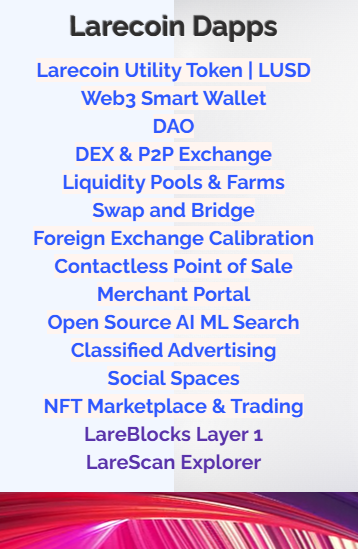
Larecoin isn't just a payment processor. It's an ecosystem.
Integrated access to:
Decentralized exchanges
Liquidity pools
Swap and bridge functionality
FX calibration tools
CoinPayments processes payments. Full stop. Larecoin connects you to the broader DeFi landscape.

The Numbers Don't Lie
Let's run a realistic scenario.
Mid-sized E-commerce Store
Annual crypto payment volume: $500,000
Average transaction size: $150
Approximately 3,333 transactions per year
CoinPayments Costs
Processing fees (0.5%): $2,500
Additional network fees: ~$2,500
Total annual cost: ~$5,000
Larecoin Costs
Processing fees: $0
Gas fees only: ~$2,000
Total annual cost: ~$2,000
Annual savings with Larecoin: $3,000+
Scale that to a $2 million operation. You're saving over $12,000 annually. That's not margin: that's profit you're currently giving away.
The Self-Custody Difference in Practice
Self-custody isn't just philosophical. It's practical.
Scenario 1: Platform Issues
CoinPayments experiences technical difficulties. Your funds are locked in their system. Settlement delays stack up. Customer refunds become complicated.
With Larecoin? Your funds are already in your wallet. Platform issues don't affect your access to your own money.
Scenario 2: Account Restrictions
Custodial platforms can freeze accounts. Flag transactions. Request additional verification. Your business grinds to a halt while you wait for support tickets.
Self-custody means no one can restrict your access. Your wallet. Your keys. Your business.
Scenario 3: Regulatory Changes
Payment processors operate under regulatory frameworks. Those frameworks change. Suddenly certain coins aren't supported. Settlement times increase. New compliance requirements appear.
Self-custody insulates you from platform-level regulatory decisions. You maintain control regardless of external policy shifts.
Making the Switch
Transitioning from custodial to self-custody processing is simpler than you think.
Step 1: Set Up Your Larecoin Merchant Account
Visit Larecoin's merchant portal and configure your smart wallet. Takes minutes.
Step 2: Integrate the POS System
Larecoin's contactless POS integrates with existing checkout flows. No complete overhaul required.
Step 3: Start Accepting Payments
Customer pays. Funds arrive in your wallet. Immediately.
No waiting period. No custody transfer. No permission requested.
The Bottom Line
CoinPayments works. It's been working since 2013. But "works" isn't the same as "optimal."
Custodial processing was a necessary step in crypto payment adoption. We needed bridges between traditional finance and blockchain.
But those bridges shouldn't become permanent structures. They should lead somewhere better.
Larecoin represents where crypto payments were always heading:
Full self-custody from transaction one
Gas-only fees with no percentage cuts
Complete flexibility in settlement urgency
Ecosystem integration beyond basic processing
NFT receipts and LUSD stablecoin utility
The question isn't whether self-custody matters. The question is why you'd accept anything less.
Ready to take control of your crypto payments? Explore Larecoin's merchant solutions and see what actual financial sovereignty looks like.
Your keys. Your wallet. Your business.
Comments