

.png)
Do You Really Need Self-Custody Merchant Accounts? Here's the Truth About Web3 Global Payments
- [[[Free!!]<<<<]] Watch: 스포르팅 - 토트넘 Live Stream 13 September 2022
- 7 hours ago
- 4 min read
![Writer: [[[Free!!]<<<<]] Watch: 스포르팅 - 토트넘 Live Stream 13 September 2022](https://lh3.googleusercontent.com/a/AItbvmktwQc0wCdd3ZEETSYItRQubwwBzOyjD_dcigRf=s96-c)
Let's cut straight to it.
Self-custody isn't a trend. It's the foundation of Web3 payments. And if you're a merchant still letting third parties hold your funds? You're leaving money: and control: on the table.
But do you actually need a self-custody merchant account?
Short answer: It depends on your business model. Long answer: If you want to slash fees, own your revenue instantly, and future-proof your payment infrastructure? Absolutely.
Here's the full breakdown.
What Self-Custody Actually Means for Merchants
Traditional payment processors work like this: Customer pays. Processor holds funds. You wait. You pay fees. Eventually, you get what's left.
Self-custody flips that model entirely.
With a self-custody merchant account, payments hit your wallet directly. No intermediaries holding your funds hostage. No waiting 2-7 business days for settlement. No surprise chargebacks draining your margins.
You control the keys. You own the funds. Period.
This is where Web3 payments shine. Blockchain transactions settle in minutes: sometimes seconds. And when you're using a platform built for self-custody from the ground up? The entire merchant experience transforms.
The Fee Problem: Why Traditional Processors Are Bleeding You Dry
Here's a number that should make every merchant uncomfortable: 1.5% to 3%+ per transaction.
That's what traditional payment processors charge. Credit cards. Debit cards. International transactions add even more. Cross-border fees. Currency conversion markups. The list goes on.
For a business processing $100,000 monthly? That's $1,500 to $3,000+ gone. Every single month.
Now multiply that over a year. Over a decade.
The math is brutal.
Larecoin cuts those fees by 50% or more.
How? By eliminating the middlemen. No card networks taking their cut. No banks charging interchange. Direct blockchain settlement means you keep more of what you earn.
For merchants operating on thin margins: which is most merchants: this isn't just nice to have. It's survival.
NFT Receipts: The Utility Nobody's Talking About
Here's where things get interesting.
Traditional receipts are paper. Or PDFs sitting in email folders. They're static. Useless beyond basic record-keeping.
NFT receipts are different.
Every transaction on Larecoin can generate a verifiable, immutable NFT receipt. This isn't just a gimmick. It's real utility:
Proof of purchase on-chain. No disputes about whether a transaction happened.
Warranty tracking. NFT receipts can carry metadata: expiration dates, service terms, product details.
Loyalty integration. Receipts become collectibles. Customers who purchase frequently can unlock rewards, discounts, or exclusive access.
Returns and exchanges. Verify authenticity instantly without digging through email archives.
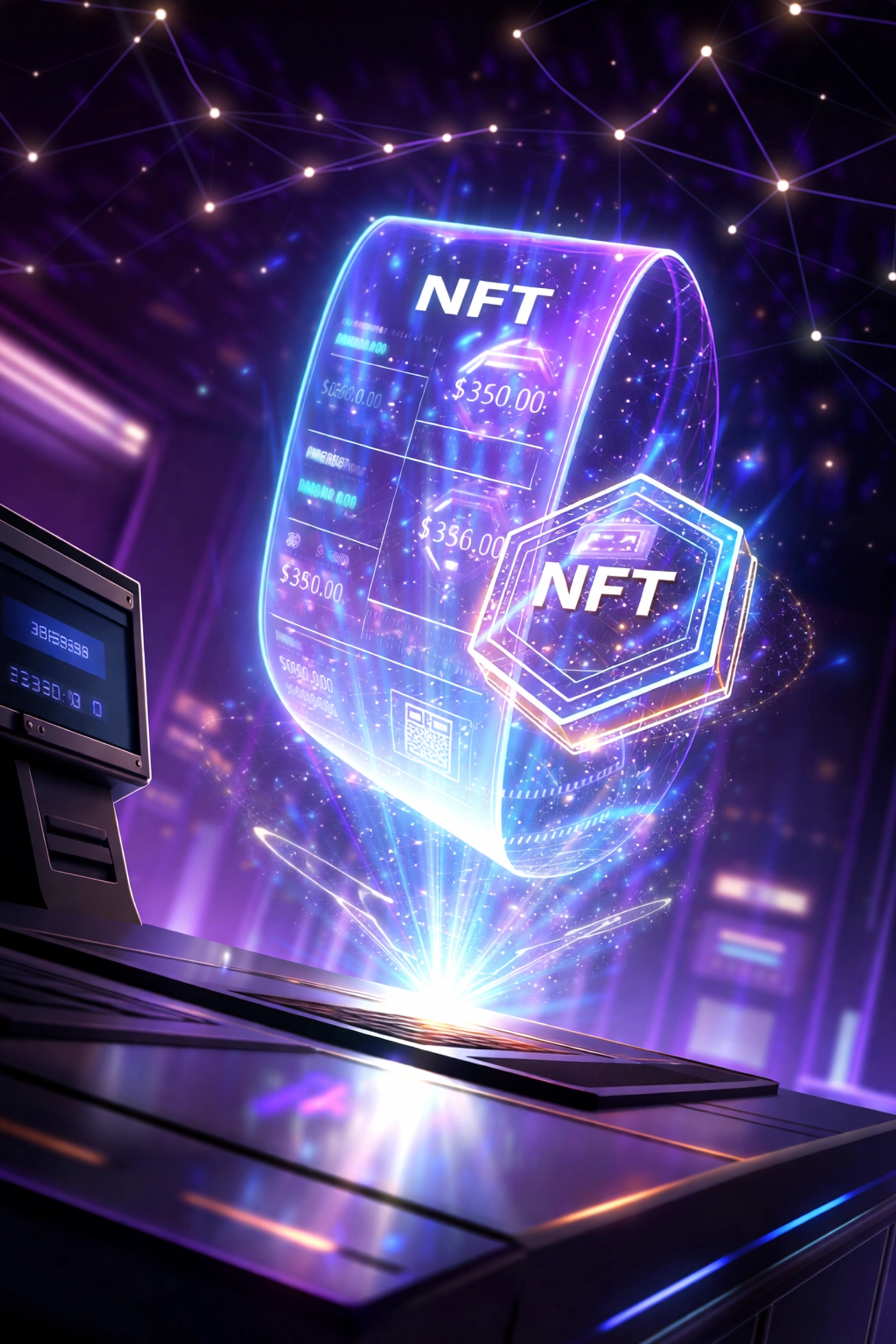
For merchants, NFT receipts reduce fraud and streamline operations. For customers, they're a permanent, portable record of every purchase.
This is what Web3 infrastructure makes possible. And it's baked into the Larecoin ecosystem.
LUSD: The Stablecoin Advantage
Crypto volatility scares merchants. Understandably.
Accept Bitcoin today. It drops 10% tomorrow. Your $1,000 sale becomes $900.
That's not a payment solution. That's a gamble.
LUSD solves this.
Larecoin's stablecoin maintains a 1:1 peg with USD. Merchants receive stable value. Every time. No conversion anxiety. No watching charts nervously after every sale.
But LUSD goes further than competing stablecoins:
Lower gas fees. Built on Solana infrastructure, LUSD transactions cost fractions of a penny.
Instant settlement. Funds are yours immediately. Not "pending." Not "processing." Yours.
Seamless conversion. Push to card functionality lets you move LUSD to traditional banking rails whenever needed.

For global merchants, LUSD eliminates currency conversion headaches entirely. A customer in Tokyo pays in LUSD. A merchant in São Paulo receives LUSD. No FX fees. No bank delays. One currency. One value.
How Larecoin Stacks Up Against the Competition
Let's talk about the elephant in the room.
Other crypto payment processors exist. NOWPayments. CoinPayments. They've been around. They have users.
But they're not built for true self-custody.
NOWPayments processes payments, but funds often route through their infrastructure before reaching you. That's a custody layer. That's counterparty risk. And their fee structures? Still significant: especially for high-volume merchants.
CoinPayments offers multi-coin support, but their model relies on merchant accounts they control. Withdrawal limits. Processing delays. The same old problems dressed in crypto clothing.
Larecoin is different.
Payments hit your self-custody wallet directly.
Interchange fees slashed by 50%+.
NFT receipt generation built-in.
LUSD stablecoin eliminates volatility.
No withdrawal limits on your own funds.
This isn't incremental improvement. It's a fundamental shift in how merchant payments work.
Check out the merchant dashboard to see the difference firsthand.
When Self-Custody Makes Sense (And When It Might Not)
Let's be real. Self-custody isn't for everyone.
Self-custody makes sense when:
Your customers are crypto-native or crypto-curious.
You're tired of losing 2-3% on every transaction.
You operate internationally and hate FX fees.
You want instant settlement, not "3-5 business days."
Financial sovereignty matters to your brand.
Self-custody might not be necessary when:
Your entire customer base is non-technical and uncomfortable managing wallets.
You're processing minimal volume where fees are negligible.
Your business model relies entirely on traditional banking relationships.
But here's the thing: flexibility is the optimal approach.
Larecoin lets you integrate both custodial and self-custodial options within a single ecosystem. Offer customers choice. Serve crypto-savvy audiences seeking autonomy while maintaining accessibility for mainstream buyers.
It's not either-or. It's both.
The Real Question: Can You Afford NOT to Adopt Self-Custody?
Web3 payments aren't the future. They're the present.
Every month you stick with legacy processors is another month of:
Bloated interchange fees eating your margins.
Settlement delays hurting your cash flow.
Zero innovation in how you engage customers.
Meanwhile, competitors adopting self-custody solutions are:
Keeping more revenue per transaction.
Settling instantly.
Building loyalty through NFT receipts and tokenized engagement.
The gap widens daily.
Take Control. Start Now.
Self-custody merchant accounts aren't about being "crypto cool."
They're about financial sovereignty. Operational efficiency. Competitive advantage.
Larecoin delivers all three. Lower fees. Instant settlement. NFT receipts. LUSD stability. True self-custody.
No middlemen. No delays. No compromise.
Ready to see what your business looks like with 50%+ lower payment processing costs?
Explore merchant solutions and set up your self-custody account today.
Or join the Larecoin community to connect with merchants already making the switch.
The future of payments isn't coming. It's here. The only question is whether you're ready to own it.
Comments