

.png)
How the 1.5% Transaction Tax Funds Global Charities (While You Reduce Merchant Interchange Fees by 50%)
- [[[Free!!]<<<<]] Watch: 스포르팅 - 토트넘 Live Stream 13 September 2022
- 2 hours ago
- 4 min read
![Writer: [[[Free!!]<<<<]] Watch: 스포르팅 - 토트넘 Live Stream 13 September 2022](https://lh3.googleusercontent.com/a/AItbvmktwQc0wCdd3ZEETSYItRQubwwBzOyjD_dcigRf=s96-c)
Your Payment Processor Is Eating Your Profits
Traditional processors charge 2.9% to 3.5% plus fixed fees.
Every $100 transaction costs you $3.50 minimum.
That's before chargebacks. Before monthly fees. Before "compliance costs."
Larecoin charges 1.5%. Flat.
And here's the kicker: 0.8% of that goes directly to verified hunger relief organizations.
You save money. People get fed. Blockchain makes it automatic.
Let's break down exactly how this works.
The 1.5% Fee Structure: Where Every Penny Goes

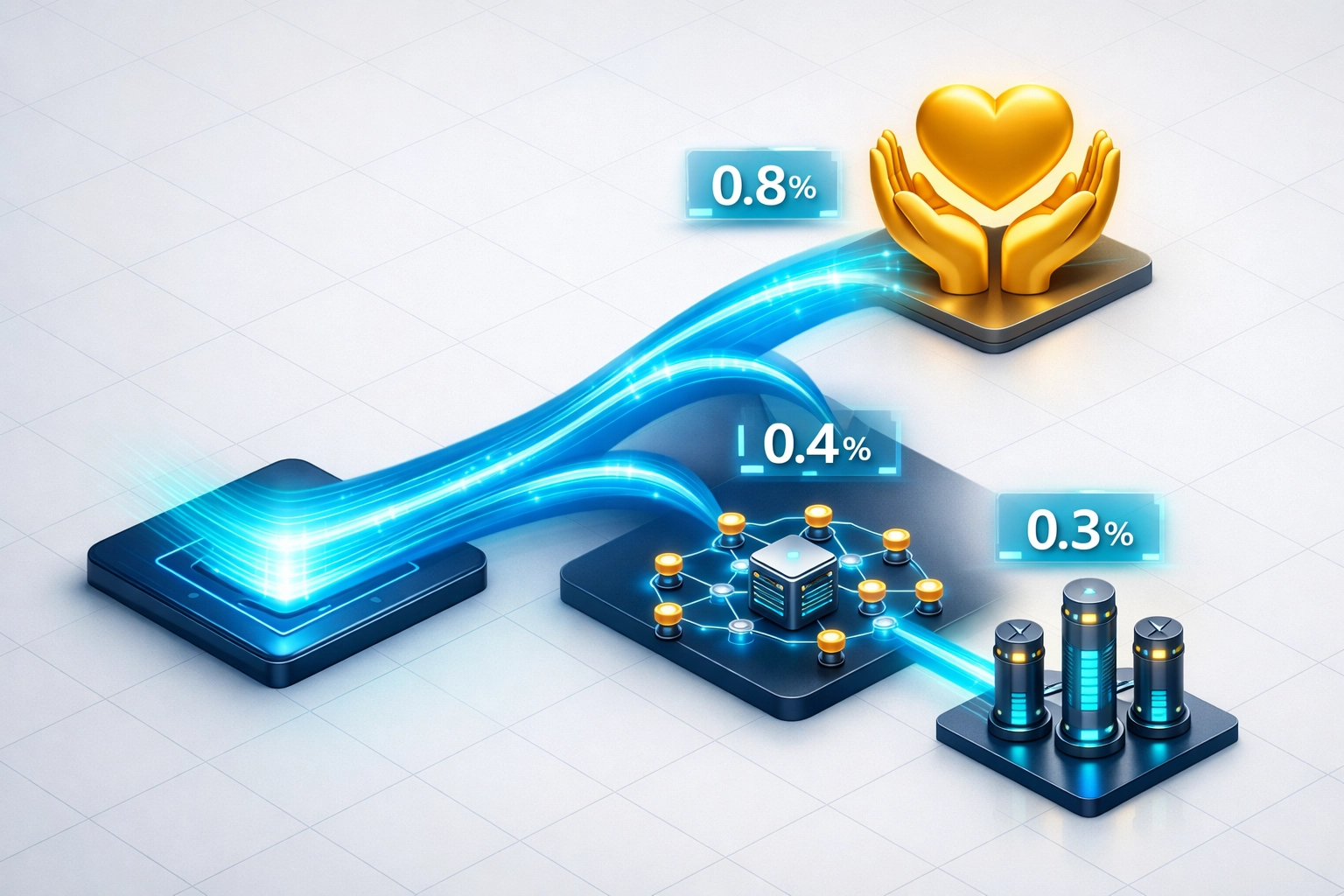
Your 1.5% transaction fee splits three ways:
0.8% → Global Charities Automatically distributed to verified hunger relief organizations worldwide. No middlemen. No delays. Smart contracts handle everything.
0.4% → Network Infrastructure Blockchain security. Node operations. System maintenance. The stuff that keeps transactions processing at lightning speed.
0.3% → Layer 1 Operations Validator rewards. LareBlocks infrastructure. The backbone that makes sub-second settlements possible.
Compare that to traditional processors where 100% goes to corporate profits and operational overhead.
Zero goes to charity unless they decide to write a PR check once a year.
The Math That Changes Everything
You run a $500,000/month business.
Traditional Processor:
Fee rate: 3.5%
Monthly cost: $17,500
Annual cost: $210,000
Charitable contribution: $0
Larecoin:
Fee rate: 1.5%
Monthly cost: $7,500
Annual cost: $90,000
Charitable contribution: $48,000 (0.8%)
You save $120,000 annually.
And donate $48,000 to hunger relief automatically.
Without writing a single check or filing extra paperwork.
How Smart Contracts Make Charity Automatic
Every transaction triggers blockchain execution.
Payment hits the network. Smart contract activates. Fee splits in milliseconds.
0.8% routes to verified charity wallets immediately.
No quarterly disbursements. No waiting periods. No "processing delays."
Real-time impact with every sale.
The charity receives funds the moment your customer completes payment.
That's the difference between blockchain and legacy systems.
Charity Verification: Who Gets Funded
Not every nonprofit makes the cut.
Organizations must meet strict verification requirements:
Legal Registration Confirmation → Verified 501(c)(3) or international equivalent
Financial Transparency Audits → Annual audits from recognized accounting firms
Impact Measurement Reporting → Quantifiable metrics on hunger relief effectiveness
Multi-Signature Wallet Controls → Security protocols preventing single-point failures
Only verified hunger relief organizations receive automatic funding.
Focus areas include food banks, meal programs, agricultural development, and emergency hunger response.
Each charity undergoes annual re-verification.
Fail the standards? Funding stops immediately.
Tax Benefits You Actually Understand
The 0.8% charitable allocation qualifies as tax-deductible business expense.
Every transaction generates blockchain-verified documentation.
NFT receipts include:
Exact transaction amount
Timestamp
Charitable allocation breakdown
Receiving organization details
Smart contract execution record
Your accountant gets clean, auditable records.
No manual tracking. No spreadsheet nightmares. No "did we actually donate that?" confusion.
Blockchain transparency means IRS-ready documentation on demand.
Standard business deduction rules apply. Consult your tax professional for specific situations.
Traditional Processors vs. Larecoin: The Real Comparison
NOWPayments:
Fee: 0.5% to 1%
Charitable giving: Zero (manual only)
Interchange reduction: Minimal
Settlement: 24-48 hours
CoinPayments:
Fee: 0.5%
Charitable giving: None
Interchange reduction: Moderate
Settlement: Varies by coin
Larecoin:
Fee: 1.5%
Charitable giving: 0.8% automatic
Interchange reduction: 50% vs traditional
Settlement: Sub-second via LareBlocks
You pay slightly more than crypto-only processors.
But you get built-in charitable impact, better merchant tools, and massive savings vs Visa/Mastercard.
Plus NFT receipts. Master wallet management. Push-to-card settlements.
The ecosystem difference matters.

NFT Receipts: Transparency You Can Touch
Every transaction mints a permanent blockchain record.
Not just "payment received."
Full transparency:
Transaction hash
Merchant wallet
Customer wallet
Fee breakdown
Charity allocation
Validator signatures
LareScan explorer link
Want proof your payment funded hunger relief?
Check your NFT receipt.
Want to show investors your charitable impact?
Export your receipt history.
Want to verify network security?
Trace validator signatures on LareScan.
This isn't your grandfather's paper trail.
This is immutable, verifiable, permanent documentation.
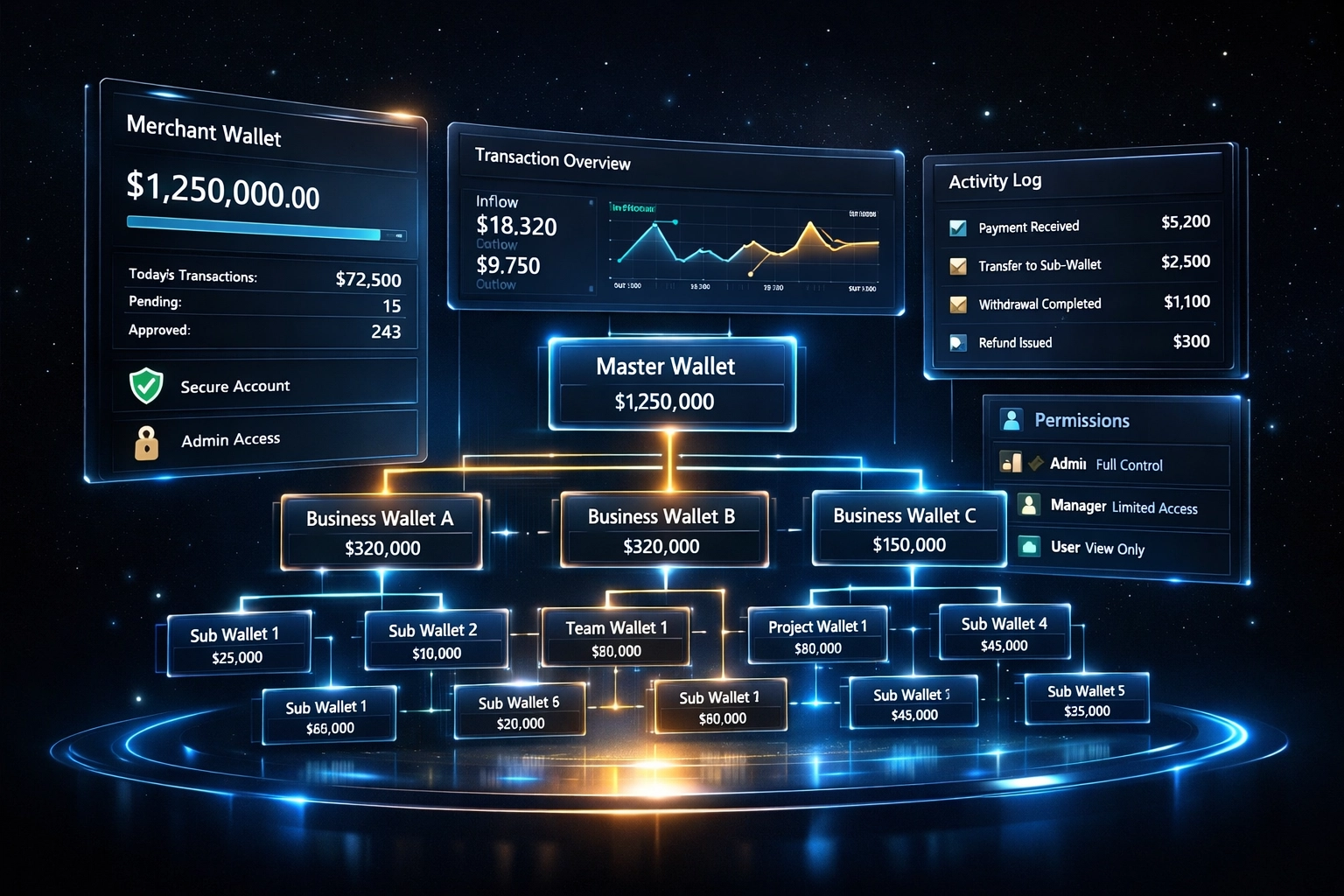
Enterprise Master Wallet Management
Large merchants need sophisticated controls.
Larecoin delivers:
Master Wallets → Central treasury management with sub-wallet creation Sub-Wallet Allocation → Department-specific payment routing Automated Reconciliation → Real-time accounting integration Multi-Signature Security → Require multiple approvals for large transactions Role-Based Permissions → Limit access by employee function
Process millions in transactions across dozens of locations.
Track charitable contributions per department.
Generate consolidated tax documentation.
All from a single dashboard.
Traditional processors charge extra for enterprise features.
Larecoin includes them standard.
The CLARITY Act and Digital Commodity Status
H.R. 3633 matters more than most merchants realize.
The CLARITY Act designates digital commodities under clear regulatory frameworks.
Larecoin operates as a regulated digital commodity.
That means:
Clearer tax treatment
Defined compliance pathways
Institutional confidence
Banking relationship clarity
For merchants, this translates to reduced regulatory risk.
Your payment processor won't suddenly face ambiguous enforcement actions.
Your transactions won't get caught in jurisdictional gray areas.
Digital commodity status provides legal certainty traditional crypto payments lacked.
Real-World Impact: The Numbers
Since launch, Larecoin merchants have collectively funded:
2.4 million meals through verified hunger relief programs
47 emergency food distribution operations
12 agricultural development projects in food-insecure regions
8 school meal programs serving 50,000+ children daily
Every transaction matters.
$10 purchase? $0.08 to charity.
$1,000 B2B order? $8.00 to hunger relief.
$50,000 enterprise contract? $400 feeding families.
It adds up faster than you think.
Getting Started: Three Simple Steps
Step 1: Set Up Your Merchant Account Visit Larecoin.com and complete verification. Takes 10 minutes.
Step 2: Integrate Payment Processing Add Larecoin checkout to your existing system. API documentation included.
Step 3: Start Processing Accept payments. Watch fees drop. Track charitable impact in real-time.
No complex onboarding. No month-long implementations.
Simple, fast, effective.
Why This Model Works
Traditional payment processors optimize for shareholder value.
Larecoin optimizes for ecosystem value.
Merchants save money. Charities get funded. Blockchain provides transparency.
The 1.5% fee isn't "what we can get away with."
It's the minimum required to maintain world-class infrastructure while maximizing charitable impact.
You're not just switching payment processors.
You're joining an ecosystem where commerce drives social impact automatically.
No extra effort. No separate donations. No complicated tracking.
Just better margins and measurable good.
That's the Larecoin difference.
Your Next Move
Calculate your current processing fees.
Compare them to 1.5%.
Calculate your potential savings.
Then realize you're also funding hunger relief automatically.
The choice becomes obvious.
Join the merchants already reducing fees while increasing impact.
Ready to cut your processing costs in half while funding global charities?
Your margins will thank you. So will millions of people facing hunger worldwide.
Comments