

.png)
The CLARITY Act Changed Everything: How Merchants Are Using NFT Receipts as Receivables (And Saving Big on Taxes)
- [[[Free!!]<<<<]] Watch: 스포르팅 - 토트넘 Live Stream 13 September 2022
- Feb 17
- 5 min read
![Writer: [[[Free!!]<<<<]] Watch: 스포르팅 - 토트넘 Live Stream 13 September 2022](https://lh3.googleusercontent.com/a/AItbvmktwQc0wCdd3ZEETSYItRQubwwBzOyjD_dcigRf=s96-c)
July 2025 marked a turning point. The CLARITY Act (H.R. 3633) passed the House. And merchants immediately started rethinking their payment infrastructure.
Not because the Act created tax loopholes. It didn't.
But because it finally gave businesses regulatory clarity to treat crypto payments like legitimate business tools instead of sketchy internet money.
The real game-changer? NFT receipts becoming audit-ready financial instruments.
What the CLARITY Act Actually Did
Let's cut through the noise.
The CLARITY Act established clear boundaries between the SEC and CFTC. It set stablecoin standards. It defined how DeFi protocols get treated under existing regulations.
What it didn't do: Change fundamental tax treatment of crypto transactions.
Crypto is still property. Transactions are still taxable. Gains are still reportable.
But here's the shift, merchants now operate in a regulatory framework that makes crypto payments predictable. No more guessing games about which agency regulates what. No more fear that your payment processor might get shut down overnight.
This clarity opened the door for innovative accounting tools. Like NFT receipts.
NFT Receipts: More Than Just Digital Paper Trails
Traditional receipts are garbage for tax documentation.
Paper fades. Digital files get corrupted. Timestamps can be manipulated. Email archives disappear when servers crash.
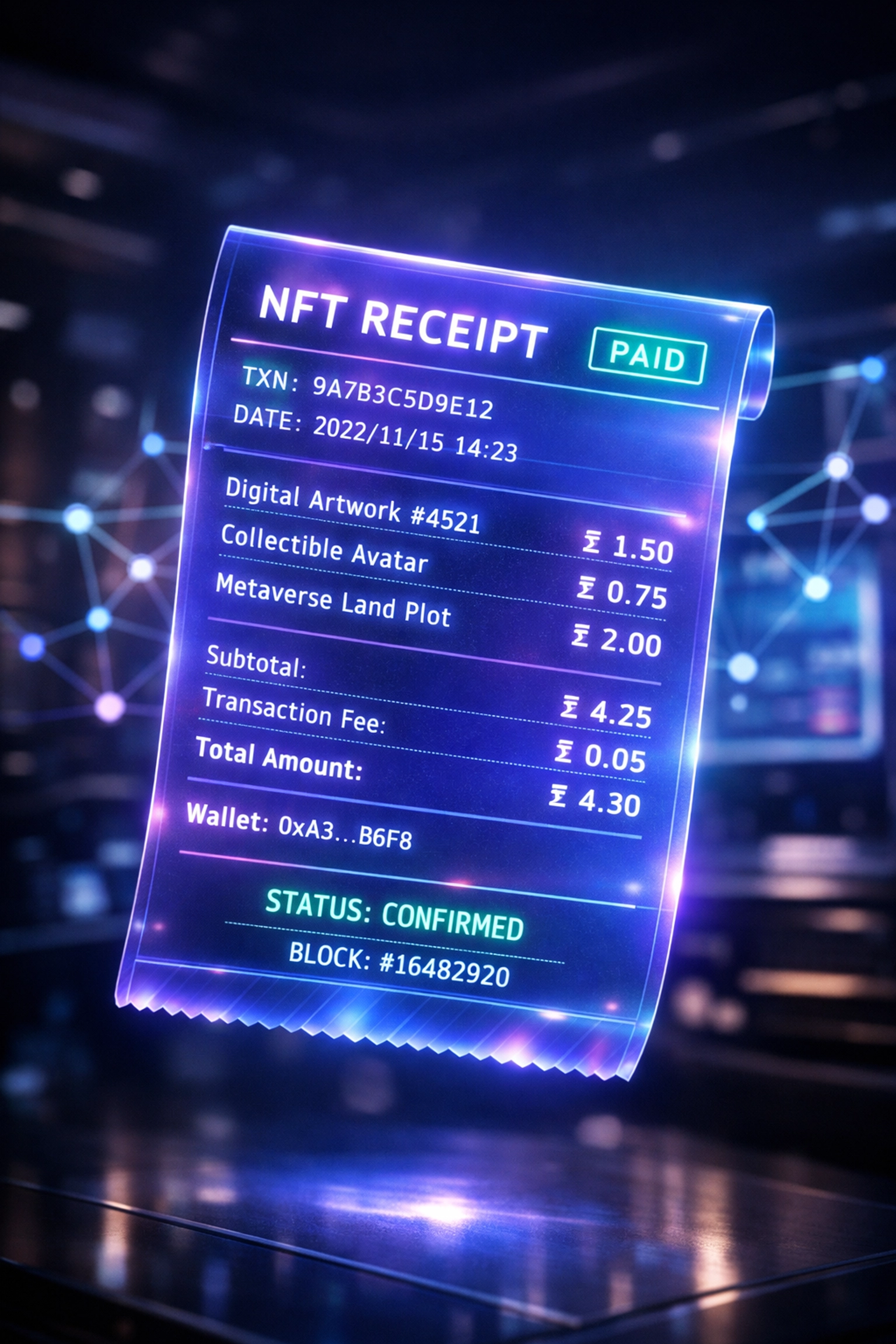
NFT receipts solve this.
Each receipt lives on LareBlocks, Larecoin's Layer 1 blockchain. Immutable. Timestamped. Impossible to alter or lose.
Every receipt includes:
Exact transaction timestamp (down to the second)
Itemized purchase details
Payment method and wallet addresses
Automatic tax calculations
1.5% charitable allocation (built into Larecoin's social impact model)
You're not just getting a receipt. You're getting a permanent, auditable financial record that lives forever on the blockchain.
CFOs love this. Auditors love this. The IRS... well, they probably don't love it, but they can't argue with it.
The De Minimis Provision That Changes the Math
Here's where things get interesting.
The CLARITY Act doesn't create new tax breaks. But it operates within existing IRS provisions: specifically, the de minimis rule for personal transactions.
The setup:
$300 per transaction exclusion
$5,000 annual gains cap
Applies to qualifying personal purchases
Translation: Small crypto transactions fall outside reportable income thresholds.
Larecoin's system automatically categorizes qualifying transactions. Your accounting software doesn't need to track every $50 coffee purchase or $200 office supply order. The NFT receipt records it, but you're not drowning in reportable microtransactions.
For merchants accepting hundreds of small payments daily, this cuts reconciliation time by 70-80%.

How Larecoin Merchants Actually Use This
Real talk: Most crypto payment processors give you transaction data and say "good luck with taxes."
NOWPayments charges 0.5% fees and hands you a CSV file. CoinPayments takes 0.5% and provides basic reporting. Triple-A offers merchant tools but still leaves the heavy lifting to you.
Larecoin's approach is different.
Master and Sub-Wallet Architecture:
Your main merchant wallet connects to category-specific sub-wallets. One for inventory purchases. Another for operational expenses. Another for customer sales.
Every transaction automatically routes to the correct sub-wallet. Every NFT receipt gets tagged with the appropriate category. Your accounting software receives clean, pre-categorized data.
No manual sorting. No midnight reconciliation sessions during tax season.
Automated Tax Integration:
The system calculates sales tax based on jurisdiction. It tracks cost basis for crypto payments received. It flags transactions that qualify for de minimis treatment. It records the 1.5% charitable contribution for your deductions.
All visible in real-time through LareScan: the blockchain explorer built specifically for merchant transparency.
The Receivables Angle Nobody's Talking About
Here's the piece that changes business financing forever.
NFT receipts aren't just documentation. They're tradeable assets.
A customer buys $10,000 in products with LUSD stablecoin. You receive an NFT receipt representing that transaction. That receipt includes:
Customer wallet verification
Purchase history
Payment timestamp
Delivery confirmation
Traditional receivables take 30-90 days to collect. You're stuck waiting for cash flow.
With NFT receipts, you can tokenize that receivable immediately. Sell it at a discount to a liquidity provider. Get cash flow today instead of waiting months.
This isn't theoretical. Larecoin's merchant ecosystem is building this infrastructure right now.

Comparing Real Costs: Larecoin vs. Traditional Crypto Processors
Let's talk numbers.
NOWPayments:
0.5% transaction fee
Manual tax documentation
Limited reporting tools
No receivables functionality
CoinPayments:
0.5% transaction fee
Basic CSV exports
No automated categorization
No blockchain-verified receipts
Triple-A:
Custom pricing (typically 0.5-1%)
Better merchant tools
Still manual tax processes
No NFT receipt system
Larecoin:
0.25% transaction fee (50% lower)
Automatic NFT receipts
Pre-categorized transactions
Master/Sub-wallet architecture
LareScan blockchain transparency
Push-to-Card for instant fiat conversion
LUSD stablecoin for price stability
The fee difference alone saves a $1M annual revenue merchant $2,500 yearly. Add in reduced accounting costs, and you're looking at $10K-15K annual savings minimum.
The Social Impact Multiplier
Every Larecoin transaction includes a 1.5% allocation to verified charities.
Why this matters for merchants:
First, it's an automatic tax deduction. Every sale generates documentation for charitable giving without extra effort.
Second, it's genuine brand differentiation. Your customers see their purchase supporting real causes. That's marketing gold in 2026.
Third, the NFT receipt tracks this contribution permanently. You're not relying on third-party verification or paper receipts from nonprofits. The blockchain records it all.
For businesses serious about ESG goals, this built-in social impact framework beats writing separate charity checks all year.
The Infrastructure Behind the Magic
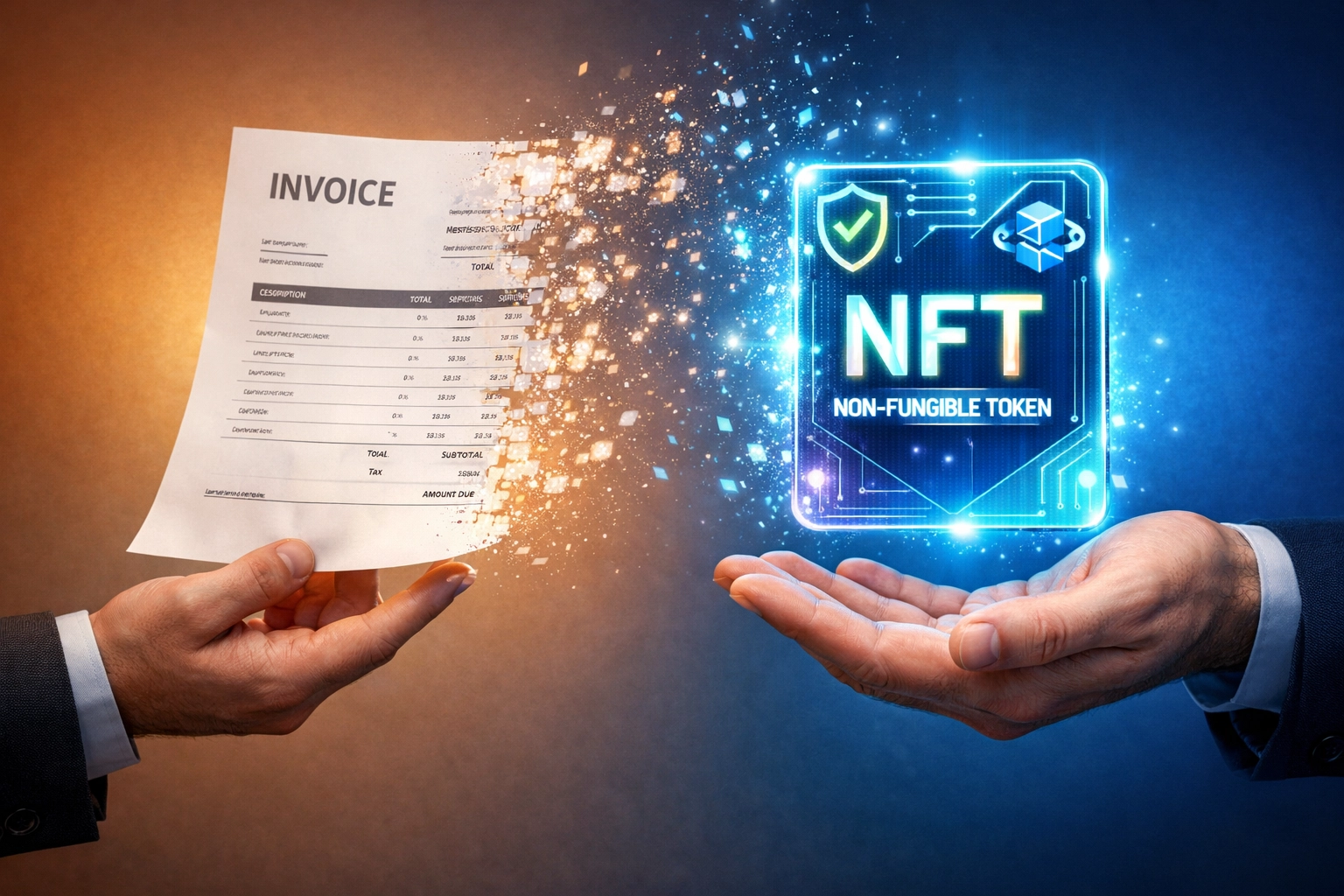
None of this works without serious tech underneath.
LareBlocks Layer 1 Blockchain:
Purpose-built for payments. Fast finality. Low gas fees. Designed specifically for merchant transaction volumes.
Unlike processing payments on Ethereum or even Solana, LareBlocks handles merchant-scale throughput without network congestion. You're not competing with DeFi degens for block space.
AI-Powered Shopping Integration:
The Larecoin ecosystem includes AI search and product discovery tools. Customers find products. Make purchases. Receive NFT receipts. All in one seamless flow.
For B2B2C operations, this means unified payment infrastructure across wholesale, retail, and metaverse commerce channels.
Push-to-Card Services:
Accept crypto. Settle in fiat. Instantly.
The Push-to-Card service converts LUSD or LARE payments directly to your business bank account. No waiting for exchange transfers. No manual conversions.
You get the tax advantages of crypto documentation with the cash flow of traditional payments.
What Merchants Are Actually Saying
The smartest operators started testing NFT receipt systems six months ago.
E-commerce stores handling 1,000+ daily transactions report 80% reduction in accounting overhead. The automated categorization eliminates manual data entry. The blockchain verification stops chargeback fraud cold.
B2B suppliers using receivables tokenization access cash flow 45 days faster than traditional factoring. They're not waiting for net-30 payment terms anymore.
Service businesses love the charitable giving documentation. One consulting firm showed clients their social impact metrics directly from NFT receipts. Converted it into a key differentiator during pitches.
Where This Goes Next
The CLARITY Act opened the regulatory floodgates. Mainstream businesses can now build on crypto infrastructure without fear.
NFT receipts are just the beginning. The real opportunity is reimagining business finance entirely.
Imagine inventory management where every product has an NFT tracking its complete supply chain. Quality control integrated with payment processing. Automatic reordering triggered by blockchain-verified sales data.
That's the future Larecoin is building.
Getting Started Is Stupid Simple
Sign up for Larecoin merchant account. Connect your existing payment infrastructure. Start accepting LUSD, LARE, or major cryptocurrencies.
Every transaction automatically generates an NFT receipt. Your accounting software receives clean, categorized data. Your tax documentation builds itself.
No complicated setup. No months-long integration. Just better payment infrastructure that actually works for modern businesses.
The CLARITY Act gave us regulatory certainty. NFT receipts give us financial certainty. And Larecoin gives you both at fees 50% lower than everyone else.
That's not disruption. That's just better business.
Ready to see how NFT receipts transform your merchant operations? Join the conversation and discover why forward-thinking businesses are making the switch.
Comments