

.png)
LareBlocks Layer 1 Explained: Why This Web3 Infrastructure Changes Everything for Merchants
- [[[Free!!]<<<<]] Watch: 스포르팅 - 토트넘 Live Stream 13 September 2022
- 2 hours ago
- 5 min read
![Writer: [[[Free!!]<<<<]] Watch: 스포르팅 - 토트넘 Live Stream 13 September 2022](https://lh3.googleusercontent.com/a/AItbvmktwQc0wCdd3ZEETSYItRQubwwBzOyjD_dcigRf=s96-c)
Most crypto payment processors are playing dress-up.
They slap a payment gateway on top of Ethereum or Polygon. Call it innovation. Charge merchants the same fees legacy systems do.
LareBlocks is different. It's an independent Layer 1 blockchain built specifically for commerce. Not DeFi gambling. Not NFT speculation. Real-world transactions.
Here's why that matters for your bottom line.
What Actually Is a Layer 1 Blockchain?
Layer 1 = foundational blockchain infrastructure.
Think Bitcoin. Ethereum. Solana. These networks handle their own transaction validation, consensus, and settlement. No intermediaries. No borrowed infrastructure.
LareBlocks sits in this category. But unlike general-purpose chains, it's purpose-built for one thing: merchant payments.
Every protocol decision optimizes for commerce speed, fee reduction, and enterprise features. Not token speculation or smart contract complexity.

Why Merchants Get Crushed on Borrowed Blockchains
Platforms like NOWPayments and CoinPayments operate as interfaces. They don't own the underlying blockchain. They rent space on Ethereum, BSC, or Tron.
This creates three massive problems:
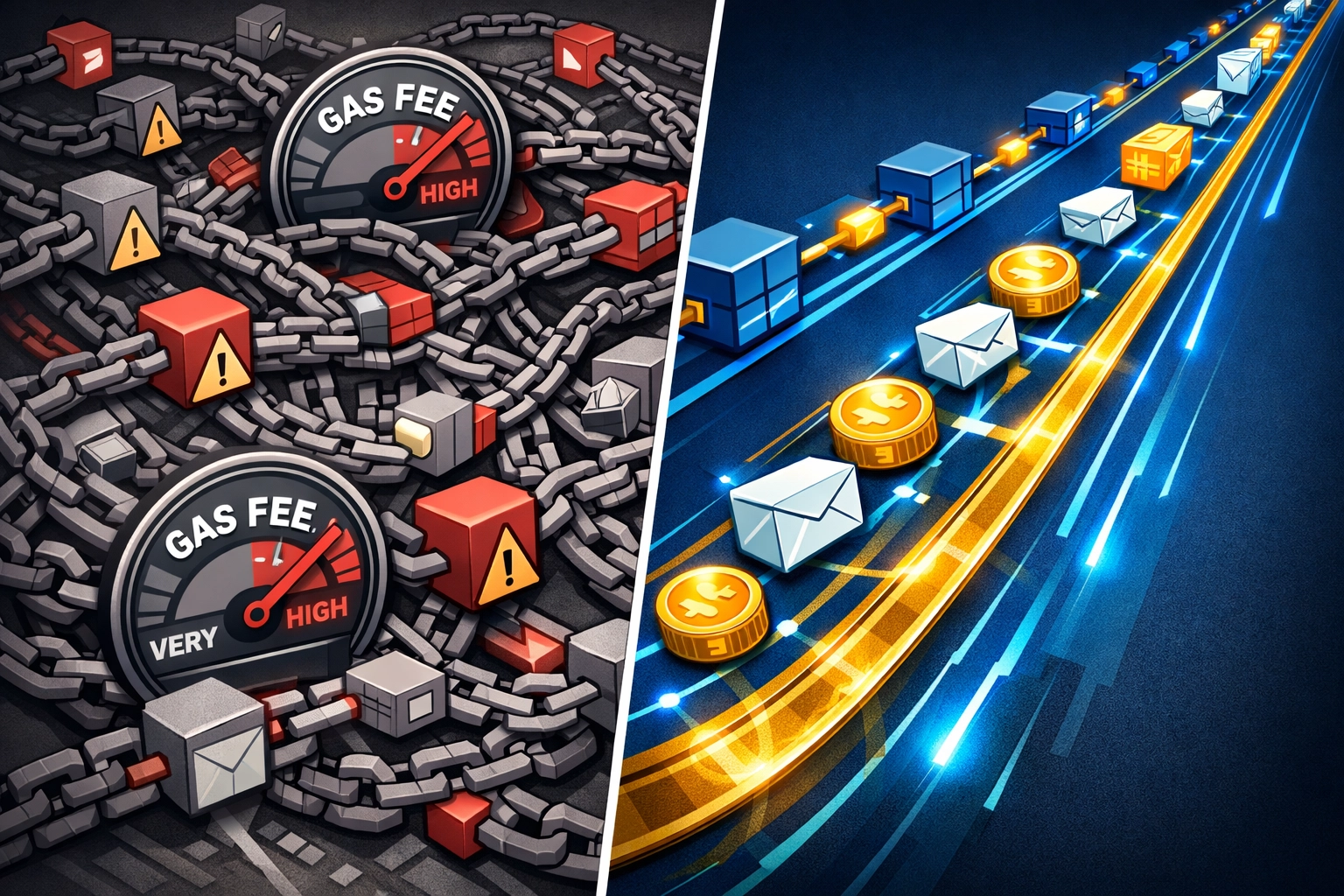
Gas Fee Volatility – Network congestion spikes. Your transaction fees jump 300% overnight. You can't predict costs. Customers abandon carts.
Governance Lock-Out – Protocol upgrades happen without merchant input. Fee structures change. Security patches deploy on someone else's timeline. You're powerless.
Network Dependency – The base layer goes down? Your payment system stops. Period. You're building a business on rented land.
LareBlocks eliminates all three. Full infrastructure ownership means fee predictability, merchant-driven governance, and zero single-point failures.
The Architecture Advantage: What LareBlocks Actually Does
As an independent Layer 1, LareBlocks runs its own validator network globally. Transaction settlement happens in seconds. Fees stay consistently low because there's no gas fee auction market.
Here's the technical breakdown:
Native Transaction Processing – Every payment settles on-chain without external dependencies. No waiting for Ethereum confirmations. No BSC network delays.
Consensus Optimization – Validators prioritize commercial throughput over speculative trading volume. Your payment clears fast even during network spikes.
Distributed Ledger Control – No single entity can freeze accounts, halt transactions, or manipulate fee structures. True decentralization for enterprise commerce.
Compare this to CoinPayments, which processes transactions across 2,000+ coins but depends entirely on those external networks. When Bitcoin mempool backs up, their merchants wait. LareBlocks merchants don't.
Merchant-Specific Features That Only Layer 1 Enables
Building your own blockchain isn't just about independence. It unlocks capabilities impossible on borrowed infrastructure.
Push-to-Card Services
LareBlocks processes instant fiat conversion directly on-chain. Customer pays in crypto. You receive USD, EUR, or local currency in your bank account. Same day.
This isn't a third-party integration. It's native protocol functionality. Zero middleman fees.
NOWPayments charges 0.5-1% for similar services. Plus gas fees. Plus conversion spreads. Your actual cost? 3-5% total.
LareBlocks? Under 1.5% all-in. That's 50%+ savings on every transaction.
NFT Receipt System
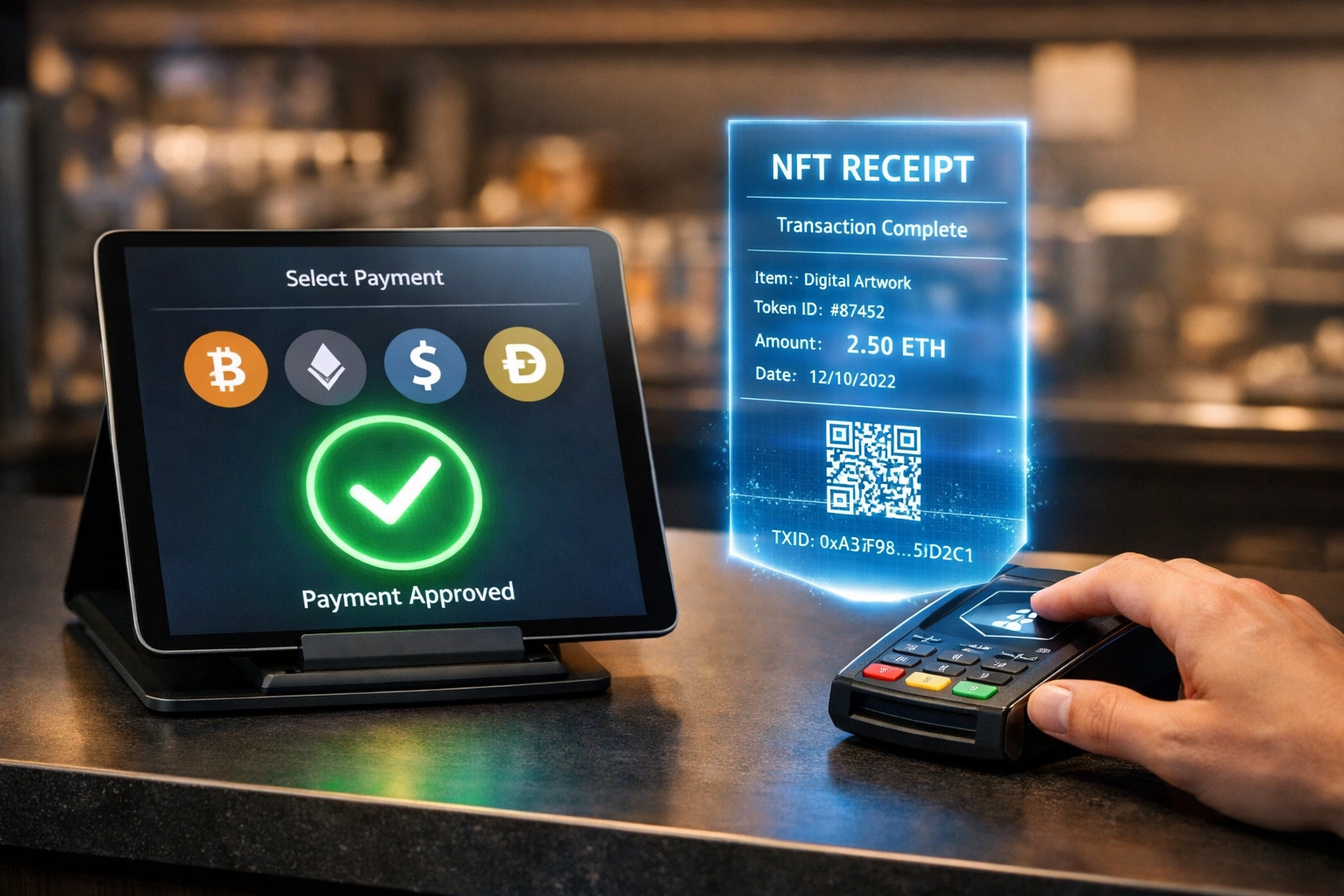
Every transaction generates an NFT receipt automatically. Permanent on-chain record for tax compliance and accounting transparency.
No manual reconciliation. No lost receipts. No audit nightmares.
Your accountant downloads transaction history directly from LareScan (the blockchain explorer). Everything's timestamped and immutable.
Traditional processors offer CSV exports. LareBlocks offers cryptographic proof.
Master/Sub-Wallet Architecture
Enterprise merchants manage hundreds of payment points. Different locations, departments, franchises.
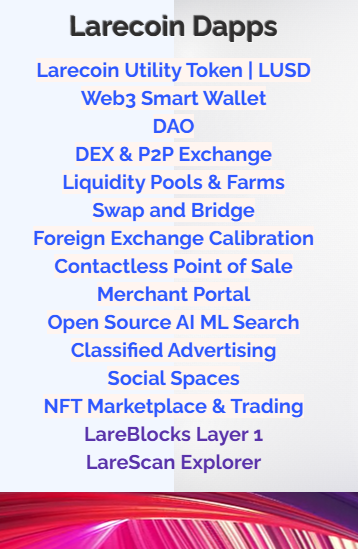
LareBlocks master wallets create unlimited sub-wallets with customizable permissions. Track revenue by location. Set spending limits per department. Consolidate treasury management.
All native to the Layer 1 protocol. No third-party software required.
LUSD Stablecoin: The Merchant's Secret Weapon
Crypto volatility kills merchant adoption. Bitcoin swings 10% daily. Customer pays $100. You receive $87 by settlement.
LUSD (Larecoin USD) solves this. It's a stablecoin pegged 1:1 to the US dollar, native to LareBlocks.
Price Stability – Your revenue doesn't fluctuate. $100 transaction = $100 settlement. Always.
Zero Conversion Delays – No swapping to USDT or USDC through exchanges. LUSD settles directly on LareBlocks in seconds.
Lower Liquidity Risk – Unlike algorithmic stablecoins, LUSD maintains reserves and regular audits. Your funds stay secure.
CoinPayments supports stablecoins, but you're paying cross-chain bridge fees and waiting for external confirmations. LareBlocks keeps everything native and instant.
The Social Impact Engine: 1.5% That Changes Everything
Every LareBlocks transaction includes an optional 1.5% tax directed toward global hunger relief initiatives.
Merchants can enable this feature. Customers see their purchase contributes to verified charitable causes. Purchase receipts show exact donation amounts.
This isn't marketing fluff. It's protocol-level philanthropy with on-chain transparency.
Check LareScan. See exactly where funds flow. Track impact in real-time.
No payment processor built on Ethereum or Solana offers this. Why? Because they don't control the protocol layer where these features live.
AI Shopping Assistants: Commerce Intelligence on Layer 1
LareBlocks trains AI models directly on blockchain transaction data. Personalized shopping recommendations based on verified purchase history.
Customer buys coffee regularly? The AI suggests related products. Browsing camping gear? Get recommendations from merchants with high satisfaction ratings.
This happens on-chain. No centralized database. No privacy violations. Customers control their data through wallet permissions.
Traditional e-commerce platforms run AI through Amazon or Google servers. LareBlocks runs it decentralized across validator nodes.
Better recommendations. Zero data mining. Pure Web3 commerce.
Gift Card Onboarding: Killing Crypto's Biggest Barrier
New crypto users face one problem: how do I actually get cryptocurrency?
LareBlocks solves this with gift card purchases. Buy a gift card with fiat. Redeem for Larecoin or LUSD instantly.
No KYC friction. No bank account linking. No exchange signups.
Customer walks into a store. Buys a $50 Larecoin gift card. Scans QR code. Has crypto in their wallet 30 seconds later.
This onboarding simplicity only works because LareBlocks controls the entire stack. From gift card issuance to wallet redemption to merchant settlement.
NOWPayments can't offer this. They're middleware, not infrastructure.
LareScan: The Explorer That Powers Transparency
Every Layer 1 needs a blockchain explorer. LareScan provides real-time transaction tracking, wallet histories, and smart contract verification.
Merchants use it for reconciliation. Customers verify payments. Auditors examine transaction flows.
The difference? LareScan integrates directly with merchant portals, AI analytics, and tax reporting tools. It's not just a block explorer: it's enterprise infrastructure.
Compare this to checking Etherscan for payment confirmation. You're looking at raw blockchain data. LareScan delivers actionable business intelligence.
The Real Cost Comparison
Let's get specific. Here's what processing $100,000 monthly revenue costs across platforms:
NOWPayments: 0.5% processing fee + average 2% gas fees + 1% conversion spread = $3,500/month
CoinPayments: 0.5% base fee + network fees (variable) + 0.5% withdrawal = ~$3,200/month
LareBlocks: 1.5% all-in (including optional Social Impact tax) = $1,500/month
You save $1,700-2,000 monthly. That's $20,400-24,000 annually.
At $1M revenue? You're saving $200,000+ per year.
Infrastructure Independence Means Future-Proof Operations
Ethereum transitions to proof-of-stake. Your fees change. Solana experiences network outages. Your payments stop processing.
When you build on borrowed infrastructure, you inherit someone else's problems.
LareBlocks merchants control their destiny. Community governance determines protocol upgrades. Validator nodes run globally with redundancy. Security patches deploy on merchant timelines.
This is what true Web3 infrastructure looks like. Not renting blockchain space. Owning it.
Why Layer 1 Matters More Than You Think
The crypto payment industry has a dirty secret: most "blockchain solutions" are just traditional payment processors with crypto window dressing.
They integrate with existing chains. Charge legacy fees. Offer zero architectural advantages.
LareBlocks built from the ground up for commerce. Every feature: from LUSD stability to NFT receipts to AI shopping assistants: exists because the protocol allows it.
You can't retrofit these capabilities onto Ethereum. You can't plugin infrastructure independence through APIs.
You need a Layer 1 designed specifically for merchant needs.
That's LareBlocks.
Ready to See the Difference?
Test it yourself. Process a payment on LareBlocks. Check settlement speed. Compare fees. Examine the NFT receipt.
Then try the same transaction on NOWPayments or CoinPayments.
The infrastructure difference becomes immediately obvious.
Lower costs. Faster settlement. Better features. True ownership.
That's what happens when merchants finally get their own Layer 1 blockchain.
Visit larecoin.com to explore the platform. Join the conversation at our community discussion forum.
The future of Web3 commerce isn't built on borrowed infrastructure.
It's built on LareBlocks.
Comments