

.png)
LareBlocks Layer 1 Secrets Revealed: How Enterprises Cut Interchange Fees by 50% (What Traditional Processors Don't Want You to Know)
- [[[Free!!]<<<<]] Watch: 스포르팅 - 토트넘 Live Stream 13 September 2022
- 2 hours ago
- 4 min read
![Writer: [[[Free!!]<<<<]] Watch: 스포르팅 - 토트넘 Live Stream 13 September 2022](https://lh3.googleusercontent.com/a/AItbvmktwQc0wCdd3ZEETSYItRQubwwBzOyjD_dcigRf=s96-c)
The Hidden Tax You've Been Paying
Interchange fees are bleeding enterprises dry.
Traditional payment processors take 2.5% to 3.5% per transaction. On $10 million in annual revenue, that's $250,000+ vanishing into payment rails.
Visa and Mastercard want you to believe this is the cost of doing business.
They're wrong.
What Traditional Processors Hide From You
Here's the dirty secret: Traditional payment networks operate on infrastructure from the 1970s.
Banks charge you for:
Network access fees
Assessment fees
Interchange fees
Processing markups
Cross-border fees
Currency conversion spreads
Each layer adds cost. Each middleman takes their cut.
The result? You're paying 50x what the actual transaction costs.
Enter LareBlocks Layer 1
LareBlocks flips the script entirely.
Fixed sub-$0.01 per transaction. Period.
No percentage cuts. No scaling fees as your business grows. No surprise charges when networks get congested.
Process $100? Pay less than a penny. Process $100,000? Still pay less than a penny.
This is possible because LareBlocks operates as an independent Layer 1 blockchain.
Not built on Ethereum. Not dependent on Polygon. Not piggybacking on existing networks that charge gas fees.
Pure, native infrastructure designed for enterprise payments.
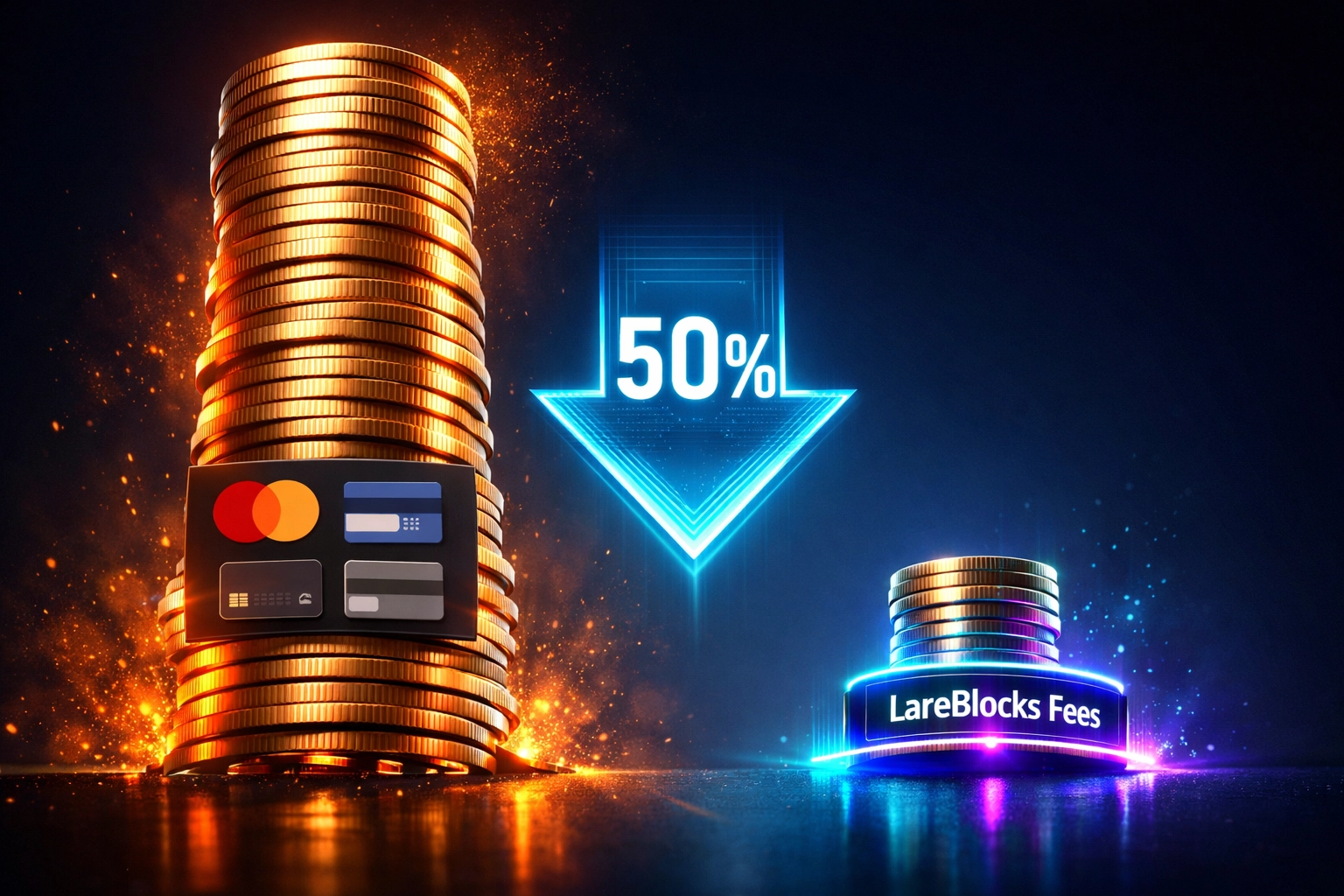
The 50% Fee Reduction (And How It Actually Works)
Let's break down the math.
Traditional Processor:
$10,000 transaction
2.9% interchange fee
$290 cost to you
LareBlocks:
$10,000 transaction
$0.01 fixed fee
$0.01 cost to you
That's a 99.99% reduction on individual transactions.
But enterprises process thousands of transactions daily. Scale that across your entire payment volume.
Even when accounting for crypto conversion and settlement costs, you're looking at under 50% of traditional interchange fees.
Master/Sub-Wallet Architecture Changes Everything
Here's where it gets interesting for enterprises.
LareBlocks includes protocol-level master/sub-wallet management.
What does this mean?
Centralized Treasury Control: One master wallet governs all company transactions. Sub-wallets for departments, locations, or individual employees.
Real-Time Visibility: Track every payment across your organization instantly. No waiting for settlement reports.
Automated Reconciliation: Sub-wallet activity rolls up automatically. Your accounting team will love you.
Granular Permissions: Set spending limits, approval workflows, and access controls at the protocol level.
Traditional processors charge extra for these features. LareBlocks builds them into the base layer.
NFT Receipts: The Audit Trail That Can't Be Faked
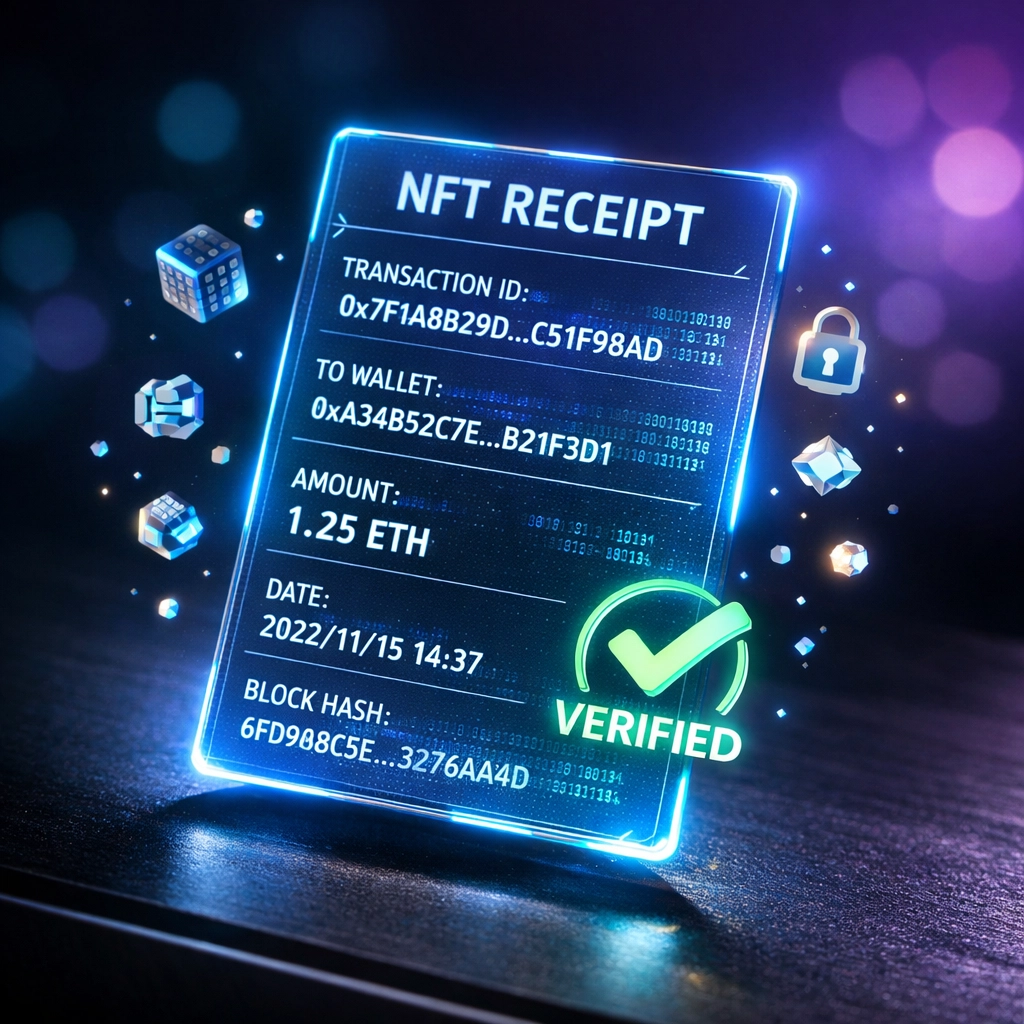
Every LareBlocks transaction automatically mints an NFT receipt.
Not as a gimmick. As an immutable proof of payment.
Key Benefits:
Permanent transaction record
Cryptographically verified
Impossible to alter or dispute
Embedded metadata (timestamp, amount, parties)
Instant audit trails for compliance
Try faking an NFT receipt. You can't.
This eliminates chargebacks, reduces fraud disputes, and streamlines financial audits.
Your CFO's nightmare scenarios just disappeared.

LUSD: Stability Without Volatility
Crypto payments face one major enterprise objection: price volatility.
Larecoin solves this with LUSD stablecoin.
Pegged 1:1 to USD. Maintains purchasing power. Operates on LareBlocks Layer 1.
Process payments in LUSD and you get:
Fixed-fee benefits of crypto
Stability of fiat currency
Instant settlement
No foreign exchange spreads
Cross-border payments without correspondent banking fees
Accept payments in LARE or LUSD. Convert to fiat instantly with push-to-card services.
Or hold in stablecoin and maintain crypto treasury exposure without risk.
Independence From External Networks
This is crucial.
Remember when Ethereum gas fees hit $200 per transaction in 2021?
Enterprises using Ethereum-based payment processors absorbed those costs.
When Solana went down for 17 hours in 2022?
Businesses using Solana payment rails couldn't process transactions.
LareBlocks runs independently.
External network congestion doesn't affect your fees. Other blockchain outages don't halt your payments.
You're not dependent on shared infrastructure that serves millions of competing use cases.
LareBlocks exists solely for enterprise payment processing and the Larecoin ecosystem.
Push-To-Card: Crypto Benefits, Fiat Convenience
Accept crypto. Receive fiat. Instantly.
LareBlocks push-to-card services convert LARE or LUSD directly to your bank account or debit card.
Settlement Speed:
Traditional processors: 2-5 business days
LareBlocks: Minutes
Fee Structure:
Traditional processors: 2.9% + batch fees + interchange
LareBlocks: Sub-$0.01 + conversion spread
You get crypto payment advantages without holding crypto exposure.
Perfect for enterprises testing Web3 waters without diving in completely.
The Decentralization Advantage
Centralized payment processors can:
Freeze your account
Reverse transactions arbitrarily
Change fee structures unilaterally
Deny service based on business category
LareBlocks operates on decentralized infrastructure.
No single entity controls the network. No payment processor dictates terms.
Smart contracts execute automatically. Transactions finalize on-chain without intermediary approval.
This means:
Censorship resistance
Predictable fee structures
Permissionless access
No arbitrary account closures
You own your payment rails.
Real-World Cost Comparison
Let's run a realistic scenario.
Mid-size e-commerce company. $5 million monthly payment volume.
Traditional Processor (2.9% + $0.30):
Monthly interchange fees: $145,000+
Annual cost: $1,740,000
LareBlocks ($0.01 fixed + conversion):
Monthly transaction fees: ~$50
Conversion costs (estimated 0.5%): $25,000
Monthly total: ~$25,050
Annual cost: ~$300,600
Annual savings: $1,439,400
That's an 82% reduction in payment processing costs.
Even in conservative estimates, you're cutting fees by more than half.
What Competitors Won't Tell You
NOWPayments, CoinPayments, and similar crypto processors still charge percentage-based fees.
They're just replacing Visa rails with crypto rails while maintaining the same extractive fee models.
Lower than traditional processors? Sure.
But still percentage-based. Still scaling with transaction size.
LareBlocks breaks this paradigm entirely with fixed-fee architecture.
Implementation Is Simpler Than You Think
Integrating LareBlocks doesn't require ripping out existing infrastructure.
Quick Start:
Connect via API in under 30 minutes
Set up master/sub-wallet structure
Configure push-to-card settlement
Start accepting LARE and LUSD payments
Run parallel with existing processors during transition.
No downtime. No disruption to current operations.
Test with small transaction volumes before scaling.
The 10-Year Vision
This is post #47 in our 100-post marathon.
We're not building a payment processor.
We're building the financial infrastructure for the next decade of commerce.
Layer 1 architecture. Master wallet management. NFT receipts. Stablecoin integration.
These aren't features. They're foundations.
As traditional finance calcifies, LareBlocks provides the flexibility enterprises need for global commerce.
Take Action Now
Calculate what you're currently paying in interchange fees.
Run the LareBlocks cost comparison for your transaction volume.
The numbers don't lie.
Ready to cut payment costs in half?
Explore our merchant interchange fee guide for detailed implementation strategies.
Check out our metaverse shopping features to future-proof your business beyond traditional payment rails.
Visit larecoin.com to start building on LareBlocks Layer 1 today.
Traditional processors had their century.
Welcome to the next era of enterprise payments.
Comments