

.png)
Metaverse Shopping in 2026: Why VR/AR Checkout Is the Ultimate Competitive Edge for Small Business
- [[[Free!!]<<<<]] Watch: 스포르팅 - 토트넘 Live Stream 13 September 2022
- 2 hours ago
- 5 min read
![Writer: [[[Free!!]<<<<]] Watch: 스포르팅 - 토트넘 Live Stream 13 September 2022](https://lh3.googleusercontent.com/a/AItbvmktwQc0wCdd3ZEETSYItRQubwwBzOyjD_dcigRf=s96-c)
The metaverse isn't coming.
It's here.
By 2026, 25% of people spend at least one hour daily working, shopping, or socializing in virtual worlds. The metaverse market exploded from $155.35 billion in 2025 to a projected $7,171.54 billion by 2035: a 46.7% compound annual growth rate.
Small businesses sitting on the sidelines? They're bleeding customers to competitors who already set up shop in VR.
The ultimate weapon? VR/AR checkout powered by crypto payments.
Here's why Larecoin's approach crushes traditional options: and how small merchants gain an unfair advantage.
Traditional Crypto Payment Gateways Can't Handle Metaverse Commerce
NOWPayments, CoinPayments, and Triple-A work fine for standard e-commerce.
But metaverse shopping demands more.
NOWPayments offers basic crypto acceptance with 200+ coins. Solid. But their checkout experience stays locked in web2 interfaces. No native VR integration. No AR-enabled receipts. Just redirects and QR codes that kill immersion.
CoinPayments provides merchant tools and invoicing. Again: fine for websites. But their infrastructure wasn't built for spatial computing. Try processing a payment while browsing a virtual storefront. The friction destroys conversion rates.
Triple-A focuses on fiat off-ramps and compliance. Great for traditional businesses dipping toes into crypto. But they charge 2-3% transaction fees plus monthly minimums. Small margins evaporate fast.
None of them designed for immersive checkout experiences where customers shop in VR/AR environments and complete purchases without breaking presence.
That's where Larecoin changes the game.
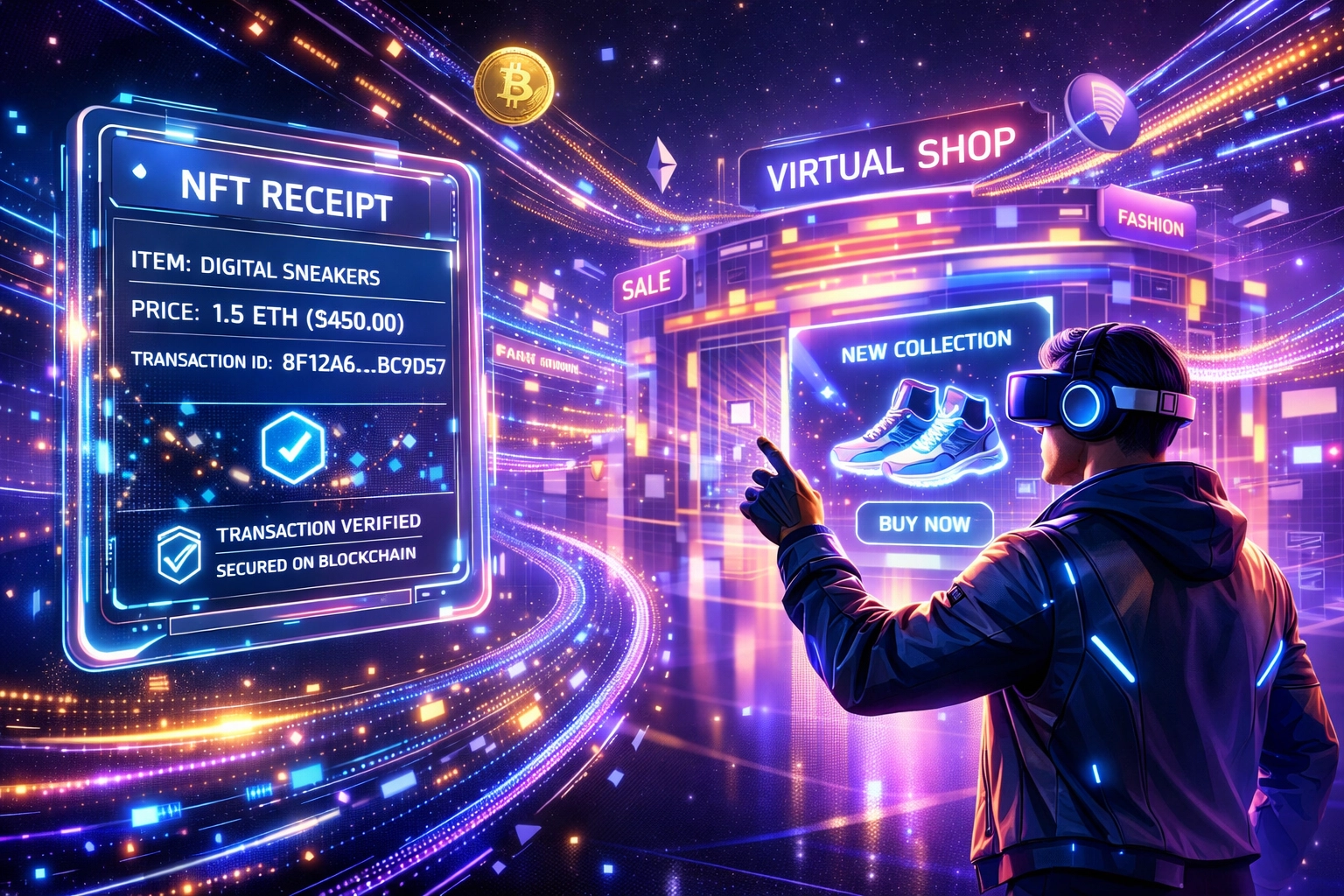
NFT Receipts: Proof of Purchase Meets Digital Collectibles
Every transaction generates an NFT receipt on Solana.
Not just a boring confirmation email.
A verifiable, tradable, collectible proof of purchase stored in your self-custody wallet.
Why this matters for small businesses:
Instant verification – No chargebacks. No payment disputes. Blockchain proof settles arguments immediately.
Marketing gold – Turn receipts into loyalty rewards. Exclusive NFTs for repeat customers. Limited edition receipts that appreciate in value.
Customer data ownership – Merchants access purchase history without surrendering data to payment processors. True self-custody means you own your customer relationships.
Gen Z and Millennials: the metaverse's core demographic: already collect NFTs. Why not make every purchase a collectible experience?
LUSD Stablecoin: Volatility-Free Metaverse Payments
Crypto volatility scares merchants.
Bitcoin swings 10% daily. Ethereum isn't much better.
LUSD (Larecoin USD) solves this.
Pegged 1:1 to USD. Built on Solana for sub-second finality. Zero price fluctuation risk.
Small businesses get:
Predictable revenue in stable dollar amounts
Instant settlement without waiting for confirmations
Gas-only transfers that cost pennies, not dollars
Cross-chain compatibility through Larecoin's swap and bridge infrastructure
Compare this to NOWPayments' reliance on volatile altcoins. Or CoinPayments forcing merchants to immediately convert to fiat (eating 3-5% in fees).
LUSD gives merchants crypto's benefits without the downsides.
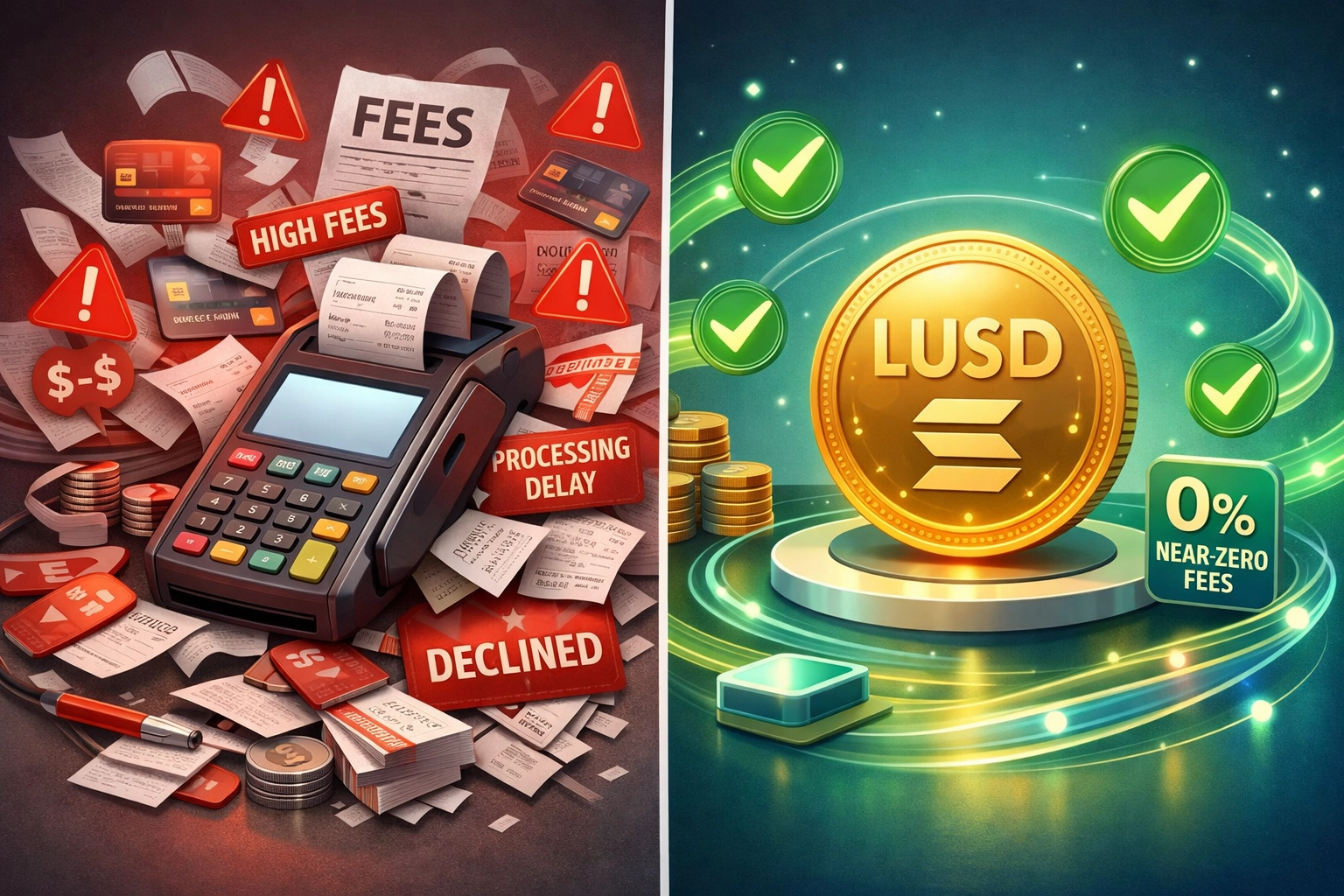
Gas-Only Transfers and Self-Custody: True Financial Freedom
Traditional payment processors hold your money hostage.
PayPal? 21-day holds. Stripe? 7-day rolling reserves.
Even crypto gateways like CoinPayments and Triple-A require custodial wallets. They control your funds until you withdraw.
Larecoin's architecture operates differently:
Gas-only transfers – Pay only network fees. No percentage cuts. No monthly minimums. A $1,000 transaction costs the same as a $10 transaction: a few cents in Solana gas.
Self-custody wallets – Merchants control private keys. Funds arrive directly in your wallet. No intermediaries. No freezes. No permission required to access your money.
Master/sub-wallet architecture lets you organize inventory, employees, and business units while maintaining full control.
This matters exponentially in VR/AR commerce where microtransactions dominate. Selling a $2 virtual item? Traditional gateways eat 40% in fees. Larecoin charges pennies.
The QR-Generated Contactless POS Revolution
Physical stores meet digital worlds through QR-generated point-of-sale systems.
Here's the flow:
Customer browses your VR storefront wearing a Quest 3 headset
They select products and approach virtual checkout
A QR code appears in their field of vision
They scan with their Larecoin wallet (mobile or wearable)
Payment processes instantly via Solana
NFT receipt mints automatically
Digital goods deliver to their metaverse inventory immediately
No credit card readers. No terminals. No PCI compliance headaches.
Just scan and pay.
The same system works for:
In-store purchases at physical locations
Pop-up shops in virtual worlds
AR-enabled window shopping where customers point phones at products and buy instantly
Live-streamed shopping events in social metaverse spaces
Triple-A and CoinPayments offer QR codes. But they route through custodial wallets and fiat conversion. Larecoin keeps everything on-chain, instant, and self-custodied.
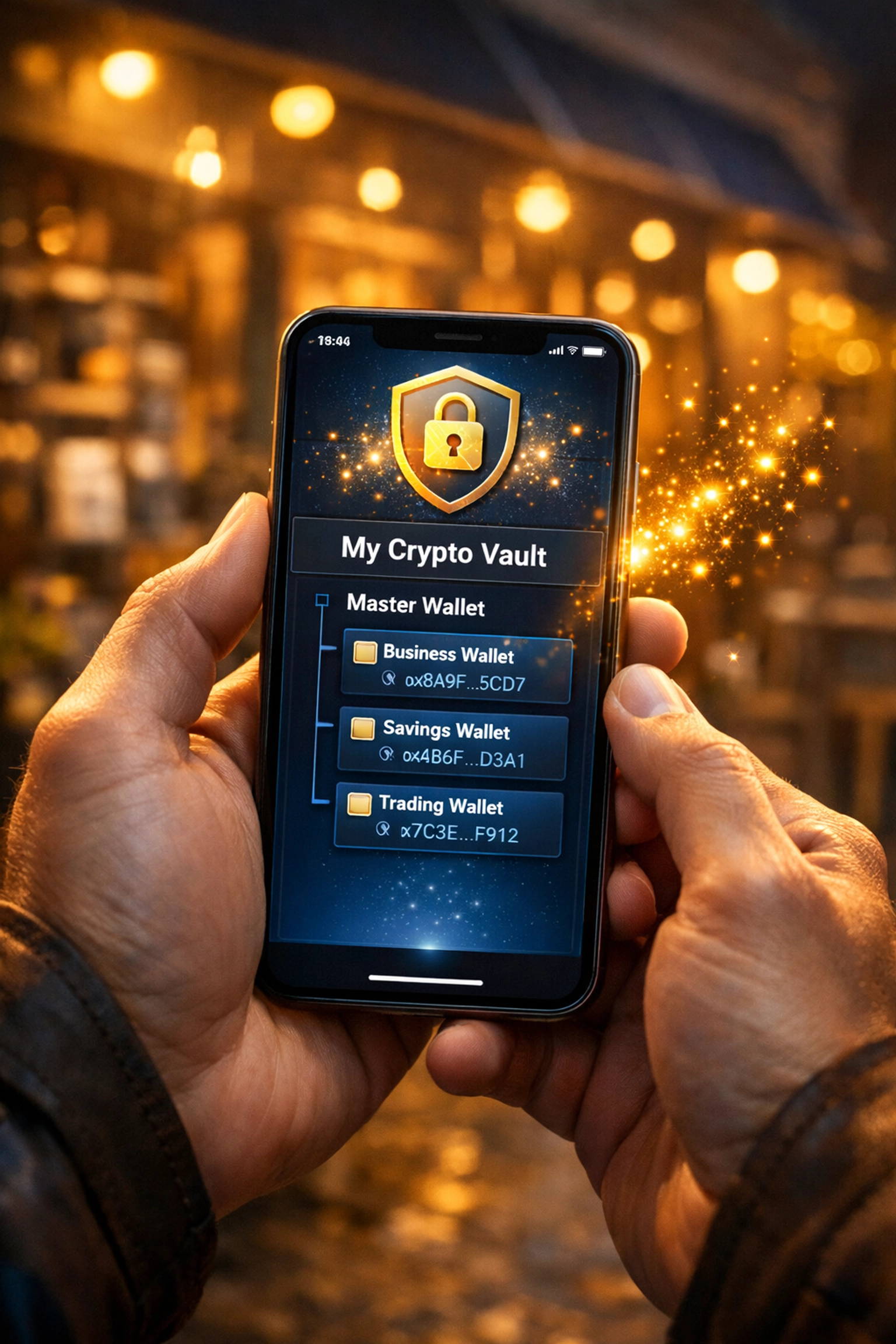
Slashing Interchange Fees By 50%+
Credit card processors charge 2.9% + $0.30 per transaction.
On a $50 sale, that's $1.75 in fees.
Over 1,000 transactions monthly? $1,750 gone to Visa and Mastercard.
Larecoin's fee structure:
$0.003 average gas fee on Solana
Zero percentage-based fees
No chargebacks (blockchain transactions are final)
No payment disputes (NFT receipts provide immutable proof)
On that same $50 sale, merchants pay less than a penny.
1,000 transactions? $3 in total fees.
That's a 99.8% reduction compared to traditional payment processing.
For small businesses operating on thin margins, this difference determines survival versus closure.
The Larecoin B2B2C Metaverse: Social Shopping Reimagined
Most metaverse platforms focus on B2C: brands selling to consumers.
Larecoin built a B2B2C ecosystem where:
Merchants create storefronts in shared virtual spaces
Customers socialize while shopping with friends
Influencers host live events where purchases happen in real-time
Virtual goods transfer seamlessly between platforms
Imagine:
Your boutique clothing store exists simultaneously as a physical shop, Shopify website, and VR showroom in Larecoin's metaverse.
A customer in Tokyo visits your VR space with friends. They browse together. Try on virtual samples. See how items look in different lighting.
One friend loves a jacket. Buys it instantly via QR scan. Gets an exclusive NFT receipt that unlocks 10% off future purchases.
The jacket ships to Tokyo the next day.
Meanwhile, three other virtual shoppers saw the interaction and now browse your store.
Social proof meets immersive commerce.
This isn't possible with NOWPayments or CoinPayments. They don't offer native metaverse infrastructure.
Learn more about Larecoin's metaverse features and how they future-proof your business.
Compliance and Trust: Federal MSB + State MTL Coverage
"Crypto sounds risky."
Fair concern.
Larecoin operates as a federally registered Money Services Business (MSB) with state-level Money Transmitter Licenses (MTL) across the U.S.
This means:
Full regulatory compliance with FinCEN
Bank Secrecy Act adherence
Anti-money laundering (AML) protocols
Know Your Customer (KYC) verification
Consumer protection guarantees
Small businesses need legitimate partners. Not offshore entities that vanish overnight.
Larecoin's licensing provides the trust layer necessary for mainstream adoption: without sacrificing crypto's core benefits like self-custody and permissionless transactions.
Triple-A advertises compliance. But they operate as a fiat bridge. CoinPayments? Registered but custodial. NOWPayments? Limited U.S. licensing.
Larecoin combines regulatory legitimacy with true crypto functionality.
The Competitive Edge: Speed, Cost, and Experience
By 2026, consumers expect:
Instant checkout in any environment (web, mobile, VR, AR)
Zero friction between browsing and buying
Collectible proof of every purchase
Social shopping experiences
Merchant-owned customer data
Traditional payment processors fail on all counts.
Larecoin delivers through:
✅ Sub-second settlement via Solana ✅ 99%+ fee reduction through gas-only transfers ✅ NFT receipts that double as loyalty rewards ✅ Self-custody infrastructure protecting merchant funds ✅ Native VR/AR integration for immersive checkout ✅ Federal and state compliance building customer trust
Small businesses can't compete with Amazon's logistics.
But they can win on experience, community, and innovation.
Metaverse shopping with crypto checkout is that differentiator.
Getting Started With Larecoin Payments
Setting up takes minutes:
Create a Larecoin merchant account at larecoin.com
Generate your master wallet and sub-wallets
Install the contactless POS system (QR generator)
Configure your storefront for VR/AR integration
Start accepting LARE, LUSD, and 50+ supported tokens
No coding required. No technical expertise needed.
Just scan, pay, and grow.
The metaverse economy is projected to hit $7 trillion by 2035. Small businesses capturing even 0.01% of that market generate life-changing revenue.
But only if they move now.
While competitors stick with Stripe and Square, you'll offer experiences they can't match: immersive, instant, and absurdly affordable.
VR/AR checkout powered by Larecoin isn't the future.
It's your competitive edge today.
Comments