

.png)
Metaverse Shopping Is Here: Why MTL-Compliant Web3 Payments Will Change How Your Customers Buy in VR/AR
- [[[Free!!]<<<<]] Watch: 스포르팅 - 토트넘 Live Stream 13 September 2022
- 2 hours ago
- 5 min read
![Writer: [[[Free!!]<<<<]] Watch: 스포르팅 - 토트넘 Live Stream 13 September 2022](https://lh3.googleusercontent.com/a/AItbvmktwQc0wCdd3ZEETSYItRQubwwBzOyjD_dcigRf=s96-c)
The Numbers Don't Lie
68% of Gen Z shoppers now prefer VR/AR experiences over traditional e-commerce.
Metaverse retail hits $20.7 billion in 2025. Projected to reach $236.67 billion by 2033.
That's a 35.6% compound annual growth rate.
Retailers implementing VR/AR see 94% conversion rate increases.
Your customers are already shopping in the metaverse. The question: Can your payment infrastructure keep up?
Traditional Web3 Payment Gateways Fail in VR/AR
NOWPayments, CoinPayments, and Triple-A built their systems for flat-screen commerce.
They force customers out of immersive experiences. Users navigate to separate payment portals. Type wallet addresses. Confirm transactions on external devices.
Every friction point kills conversions.
In VR, customers don't want to remove their headsets. In AR, they won't break focus to open a phone app.
Traditional processors charge 2-5% transaction fees plus network costs. Zero infrastructure for NFT receipts. No built-in stablecoin support. No compliance framework for virtual storefronts.
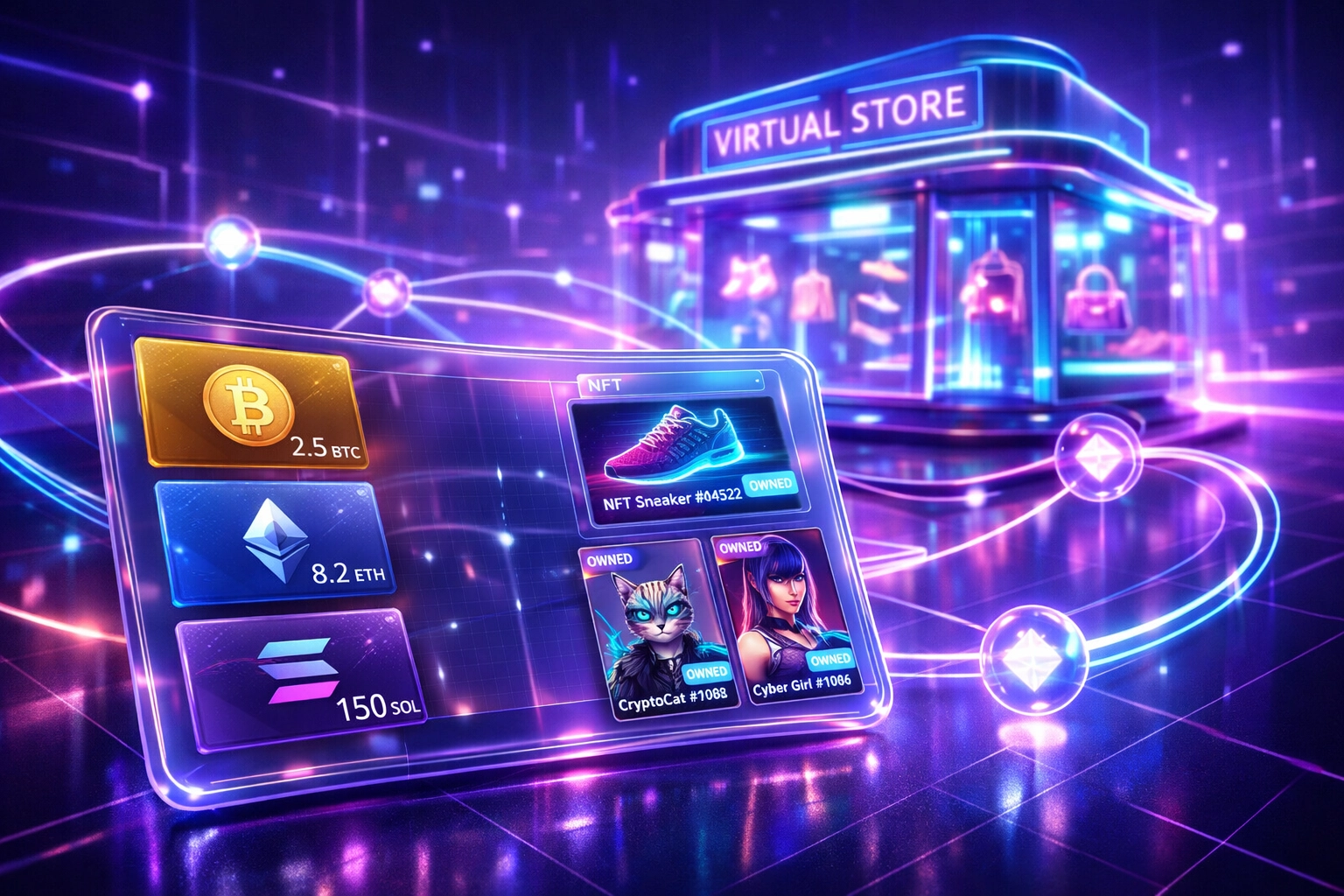
MTL Compliance Changes Everything
Money Transmitter Licenses aren't optional for serious metaverse commerce.
Federal MSB registration covers baseline compliance. State-level MTL coverage across the U.S. builds merchant and consumer trust.
Larecoin operates with full regulatory compliance. Every transaction backed by proper licensing.
Why does this matter in VR/AR shopping?
Trust. Customers spending thousands on virtual real estate or digital fashion need assurance. MTL compliance means regulated oversight. Consumer protections. Dispute resolution mechanisms.
Merchant protection. Operating without proper licenses exposes businesses to enforcement actions. Larecoin's compliance infrastructure shields merchants from regulatory risk.
Banking relationships. MTL compliance enables fiat on-ramps and off-ramps. Push-to-card services. Traditional banking integration where needed.
Competitors skip compliance to move fast. That strategy collapses when regulators arrive.
NFT Receipts: Your Purchase History Lives On-Chain
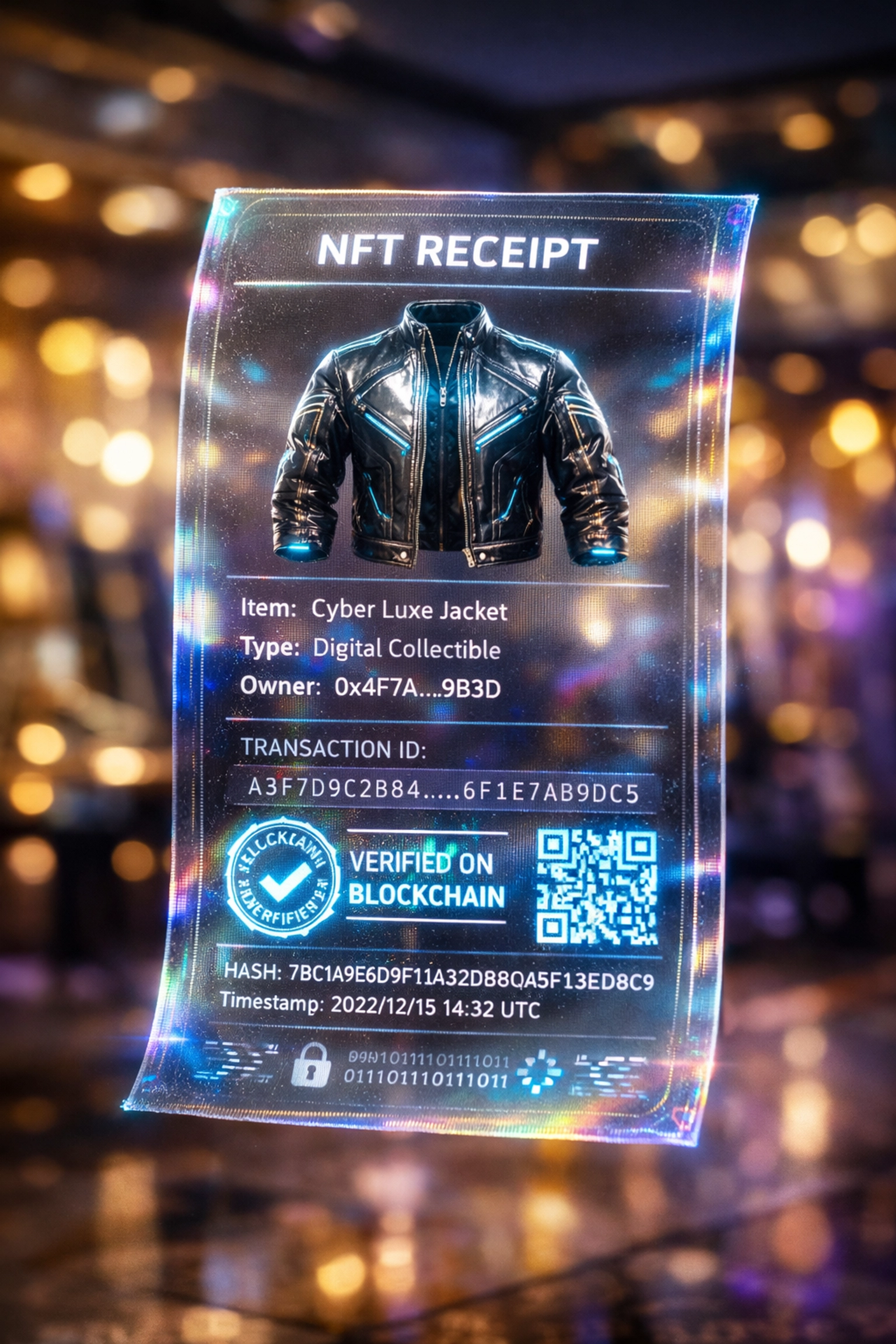
Every metaverse transaction generates an NFT receipt.
Proof of purchase. Authenticity verification. Resale tracking. All cryptographically secured.
Buy a virtual jacket in a VR boutique. Your NFT receipt proves original ownership. Resell it in secondary markets with verified provenance. The receipt follows the item through every transaction.
Traditional payment processors issue PDF receipts. Easy to forge. Impossible to verify. No secondary market utility.
NFT receipts integrate directly into VR/AR interfaces. View your purchase history as a gallery. Share receipts in social feeds. Verify authenticity before buying pre-owned items.
LUSD Stablecoin Eliminates Volatility
Bitcoin swings 10% during checkout. Your customer's $500 purchase becomes $450 or $550.
That's not a payment system. That's gambling.
LUSD stablecoin maintains dollar parity. Customers know exactly what they're paying. Merchants know exactly what they're receiving.
Gas-only transfers reduce transaction costs to network fees. No percentage-based processing fees. No hidden markups.
Compare costs:
Traditional credit cards: 2.9% + $0.30 per transaction
NOWPayments: 0.5% + network fees + conversion spread
CoinPayments: 0.5% + withdrawal fees + settlement delays
Larecoin: Gas fees only
A $1,000 metaverse purchase costs $29.30 in credit card fees. Larecoin processes the same transaction for under $2 in gas fees.
That's over 93% fee reduction.
Self-Custody Means True Ownership
Web3 payment processors hold your funds. You trust their wallets. Their security. Their policies.
Self-custody returns control to users and merchants.
Your keys. Your crypto. Your rules.
Master wallet architecture enables business operations. Sub-wallets for departments, locations, or product lines. All controlled from a single interface.
Physical retailers create location-specific sub-wallets. Track revenue by store. Allocate marketing budgets. Manage inventory purchases. All while maintaining centralized oversight.
In the metaverse, create sub-wallets for different virtual storefronts. Separate avatar fashion from virtual real estate. Track performance by product category.
QR-Generated POS Works Everywhere
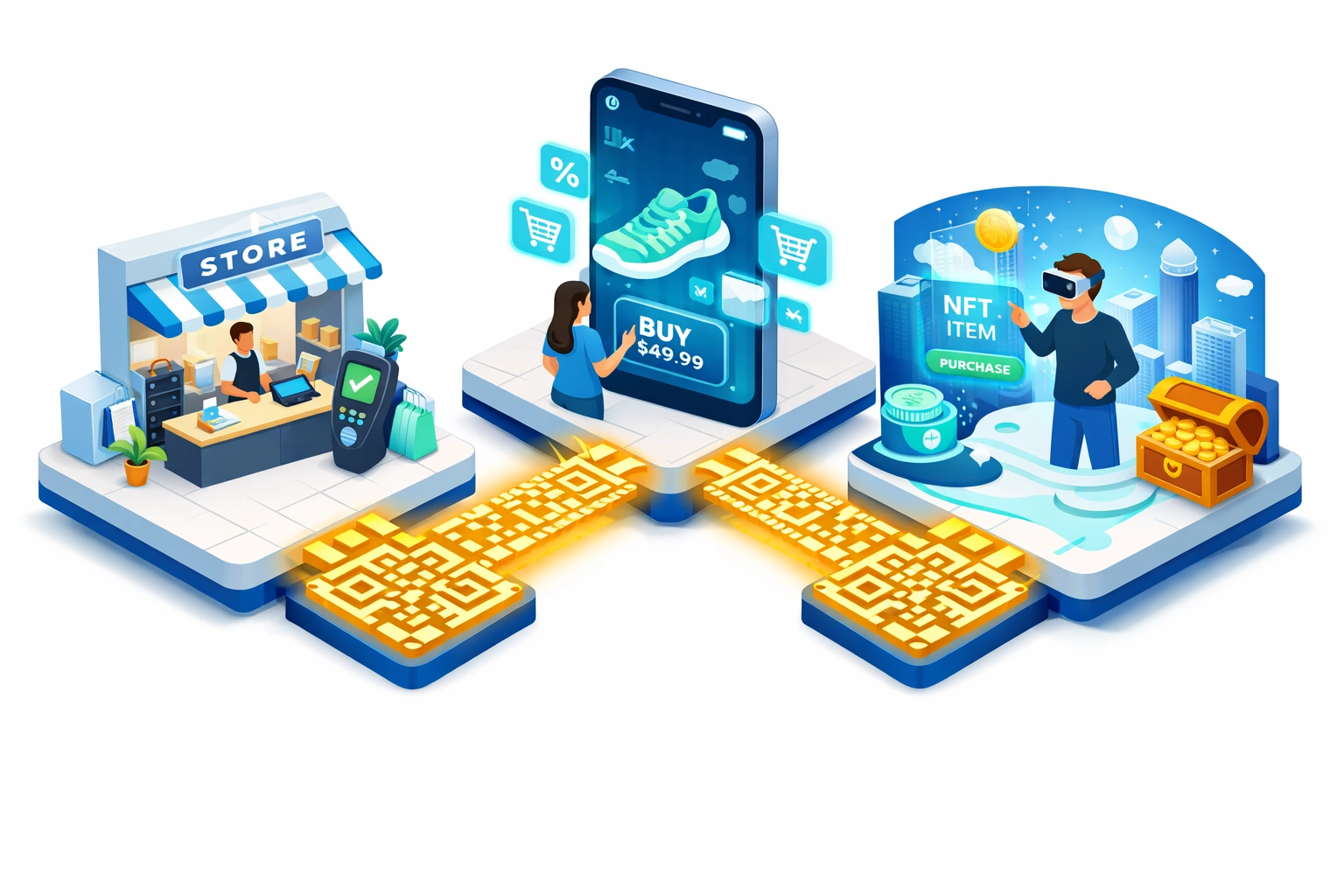
Physical stores. Pop-up shops. Metaverse boutiques.
One QR code system works across all channels.
No expensive hardware. No monthly terminal fees. No long-term contracts.
Generate a payment QR code in seconds. Customers scan with VR wrist devices, AR glasses, or smartphones. Transaction completes instantly.
The same infrastructure powers contactless payments at brick-and-mortar locations and virtual checkouts in VR environments.
Triple-A requires custom integration for each platform. CoinPayments needs separate setups for physical and digital channels. NOWPayments lacks native VR/AR support entirely.
Larecoin unifies everything.
Reducing Interchange Fees by Over 50%
Credit card interchange fees eat 2-3.5% of every transaction.
For high-volume merchants, that's millions in annual costs.
Crypto payments bypass card networks entirely. No interchange fees. No assessment fees. No cross-border markups.
A restaurant processing $2M annually pays $60,000 in credit card fees. Switching to Larecoin cuts that to under $20,000.
That's $40,000 in annual savings. Per location.
Scale that across multi-location businesses. The numbers become transformative.
Learn more about reducing merchant interchange fees with Web3 payments.
Social Shopping in the B2B2C Metaverse
Shopping becomes social entertainment.
Your customer enters a VR boutique with three friends. They browse together. Try on virtual clothing on their avatars. Vote on purchases in real-time.
One friend buys a digital jacket. The NFT receipt appears in their shared social feed. Others click to view the item. Purchase with one tap.
This isn't theoretical. It's happening now.
Larecoin's B2B2C metaverse enables merchants to host branded virtual spaces. Invite customers. Run exclusive events. Sell limited editions.
Attendance verified cryptographically. Purchases tracked on-chain. Marketing attribution becomes precise.
Influencer partnerships take new forms. Host a VR fashion show. Attendees shop the runway in real-time. Every sale traced to the event.
Traditional e-commerce can't compete with this engagement level.
VR/AR Shopping Convenience Outpaces Traditional Retail
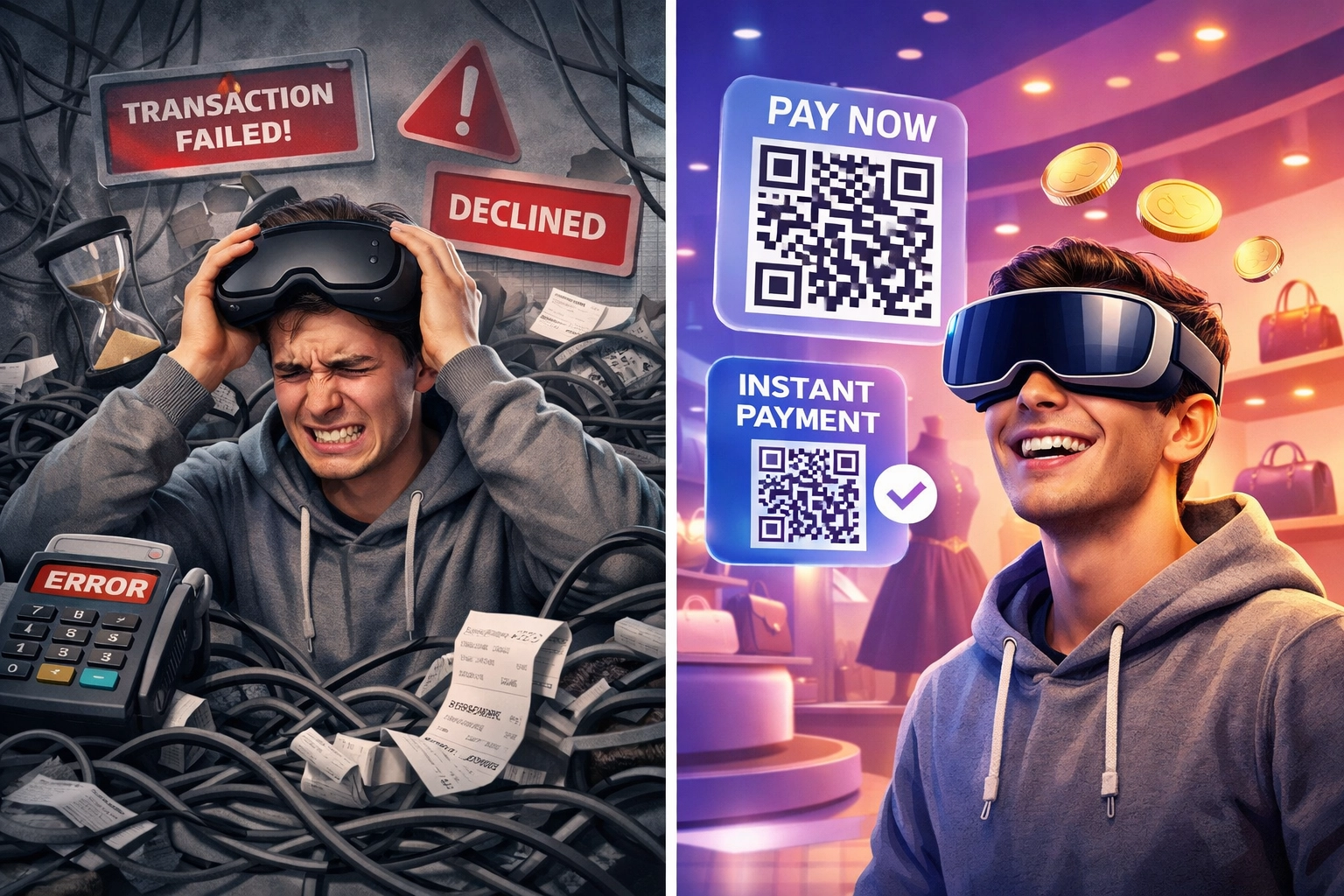
Remove your VR headset to enter payment credentials?
That's friction customers won't tolerate.
Larecoin enables in-experience payments. Browse products in VR. Select items. Scan QR code with wrist device. Transaction completes in seconds.
Never leave the virtual environment.
AR shopping works similarly. Point your phone at a product. Virtual try-on appears. Tap to buy. Payment processes instantly.
The entire shopping journey stays immersive.
Gen Z expects this convenience. Millennials embrace it. Even Gen X adopts once they experience the difference.
Retailers offering seamless VR/AR payments capture market share from competitors stuck in traditional checkout flows.
The Infrastructure Advantage
NOWPayments supports 300+ cryptocurrencies. That's flexibility merchants don't need.
Managing 300 currencies creates accounting nightmares. Tax reporting becomes impossible. Customers don't want to choose between 300 payment options.
Larecoin focuses on LARE token and LUSD stablecoin. Simple. Fast. Compliant.
CoinPayments offers payment buttons and plugins. Legacy tools designed for 2D websites. Zero native VR/AR integration.
Triple-A targets institutional merchants. Enterprise pricing. Complex onboarding. Overkill for small and medium businesses.
Larecoin builds for everyone. Solopreneurs to enterprise chains. Physical stores to virtual boutiques. All on unified infrastructure.
Federal MSB Registration and State MTL Coverage
Compliance isn't sexy. It's necessary.
Federal Money Services Business registration establishes baseline legitimacy. State-level Money Transmitter Licenses in operating jurisdictions ensure full regulatory coverage.
Larecoin maintains registrations across U.S. states. Each license represents months of applications, audits, and compliance reviews.
That investment protects merchants and customers.
When competitors face enforcement actions, Larecoin-powered businesses continue operating smoothly. No surprise shutdowns. No frozen funds. No regulatory uncertainty.
Trust matters more as commerce moves into virtual environments. Customers can't touch products. Can't visit physical stores. Can't shake hands with merchants.
MTL compliance provides verifiable trust in trustless environments.
Visit Larecoin's trust page for full compliance documentation.

The 10-Year Vision
Metaverse shopping isn't a trend. It's a shift in consumer behavior as fundamental as mobile commerce was in 2010.
Larecoin builds infrastructure for the next decade of digital commerce.
Today: NFT receipts, LUSD stablecoin, QR-generated POS, self-custody wallets.
Tomorrow: Full B2B2C metaverse ecosystems. Cross-platform virtual storefronts. AI-powered shopping assistants integrated with crypto payments. Decentralized merchant networks.
The merchants adopting Web3 payments now gain first-mover advantages. Lower fees. Better customer experiences. Regulatory compliance. Technical infrastructure that scales.
Competitors will catch up eventually. But "eventually" means missing years of savings and growth.
Get Started Today
Your customers are ready for metaverse shopping.
Your payment infrastructure should be too.
Larecoin provides:
MTL-compliant Web3 payments
NFT receipt generation
LUSD stablecoin stability
Gas-only fee structure
Self-custody security
QR-generated POS for all channels
Master/sub-wallet architecture
Over 50% fee reduction compared to traditional processors.
Native VR/AR integration traditional gateways can't match.
The future of retail is immersive, social, and powered by compliant Web3 payments.
Visit larecoin.com to join the metaverse commerce revolution.
Comments