

.png)
Why H.R. 3633 Will Change the Way Merchants Accept Crypto Payments (And What Larecoin Gets Right)
- [[[Free!!]<<<<]] Watch: 스포르팅 - 토트넘 Live Stream 13 September 2022
- 2 hours ago
- 5 min read
![Writer: [[[Free!!]<<<<]] Watch: 스포르팅 - 토트넘 Live Stream 13 September 2022](https://lh3.googleusercontent.com/a/AItbvmktwQc0wCdd3ZEETSYItRQubwwBzOyjD_dcigRf=s96-c)
Regulatory Clarity Just Arrived. Merchants Win.
H.R. 3633: the Digital Asset Market Clarity Act: passed the House on July 17, 2025 with bipartisan support.
294-134 vote. Senate received it September 18, 2025.
This isn't just another crypto bill. It's the framework that separates winners from losers in merchant payments.
Here's what changed:
SEC and CFTC now have defined jurisdictions
Digital commodities on mature blockchains exempt from SEC registration
Payment stablecoins get federal recognition
Exchanges and brokers face Bank Secrecy Act compliance
Translation: Crypto payments just became legitimate infrastructure. Not experimental tech.
The Commodity Classification Advantage

Larecoin operates as a digital commodity under H.R. 3633's framework.
Not a security. Not unregistered. A commodity.
Why this matters for merchants:
No SEC registration hurdles for payment processors
CFTC oversight means derivatives and futures markets
Institutional liquidity follows commodity status
Banks can finally touch it without compliance paralysis
Compare this to payment processors stuck in regulatory limbo. NOWPayments and CoinPayments handle hundreds of tokens. Many lack clear classification.
Larecoin's commodity status = reduced legal risk for every merchant integration.
Settlement happens on LareBlocks Layer 1. Native blockchain. Not relying on Ethereum gas fees or Polygon bridging delays.
Your transaction clears. Period.
How Merchant Acceptance Just Got Rebuilt
The old model: Merchant accepts crypto → Payment processor converts to fiat → Bank settles → Merchant receives USD minus 2-3% fees.
H.R. 3633 enables this:
Merchant accepts Larecoin → Instant settlement on LareBlocks → Optional conversion to LUSD stablecoin → Merchant holds digital value or converts to fiat.
The difference? Control points.
Legacy processors (Visa, Mastercard, traditional gateways) extract fees at every layer. Authorization fees. Interchange fees. Processing fees. Chargeback fees.
Crypto payments under H.R. 3633 eliminate intermediaries. Direct peer-to-peer settlement. Stablecoin offramps built into the protocol.
Merchants using Larecoin see:
50% fee reduction vs. card networks
Settlement in seconds, not days
No chargeback fraud
Cross-border payments without SWIFT delays
Traditional payment rails weren't built for global commerce. They were built for banks.

What Larecoin Gets Right (And Others Miss)
1. Fee Structure That Actually Saves Money
Merchants pay 0.5-1% transaction fees on Larecoin payments.
Visa/Mastercard average 2.5-3%. PayPal takes 3.49% + $0.49 per transaction.
Do the math on $100,000 monthly revenue:
Legacy processors: $2,500-$3,000 in fees
Larecoin: $500-$1,000 in fees
That's $2,000+ back in the merchant's pocket. Every month.
NOWPayments charges 0.5% with a $10 minimum. CoinPayments takes 0.5% but adds withdrawal fees and currency conversion spreads.
Larecoin? 0.5% flat. No hidden conversion spreads. No withdrawal minimums. Gas fees covered by the network's efficiency.
2. LUSD Stablecoin: Price Stability Without Banking Dependence
Merchants need stability. Bitcoin's volatility killed early adoption.
Enter LUSD: Larecoin's native stablecoin pegged 1:1 to USD.
Unlike USDC or USDT (centralized, bank-dependent), LUSD operates entirely on-chain. No banking intermediaries. No frozen accounts.
Merchant use case:
Customer pays with LARE → Merchant receives payment → Instant conversion to LUSD at point of sale → Merchant holds stable value.
All on LareBlocks Layer 1. No Ethereum gas spikes. No bridge exploits.
CoinPayments offers multi-coin settlement but lacks native stablecoin infrastructure. NOWPayments integrates third-party stables but adds conversion fees.
Larecoin's LUSD is built into the protocol. Zero friction.
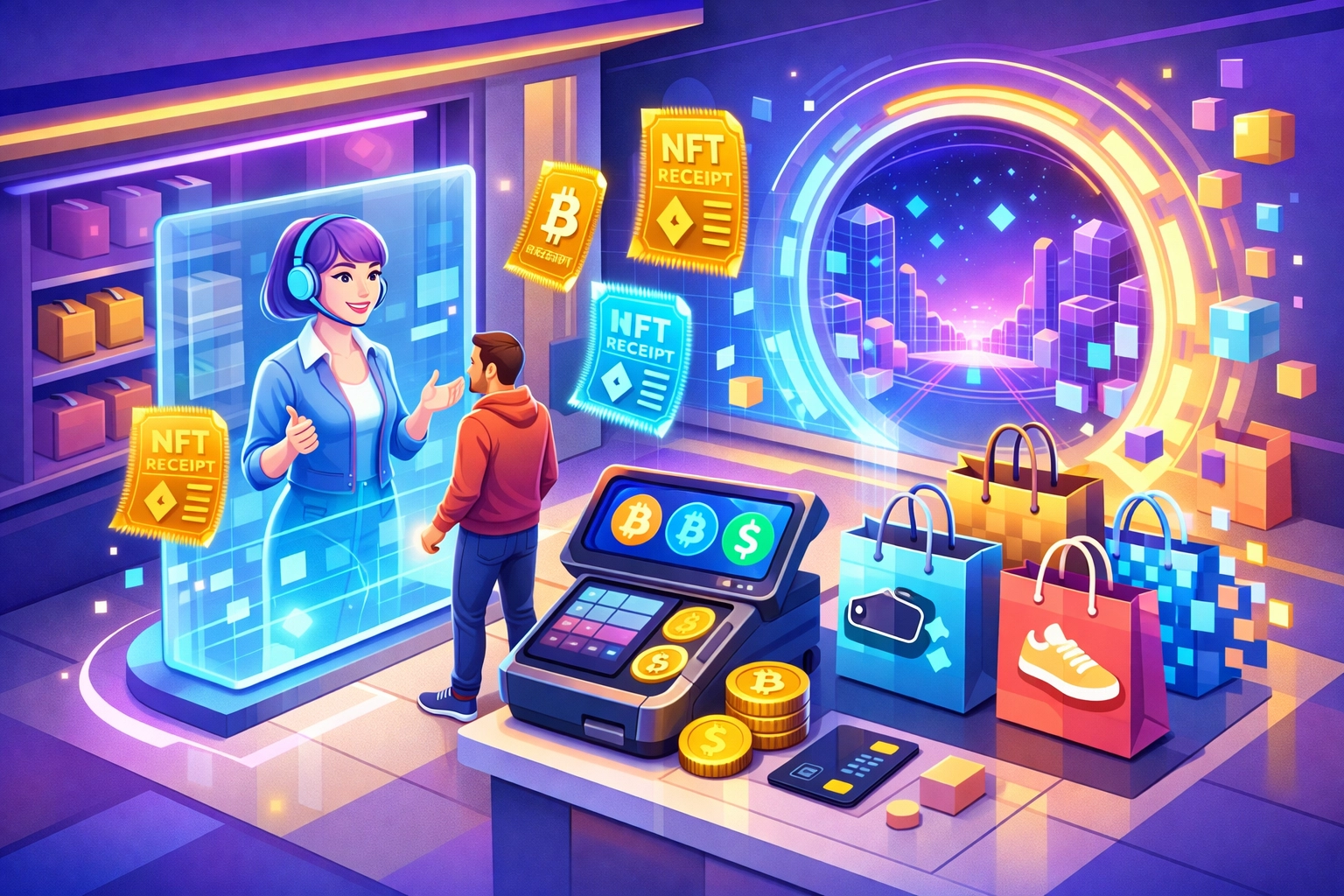
3. NFT Receipts: Proof of Purchase On-Chain
Every Larecoin transaction generates an NFT receipt.
Not a gimmick. A verifiable proof-of-purchase stored on LareBlocks.
Why merchants care:
Warranty verification without paper trails
Authenticity guarantees for high-value items
Loyalty program integration via tokenized rewards
Fraud prevention through immutable records
Traditional receipts? Lost, forged, disputed.
NFT receipts? Permanent. Verifiable. Transferable.
This unlocks new business models. Resale markets with provable purchase history. Subscription services with on-chain proof of payment.
No other payment processor offers this. NOWPayments and CoinPayments settle transactions and move on. Larecoin turns every payment into a digital asset.
4. LareBlocks Layer 1: Security Through Self-Custody
Most crypto payment processors operate on third-party chains. Ethereum. BSC. Polygon.
Risks include:
Network congestion during high activity
Bridge vulnerabilities (billions stolen in 2024-2025)
Dependency on external validators
Unpredictable gas fees
LareBlocks is Larecoin's native Layer 1 blockchain.
Designed for payments:
Sub-second finality
Predictable transaction costs
Self-custody wallets with merchant APIs
No reliance on external networks
Merchants control their funds. No custodial risk. No third-party holds.
Compare this to CoinPayments, which aggregates multiple blockchains. More complexity = more attack vectors.
Larecoin simplifies. One chain. One standard. Full merchant control.
5. AI-Powered Metaverse Shopping
H.R. 3633 doesn't just legalize crypto payments. It enables next-generation commerce.
Larecoin's metaverse integration connects physical and digital retail.
How it works:
Customer browses virtual storefront → AI assistant personalizes product recommendations → Customer pays with LARE or LUSD → NFT receipt confirms purchase → Physical item ships or digital asset delivers instantly.
Traditional payment processors can't bridge this gap. They settle fiat transactions. End of story.
Larecoin's ecosystem includes:
AI shopping assistants on https://larecoin.com/shop
Virtual storefronts with crypto checkout
NFT collectibles tied to real-world purchases
Loyalty rewards distributed as tokens
NOWPayments handles crypto transactions. So does CoinPayments.
Neither offers ecosystem-level innovation. No AI. No metaverse. No integrated digital economy.
The Competitive Landscape: Larecoin vs. Alternatives
NOWPayments:
0.5% fee + $10 minimum monthly
Multi-blockchain support (adds complexity)
Third-party stablecoin integrations
No native Layer 1
No NFT receipts
CoinPayments:
0.5% fee + withdrawal charges
Custodial wallet model
Conversion spreads on multi-currency settlements
Aggregated blockchain approach (bridge risk)
No ecosystem features
Larecoin:
0.5-1% fee, no minimums
LareBlocks Layer 1 (native, secure)
LUSD stablecoin built-in
NFT receipts standard
AI and metaverse integration
Self-custody merchant wallets
The difference? Ecosystem vs. utility.
NOWPayments and CoinPayments process payments. Larecoin builds commerce infrastructure.
Under H.R. 3633's framework, that distinction matters. Commodity classification + native blockchain + stablecoin infrastructure = institutional adoption pathway.
Why H.R. 3633 Makes This Possible Now
Before the Clarity Act, merchants faced legal uncertainty. Was accepting crypto a securities transaction? Would payment processors face SEC enforcement?
H.R. 3633 answered:
Payment stablecoins are federally recognized
Digital commodities exempt from securities registration
Clear CFTC jurisdiction for derivatives
AML/KYC requirements standardized
Larecoin benefits from every provision.
Commodity status. Check. Payment stablecoin (LUSD). Check. Exchange compliance. Check. Bank-grade security on LareBlocks. Check.
The regulatory green light just turned on. Merchants can adopt crypto payments without legal risk.
And Larecoin built the infrastructure before the law passed.
The 50% Fee Savings Reality
Let's break down a real merchant scenario:
E-commerce store: $500,000 annual revenue
Legacy payment processing:
$500,000 × 2.8% = $14,000 in fees
Larecoin payment processing:
$500,000 × 0.8% = $4,000 in fees
Annual savings: $10,000
That's $10,000 back in inventory, marketing, or profit.
Scale that to $5 million annual revenue? $100,000 in savings.
Factor in faster settlement (seconds vs. 3-5 days) and no chargeback fraud? ROI compounds.
Traditional processors won't advertise this math. Larecoin does.
Check the merchant fee comparison at https://www.larecoin.com/post/reduce-merchant-interchange-fees-the-ultimate-guide-to-web3-global-payments-in-2026.
The numbers don't lie.
What Comes Next
H.R. 3633 created the regulatory framework. Larecoin built the technology.
Now it's execution time.
For merchants:
Set up your Larecoin merchant account at https://larecoin.com/pay. Integrate checkout APIs. Start accepting LARE and LUSD payments.
For shoppers:
Download the Larecoin wallet at https://larecoin.com/consumer. Fund with LUSD for stable purchasing power or hold LARE for ecosystem rewards.
For developers:
LareBlocks offers merchant APIs, NFT minting tools, and AI shopping integrations. Build the next generation of commerce apps.
The crypto payment revolution doesn't need another white paper. It needs infrastructure.
Larecoin delivered it. H.R. 3633 legalized it. Merchants benefit immediately.
The question isn't whether crypto payments will dominate. It's whether you'll adopt before your competitors do.
Join the Larecoin merchant network today:https://larecoin.com
Comments