

.png)
Why Metaverse Shopping Will Change the Way You Sell (And How VR/AR Gets You There)
- [[[Free!!]<<<<]] Watch: 스포르팅 - 토트넘 Live Stream 13 September 2022
- 2 hours ago
- 5 min read
![Writer: [[[Free!!]<<<<]] Watch: 스포르팅 - 토트넘 Live Stream 13 September 2022](https://lh3.googleusercontent.com/a/AItbvmktwQc0wCdd3ZEETSYItRQubwwBzOyjD_dcigRf=s96-c)
Retail is evolving. Fast.
The metaverse isn't some far-off sci-fi dream anymore. It's happening right now. And if you're a merchant looking to future-proof your business, you need to understand how VR/AR technology and crypto payments intersect.
Here's the reality: metaverse shopping is projected to become a $1 trillion market. Gucci already sold a virtual bag for $4,000: more than the physical version. Nike is minting NFTs. Forever 21 partnered with Roblox.
The question isn't whether this shift is happening. It's whether you're positioned to capitalize on it.
The Metaverse Shopping Revolution: What's Actually Changing
Traditional e-commerce has a problem. It's flat. Boring. Solitary.
You scroll through 2D images. Add to cart. Checkout. Done.
Metaverse shopping flips the script entirely.
Immersive product experiences. Customers don't just look at products: they interact with them. Virtual fitting rooms. 3D product models. Full spatial exploration. One brand saw a 33% conversion rate boost just by implementing 3D product visualization.
Social shopping returns. Remember when shopping was actually social? The metaverse brings that back. Friends shopping together virtually. Real-time reactions. Shared experiences. Community-driven commerce.
Unlimited storefronts. No square footage limitations. No rent. No geographic barriers. Your virtual store can be infinitely larger than any physical location: and reach customers globally.
VR/AR: The Technology Enabling the Shift
VR and AR aren't just gimmicks. They're the foundational layer making metaverse shopping possible.
Virtual Reality (VR) creates fully immersive 3D environments. Complete virtual storefronts where customers browse, interact, and purchase: all from their living room.
Augmented Reality (AR) overlays digital elements onto the real world. Try on that watch. See how that couch looks in your space. Visualize products before committing.
Together, these technologies transform customers from passive browsers into active participants. Gamified shopping experiences. Interactive product demos. Real-time customization.
The data opportunities are massive too. AI-powered analytics track behavioral patterns. Heatmaps show where customers spend time. Every interaction generates actionable insights.
The Payment Problem Nobody's Solving (Until Now)
Here's where most metaverse platforms fall short.
They build incredible virtual experiences: then force customers through clunky, expensive legacy payment systems.
The numbers don't lie:
Traditional interchange fees: 2-3% per transaction
Cross-border fees: Additional 1-3%
Chargebacks and fraud: More hidden costs
Settlement times: Days, not seconds
For high-volume metaverse merchants? That's death by a thousand cuts.
Compare the major crypto payment processors:
NOWPayments offers decent multi-currency support but lacks the metaverse-specific infrastructure merchants need. No native stablecoin. Limited self-custody options.
CoinPayments has been around longer but feels dated. The user experience isn't built for immersive commerce. Fee structures remain complex.
Triple-A focuses on enterprise: but smaller merchants get left behind. The pricing model doesn't scale well for emerging metaverse retailers.
None of them are building for the future of commerce. None of them understand that metaverse shopping requires native Web3 infrastructure from the ground up.
How Larecoin Changes the Game
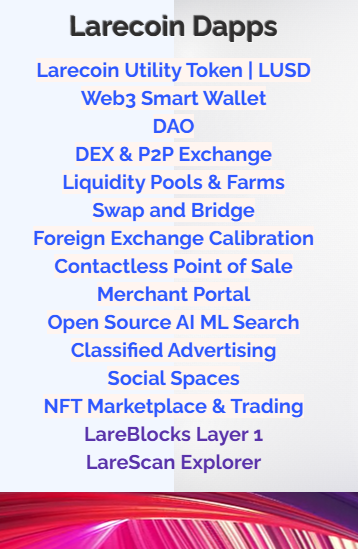
Larecoin isn't retrofitting crypto onto legacy systems. We're building the payment layer the metaverse actually needs.
Fee Savings That Actually Matter
Cut interchange fees by more than 50%. That's not marketing speak: that's math.
Gas-only transfers mean you're not paying percentage-based fees on every transaction. For a merchant processing $100,000 monthly in the metaverse, that's thousands saved annually.
Self-custody means your funds stay yours. No intermediary holding your capital. No withdrawal delays. Complete financial sovereignty.
NFT Receipts: The Future of Transaction Records
Every Larecoin transaction can generate an NFT receipt. Immutable proof of purchase on the blockchain.
Why does this matter for metaverse merchants?
Verifiable authenticity for digital goods
Automatic warranty tracking for physical products
Loyalty program integration built into the receipt itself
Resale authentication when customers want to transfer ownership
Traditional receipt systems? Paper. Email. Lost in spam folders. NFT receipts are permanent, verifiable, and transferable.
LUSD Stablecoin: Stability in Volatile Markets
Crypto volatility scares merchants. We get it.
LUSD solves that problem. Our stablecoin maintains consistent value while you transact. Accept crypto. Settle in stability. Simple.
No more watching your daily revenue fluctuate by 10% because Bitcoin moved. LUSD provides the predictability merchants need with the efficiency crypto offers.
Crypto POS Built for Metaverse and Reality
The Larecoin ecosystem includes QR-generated POS systems that work everywhere.
In-store? Generate a QR code. Customer scans. Transaction complete.
Online? Seamless checkout integration. No redirect nightmares.
In the metaverse? Native payment rails built for virtual environments.
Master and sub-wallets let you manage multiple locations, employees, or virtual storefronts from a single dashboard. Real-time tracking. Instant settlements. Complete visibility.
The Larecoin B2B2C Metaverse Vision
We're not just building payment infrastructure. We're building the destination.
The Larecoin metaverse is designed for social shopping. Browse virtual storefronts with friends. Discover new brands in immersive environments. Purchase physical and digital goods seamlessly.

For merchants, this means:
Built-in traffic from the Larecoin community
Native payment integration: no third-party processors
Social features that drive organic discovery
Analytics that show how customers interact in 3D space
For consumers:
Frictionless VR/AR shopping experiences
Self-custody of funds and purchases
NFT-based ownership verification
Rewards and incentives built into the ecosystem
This isn't theoretical. It's the roadmap. The 10-year marathon we're committed to running.
Compliance and Trust: The Foundation
Innovation means nothing without trust.
Larecoin maintains federal MSB registration. State-level MTL compliance across the United States. We're not operating in regulatory gray zones.
Why does MTL compliance matter for merchants?
Legal protection for your business
Customer confidence in transactions
Institutional partnerships become possible
Long-term operational stability
Other processors cut corners. We build properly.
Getting Started: Your Metaverse Commerce Checklist
Ready to position your business for the metaverse economy? Here's your action plan:
1. Assess your product fit. Which of your products translate well to virtual environments? Digital goods? Physical items with strong visual appeal? Experiences?
2. Calculate your current payment costs. What are you actually paying in interchange fees, chargebacks, and processing costs?
3. Explore Larecoin integration. Set up a merchant wallet. Test the QR-generated POS. Experience self-custody firsthand.
4. Plan your metaverse presence. Virtual storefront design. 3D product models. Social shopping features.
5. Launch and iterate. Start small. Gather data. Optimize based on real customer behavior.
The Bottom Line
Metaverse shopping isn't coming. It's here.
The merchants who win will be those who combine immersive VR/AR experiences with payment infrastructure that actually works.
Legacy processors weren't built for this. Neither were most crypto payment solutions.
Larecoin is different. NFT receipts. LUSD stability. Gas-only fee savings. Self-custody security. MTL compliance. All designed for the future of commerce.
The question isn't whether to adapt. It's how fast you can move.
The metaverse waits for no one. Neither should you.
Comments