

.png)
Why Web3 Payments Will Change the Way You Fight Global Hunger (While Saving 50%+ on Fees)
- [[[Free!!]<<<<]] Watch: 스포르팅 - 토트넘 Live Stream 13 September 2022
- 2 hours ago
- 5 min read
![Writer: [[[Free!!]<<<<]] Watch: 스포르팅 - 토트넘 Live Stream 13 September 2022](https://lh3.googleusercontent.com/a/AItbvmktwQc0wCdd3ZEETSYItRQubwwBzOyjD_dcigRf=s96-c)
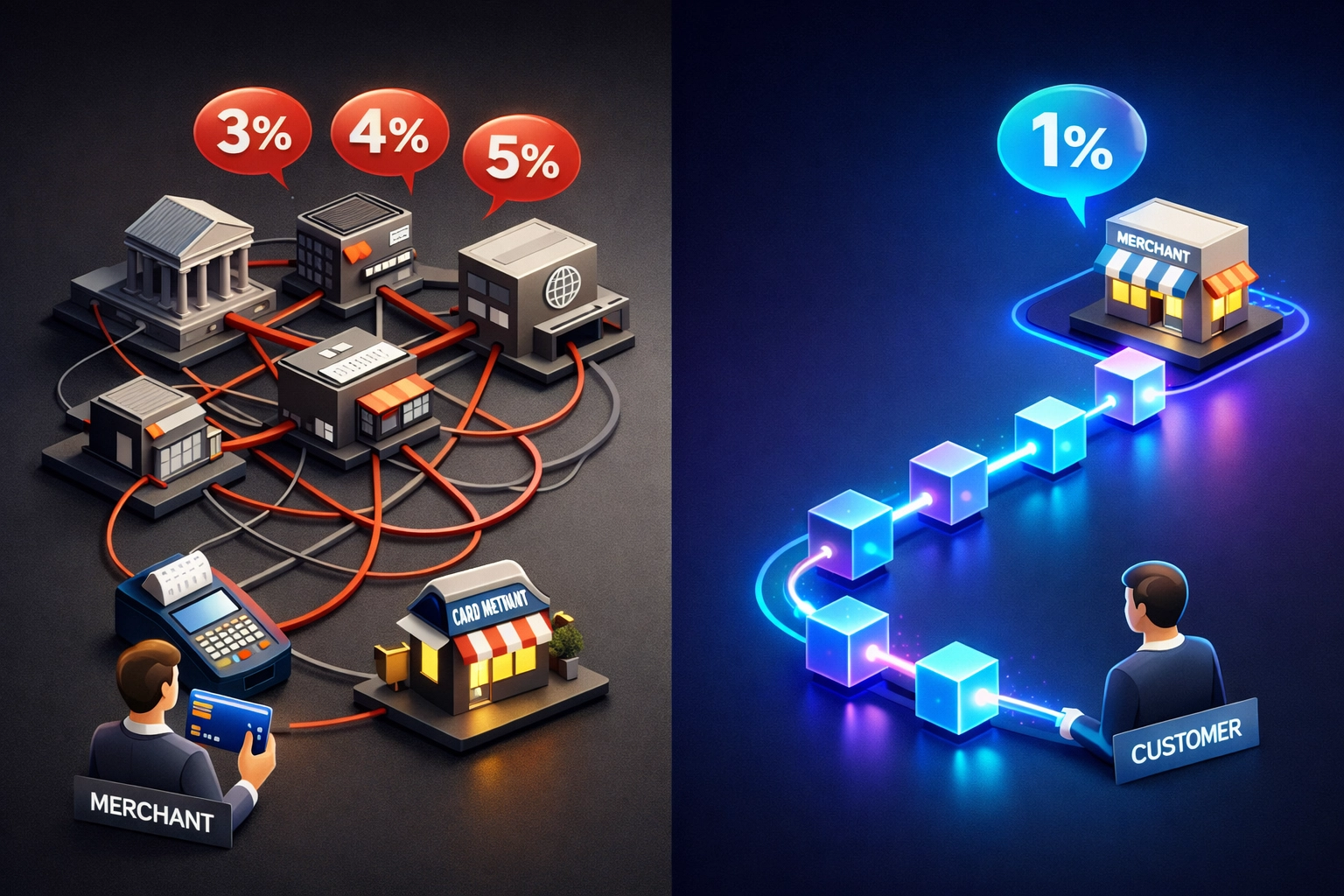
Processing payments shouldn't cost you 3-5% of your revenue.
And it definitely shouldn't require a separate donation to fight global hunger.
Web3 payments solve both problems simultaneously. Here's how Larecoin bakes humanitarian impact directly into transaction infrastructure: while cutting your processing fees by more than half.
The Hidden Cost of Traditional Payment Rails
Every credit card transaction passes through five layers of intermediaries:
Merchant acquiring banks
Payment processors (Stripe, Square)
Card networks (Visa, Mastercard)
Issuing banks
Currency exchange services
Each one takes a cut. Your $100 sale? You're actually getting $95-97.50.
That's $2,500-5,000 lost on every $100,000 processed.
Web3 infrastructure eliminates most of these middlemen. Transactions run directly on blockchain protocols: peer-to-peer verification replaces institutional gatekeepers.
Result: 1% total processing cost instead of 3-5%.
The Social Impact Engine: Hardcoded Charity at Scale
Here's where it gets interesting.
Larecoin's protocol includes a 1.5% Social Impact Tax embedded directly in the smart contract code. Not optional. Not voluntary. Automatic.
Every transaction: regardless of merchant, product, or geography: automatically allocates 1.5% to verified hunger relief programs.
Process $1 million monthly? You've just generated $15,000 for global food security. Zero additional effort.
Compare that to traditional charitable giving:
Requires active donation decisions
Fluctuates with economic conditions
Carries 30-40% administrative overhead
Lacks transparent fund tracking
Larecoin's approach creates mathematical certainty: More transactions = More meals funded.
No fundraising campaigns. No administrative bloat. No trust issues.
Real Numbers: Fee Savings + Impact Generation
Let's run actual business scenarios.
E-commerce Store ($500K monthly revenue)
Traditional processing: $15,000/month in fees (3%)
Larecoin processing: $5,000/month (1%)
Your savings: $10,000/month
Hunger relief generated: $7,500/month
Combined value: $17,500/month
Subscription Service (10,000 subscribers × $20)
Traditional processing: $6,000-8,000/month
Larecoin processing: $2,000/month
Your savings: $4,000-6,000/month
Hunger relief generated: $3,000/month
Combined value: $7,000-9,000/month
You're literally cutting costs while simultaneously funding humanitarian programs.
No other payment infrastructure does this.
How It Compares to Other Crypto Processors
NOWPayments: Charges 0.5-1% but offers zero social impact mechanism. You save on fees but contribute nothing to humanitarian causes. Standard Web3 efficiency: no innovation beyond cost reduction.
CoinPayments: Similar fee structure (0.5%) with basic crypto acceptance. Again, purely transactional. No hardcoded charity. No transparency infrastructure.
Larecoin: 1% total processing + 1.5% social impact = 2.5% total cost. Still cheaper than traditional rails (3-5%), but you're funding verified hunger programs with cryptographic proof of impact.
The choice isn't just about saving money. It's about business efficiency + humanitarian scale.
NFT Receipts: Cryptographic Proof of Impact
Traditional donation systems are black boxes.
You contribute $100. Maybe $60-70 reaches actual programs after administrative costs. No way to verify. No transparency. Just trust.
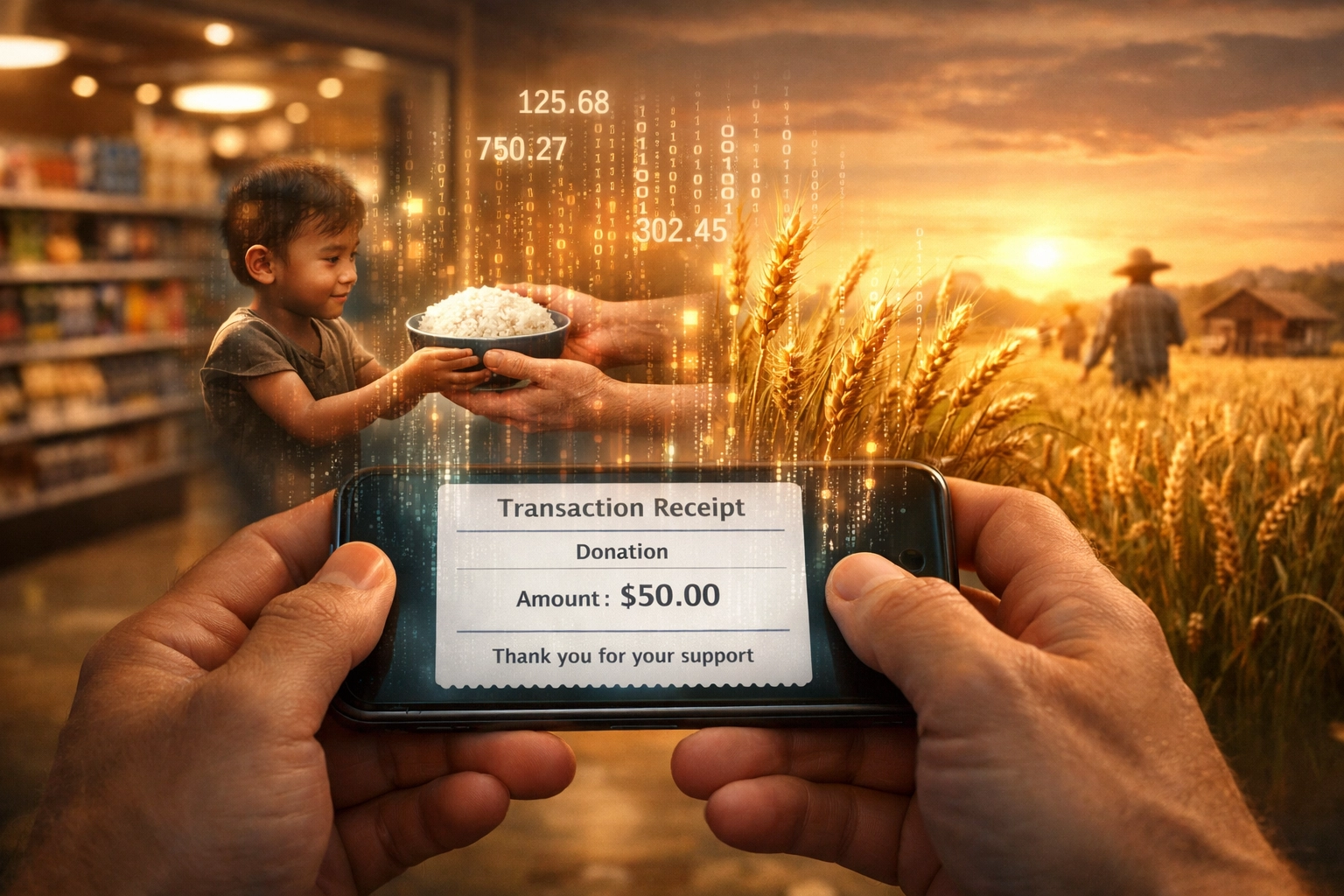
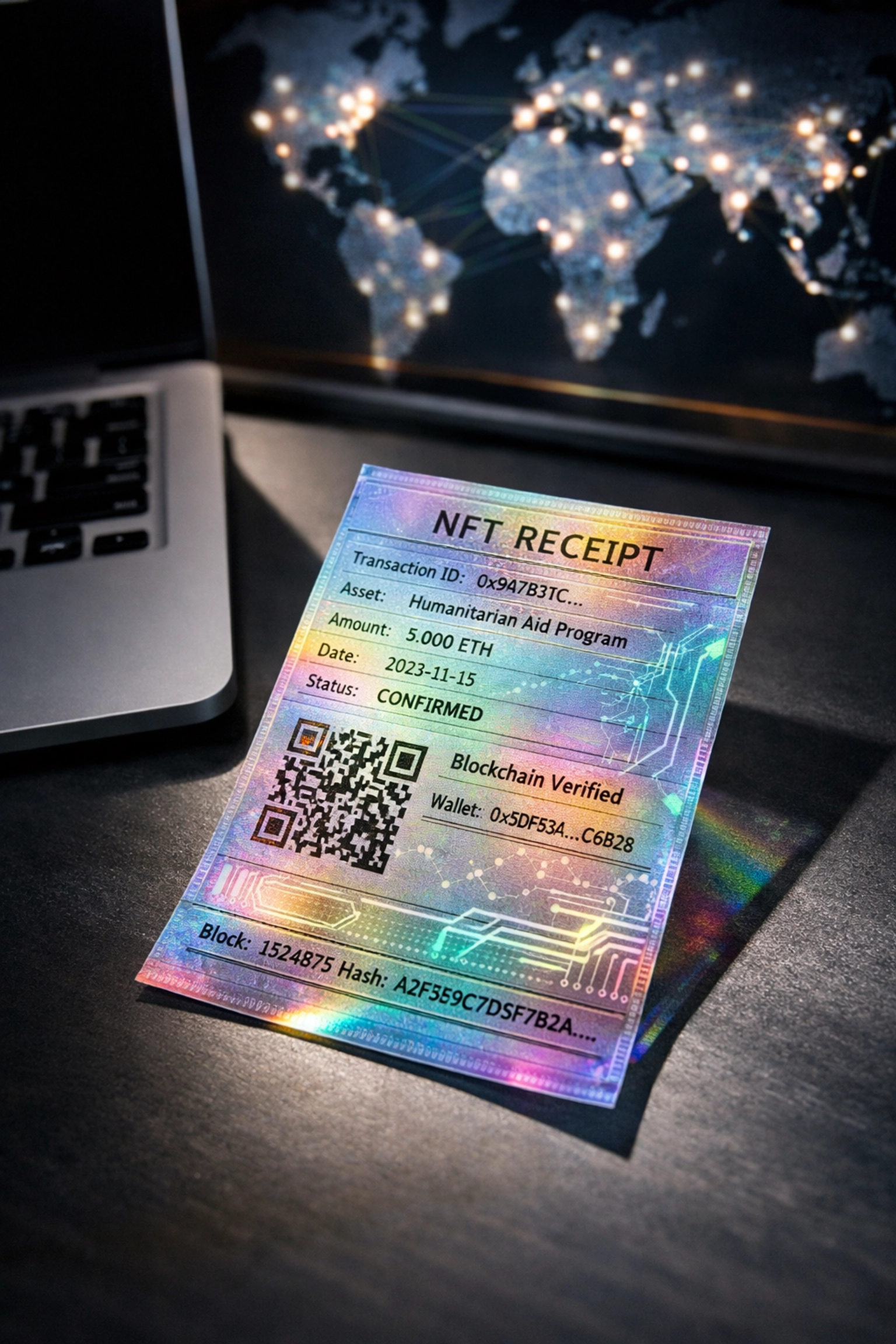
Larecoin issues NFT receipts for every transaction. Each receipt contains:
Transaction amount
Social allocation breakdown (exact amount to hunger relief)
Timestamp
Recipient organization
Tax documentation for deductions
On-chain verification link
Open-source. Auditable. Permanent.
Check LareScan (Larecoin's blockchain explorer) anytime. See exactly where funds flow. Verify recipient organizations. Track global impact metrics in real-time.
Current verified metrics:
2.3 million meals funded globally
Active programs in 47 countries
12,000+ farmers receiving sustainable agriculture training
All verifiable on-chain. Zero trust required.
LUSD Stablecoin: Volatility Protection
Crypto's wild price swings scare merchants.
Bitcoin payment worth $1,000 today might be $800 tomorrow. That's not a payment system: it's speculation.
LUSD (Larecoin's stablecoin) solves this.
Pegged 1:1 to USD. No volatility. Predictable accounting. Tax reporting in familiar currency units.
You get Web3's efficiency without crypto's chaos.
Merchants can:
Accept payments in LUSD
Hold stablecoins for operating capital
Convert to fiat instantly if needed
Generate impact through the same 1.5% tax mechanism
Same humanitarian funding. Same fee savings. Zero price risk.
LareBlocks Layer 1: Enterprise-Grade Infrastructure
Larecoin doesn't ride on Ethereum or Solana's limitations.
LareBlocks is Larecoin's proprietary Layer 1 blockchain: built specifically for payment velocity and merchant needs.
Key specs:
Sub-second transaction finality
Gas fees under $0.01
50,000+ TPS capacity
Native multi-currency support
Master/Sub-wallet architecture for enterprise treasury management
That last point matters for serious businesses.
Master/Sub-wallets let you:
Create department-specific payment addresses
Set spending limits per sub-wallet
Track transactions by team/project
Maintain unified treasury oversight
Generate departmental financial reports automatically
Traditional crypto wallets offer none of this. You're stuck with consumer-grade tools.
LareBlocks provides enterprise infrastructure from day one.
Gift Card Onboarding: Zero Crypto Knowledge Required
"But our customers don't own crypto."
Doesn't matter.
Larecoin's Gift Card onboarding lets anyone pay with crypto: without ever touching a wallet.
Customer flow:
Select product
Choose Larecoin payment
Purchase gift card with credit/debit card
Gift card auto-converts to LUSD
Payment completes instantly
They never see blockchain addresses. No wallet setup. No seed phrases. No learning curve.
Just seamless payment processing that happens to run on Web3 infrastructure.
You get the fee savings. You generate humanitarian impact. Customer experience remains familiar.
The Infrastructure Advantage: Why Competitors Can't Copy This
NOWPayments and CoinPayments could theoretically add charitable donations.
But they can't replicate Larecoin's architecture:
They lack:
Proprietary Layer 1 blockchain (they're processor overlays)
Hardcoded social impact in protocol (it's core infrastructure, not a feature)
NFT receipt systems (no transparency layer)
Master/Sub-wallet enterprise tools (consumer-focused products)
Gift card seamless onboarding (crypto-native user assumption)
Larecoin built an entire payment ecosystem from the ground up.
Not a payment processor. Not a crypto gateway. A complete financial infrastructure designed for merchant efficiency + humanitarian scale.
Real Business Applications
International e-commerce: Accept global payments without currency conversion fees. LUSD works everywhere. Customers pay in their local currency equivalent: you receive stablecoins. No forex markups. No cross-border delays.
Subscription businesses: Recurring crypto payments with predictable accounting. Set up auto-billing in LUSD. Customers maintain subscriptions without volatility concerns. You get steady cash flow + ongoing humanitarian contributions.
Marketplaces: Multi-vendor platforms benefit from sub-wallet architecture. Each vendor gets separate payment address. Platform maintains unified treasury management. Social impact aggregates across all merchants.
Nonprofits: Accept donations with zero processing fees eating into contributions. 98.5% reaches your programs (1.5% supports broader hunger relief network). NFT receipts provide donor transparency automatically.
Getting Started Takes Minutes
Visit larecoin.com
Create merchant account
Generate payment address
Integrate API (or use no-code plugins)
Start accepting payments
No blockchain expertise required. No complex setup. Standard payment gateway integration.
Your first transaction automatically contributes to verified hunger programs. You'll see the impact breakdown in your dashboard. NFT receipt arrives instantly.
The Math Doesn't Lie
Traditional payments: 3-5% fees + $0 humanitarian impact
Larecoin: 1% processing + 1.5% hunger relief = 2.5% total cost
You save 0.5-2.5% on every transaction while funding global food security.
Over $1 million annually? That's $5,000-25,000 saved PLUS $15,000 generated for humanitarian programs.
The question isn't whether Web3 payments make sense.
It's why you're still paying legacy processors premium fees for zero social impact.
Cut costs. Fund solutions. Prove impact cryptographically.
That's not the future of payments. That's the present: built on LareBlocks infrastructure and available today.
Comments