

.png)
Your Quick-Start Guide to Metaverse Shopping: Do This First Before Launching VR/AR Commerce
- [[[Free!!]<<<<]] Watch: 스포르팅 - 토트넘 Live Stream 13 September 2022
- 3 hours ago
- 4 min read
![Writer: [[[Free!!]<<<<]] Watch: 스포르팅 - 토트넘 Live Stream 13 September 2022](https://lh3.googleusercontent.com/a/AItbvmktwQc0wCdd3ZEETSYItRQubwwBzOyjD_dcigRf=s96-c)
The metaverse isn't coming. It's here.
Augmented reality hit $36 billion this year. Brands like Gucci and Adidas are already running virtual showrooms. Your competitors are setting up shop in The Sandbox.
But here's the thing, most merchants are jumping in without the right foundation.
They're using legacy payment rails in a Web3 world. They're ignoring compliance. They're bleeding fees.
This guide fixes that. Before you launch VR/AR commerce, do these steps first.
Step 1: Know Your Audience (Seriously)
Gen Z and Millennials dominate metaverse adoption. Higher-income consumers engage at elevated rates. This is your primary target.
But here's where merchants get it wrong: assuming everyone wants the same thing.
The reality:
51% want both physical and virtual goods
35% prefer physical goods only
14% are all-in on virtual items
Your commerce model needs to support all three. Build an omnichannel strategy covering:
V2V (Virtual-to-Virtual): Digital assets, NFTs, in-world items
V2P (Virtual-to-Physical): Order physical products from VR storefronts
P2V (Physical-to-Virtual): Scan products in-store, receive digital twins
Don't guess. Build for flexibility.
Step 2: Choose Your Platform Wisely
The Sandbox has partnered with over 200 brands. It's proven infrastructure with existing collaborations.
But gaming platforms adapted for commerce aren't your only option. Specialized retail platforms designed for immersive shopping often provide better integration.
Core VR/AR features driving conversions:
Virtual try-ons for fashion and beauty
3D product visualization for furniture and electronics
Immersive brand experiences replicating in-store interactions
Interactive product demos reducing return rates
Customers expect these features now. They're not futuristic, they're table stakes.
Step 3: Payment Infrastructure, This Is Where Most Merchants Fail
Here's the uncomfortable truth about metaverse commerce: traditional payment processors weren't built for this.
Credit card interchange fees eat 2.5-3.5% of every transaction. Legacy crypto processors like NOWPayments and CoinPayments add their own cuts. Triple-A charges premium rates for enterprise features.
The result? You're paying more for a worse experience.
Why Larecoin Changes the Game
Larecoin's architecture was built for metaverse commerce from day one.
Master/Sub-Wallet System
Manage multiple storefronts and physical locations from a single dashboard. Your VR showroom, physical pop-up, and online store, all unified. One view. One system.
QR-Generated Crypto POS
Works seamlessly across physical and virtual environments. Customer scans. Payment processes. Done.
No bulky hardware. No complicated integrations.
Gas-Only Transfers
Here's where it gets interesting. Larecoin's gas-only transfer model means you're not paying percentage-based fees on every transaction. You pay minimal network costs, that's it.
Compare that to:
NOWPayments: 0.5% + conversion fees
CoinPayments: 0.5% + withdrawal fees
Triple-A: Enterprise pricing with hidden costs
Step 4: Technical Foundations That Actually Matter
Let's talk about what sets serious metaverse merchants apart.
NFT Receipts
Every transaction generates a verifiable, on-chain NFT receipt.
Why this matters:
Immutable proof of purchase
Easy returns and warranty claims
Built-in authenticity verification for luxury goods
Secondary market tracking for limited editions
Your customers keep their receipts forever. No lost emails. No faded paper. Just blockchain-verified ownership.
LUSD Stablecoin
Price volatility kills commerce. Customers hesitate when BTC swings 5% during checkout.
LUSD solves this. Pegged stable value. Instant settlement. No conversion anxiety.
Merchants receive predictable payments. Customers pay with confidence.
Self-Custody Architecture
Here's what NOWPayments and CoinPayments don't tell you: they hold your funds.
Larecoin's self-custody model means you control your assets. Your keys. Your crypto. No third-party risk.
The difference is massive:
No withdrawal delays
No frozen accounts
No platform dependency
Full control, always
For metaverse commerce: where transactions happen 24/7 across global audiences: self-custody isn't optional. It's essential.
Step 5: Compliance Isn't Sexy, But It's Non-Negotiable
VR/AR commerce operates in a regulatory gray zone. Most merchants ignore this until it's too late.
MTL Compliance Matters
Larecoin holds Federal MSB registration and state-level Money Transmitter License coverage across the U.S.
What this means for you:
Legal protection for your business
Customer trust and confidence
Bank and payment partner accessibility
Future-proofed operations as regulations tighten
Competitors operating without proper licensing put your business at risk. When regulators come knocking, "we didn't know" isn't a defense.
Fee Savings Through Proper Structure
Here's a number that matters: 50%+ reduction in interchange fees.
Traditional payment processors charge:
Interchange fees (1.5-3%)
Assessment fees (0.13-0.15%)
Processor markup (0.2-0.5%)
Monthly fees
PCI compliance fees
Larecoin's crypto POS eliminates most of these. Gas-only transfers mean predictable, minimal costs regardless of transaction size.
A $100 sale costs the same as a $10,000 sale. That's how it should work.
Step 6: Social Shopping Is the Metaverse Differentiator
Metaverse shopping is inherently social.
Customers interact with friends, influencers, and brand ambassadors in shared virtual spaces. They influence each other's purchases in real-time.
This isn't e-commerce with a headset. It's a fundamentally different shopping paradigm.
Larecoin's B2B2C Metaverse Vision
Imagine this:
A customer enters your virtual store with two friends. An AI-powered avatar guides them through your collection. One friend tries on a virtual jacket: the customer sees it in real-time.
Purchase happens. NFT receipt generated. Physical item ships to their door.
Meanwhile, a digital twin of that jacket appears in the customer's metaverse wardrobe. They wear it to next week's virtual concert.
That's the vision Larecoin is building.
Social shopping. Seamless payments. Physical-digital convergence.
Gamification Drives Engagement
Layer in quests. Offer discounts for completing challenges. Reward loyal customers with exclusive digital items.
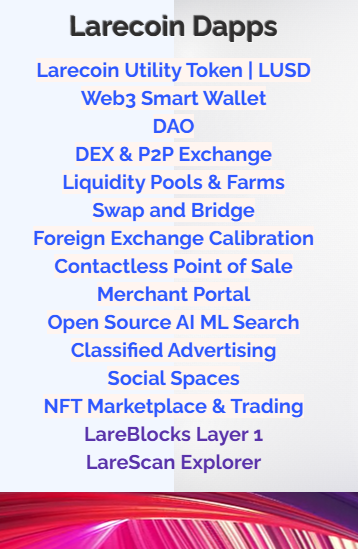
Larecoin's ecosystem supports:
Token-based rewards
NFT collectibles and exclusives
DAO-governed loyalty programs
Cross-merchant reward networks
This isn't gimmicky. It's proven engagement strategy adapted for Web3.
Your Action Checklist
Before launching VR/AR commerce, complete these steps:
Week 1:
Define your target demographic (V2V, V2P, P2V priorities)
Evaluate platform options (The Sandbox, specialized retail, custom build)
Audit current payment processor fees
Week 2:
Set up Larecoin master/sub-wallet architecture
Configure QR-generated crypto POS for all touchpoints
Verify MTL compliance requirements for your markets
Week 3:
Implement NFT receipt generation
Enable LUSD stablecoin acceptance
Test self-custody wallet integrations
Week 4:
Design social shopping elements
Build gamification reward structure
Launch pilot program with select customers
The Bottom Line
Metaverse commerce rewards merchants who build the right foundation.
Payment infrastructure isn't an afterthought. It's the backbone of your VR/AR strategy.
Legacy processors charge too much, move too slow, and weren't designed for this.
Larecoin was.
Gas-only transfers. NFT receipts. LUSD stability. Self-custody control. MTL compliance.
The tools exist. The infrastructure is ready.
Daniel Fainman, Fund Manager at Larecoin
Comments