

.png)
Self-Custody Merchant Accounts Matter: Why Web3 Global Payments Demand Financial Sovereignty
- [[[Free!!]<<<<]] Watch: 스포르팅 - 토트넘 Live Stream 13 September 2022
- 2 hours ago
- 4 min read
![Writer: [[[Free!!]<<<<]] Watch: 스포르팅 - 토트넘 Live Stream 13 September 2022](https://lh3.googleusercontent.com/a/AItbvmktwQc0wCdd3ZEETSYItRQubwwBzOyjD_dcigRf=s96-c)
Your money. Your rules.
That's the promise of Web3. Yet most crypto payment processors break it before you even start.
They hold your funds. They control your keys. They decide when you get paid.
Sound familiar? That's because it's the same old banking model wearing a blockchain costume.
Real financial sovereignty requires something different. Something radical.
Self-custody merchant accounts.
The Custodial Trap: Why Most Crypto Payment Solutions Fail Merchants
Here's the uncomfortable truth.
Platforms like NOWPayments and CoinPayments talk a big game about crypto freedom. But dig deeper. Your funds flow through their wallets first. You're still waiting for permission to access your own money.
That's not sovereignty. That's dependency with extra steps.
The risks stack up fast:
Counterparty exposure. If the platform gets hacked, your funds vanish.
Account freezes. One compliance flag and you're locked out.
Settlement delays. Your cash flow depends on someone else's schedule.
Geographic restrictions. Operating globally? Good luck navigating their compliance maze.
Traditional payment processors charge 2.5-3.5% in interchange fees. Custodial crypto processors? They often match or exceed those rates while adding withdrawal fees on top.
You traded one middleman for another.
What Self-Custody Actually Means for Merchants
Self-custody isn't just a buzzword. It's architecture.
When you maintain exclusive control over your private keys, no third party can freeze, restrict, or seize your assets. Period.
Payments hit your wallet directly. No intermediary wallet. No holding period. No permission required.
This creates three massive advantages:
1. Censorship Resistance
No single entity can block your ability to transact. Regulators cracking down on custodial services in your region? Doesn't affect you. Your self-custody wallet operates independently.
2. Zero Counterparty Risk
Platform insolvency? Hack? Regulatory seizure? None of it touches your funds. They're already in your possession the moment a transaction confirms.
3. Instant Liquidity
Your money is accessible immediately. Convert to stablecoins. Bridge to another chain. Push to card. Your choice, your timing.
This is what financial sovereignty looks like in practice.
Larecoin: Built From Day One for Self-Custody
Most payment processors bolt on "self-custody options" as an afterthought.
Larecoin built the entire ecosystem around it.
Every transaction routes directly to merchant wallets. No custodial layer. No intermediary holding your funds. Just clean, direct, peer-to-peer settlement.
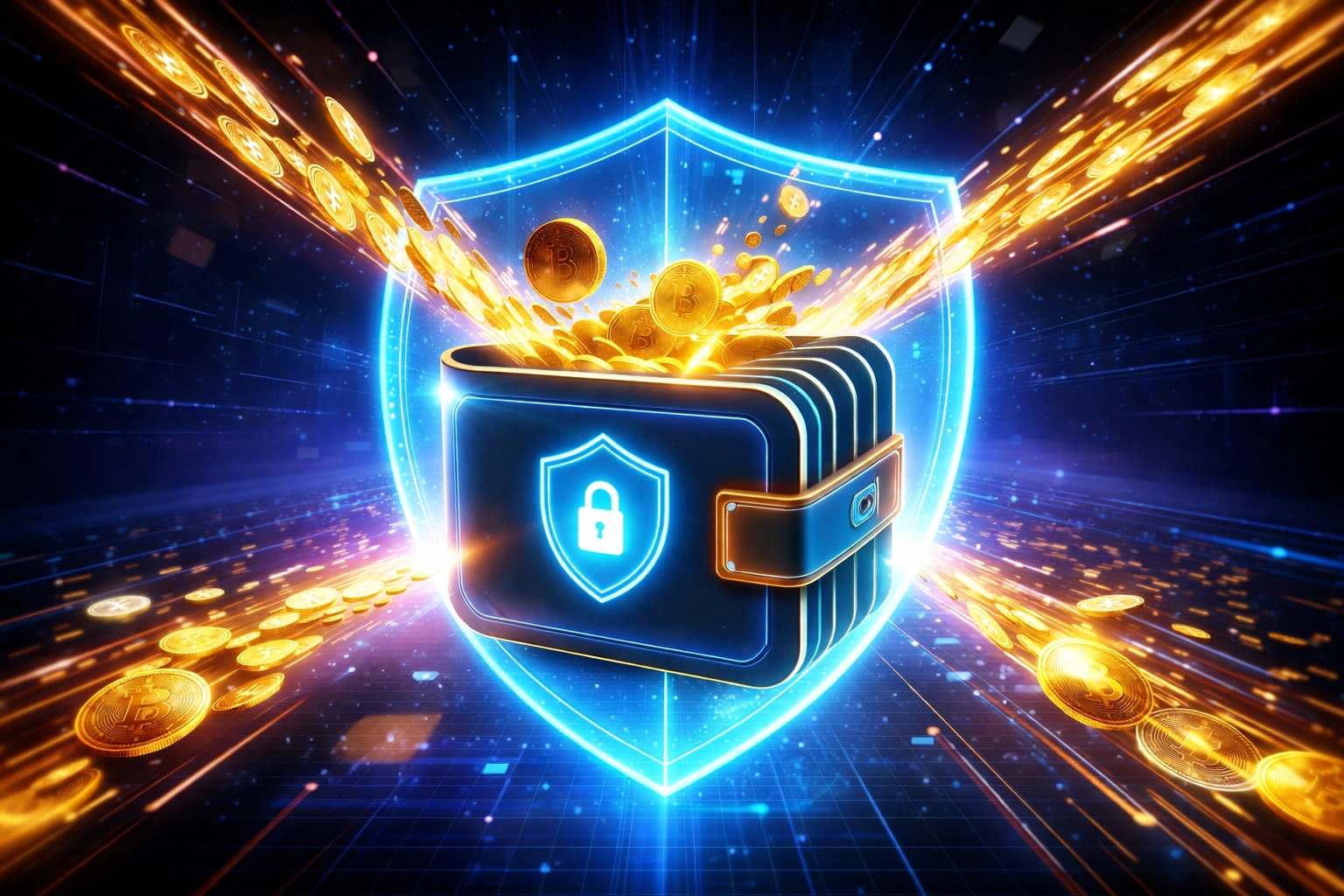
The technical architecture makes this possible:
Direct wallet integration. Your existing Solana wallet becomes your merchant account.
Multi-signature support. Enterprise-grade security without sacrificing custody.
Role-based access controls. Scale your team without handing over keys.
Real-time settlement. Funds available the moment blockchain confirmation hits.
Compare this to NOWPayments, where funds route through their infrastructure before reaching you. Or CoinPayments, where withdrawal minimums and processing times create artificial delays.
With Larecoin, you're not waiting on anyone.
Slash Interchange Fees by 50%+ (Yes, Really)
Here's where self-custody gets exciting for your bottom line.
Traditional merchant interchange fees eat 2.5-3.5% of every transaction. Credit card networks, issuing banks, payment processors: everyone takes a cut.
Custodial crypto processors? They've built similar fee structures. Platform fees. Network fees. Conversion fees. Withdrawal fees.
Larecoin's self-custody model eliminates most of these layers.
The result? Over 50% reduction in payment processing costs.
How it works:
No custodial platform fees
Gas-only transfers on Solana (fractions of a penny)
Direct stablecoin settlement (no conversion spreads)
Zero withdrawal fees (it's already your wallet)
For a merchant processing $100,000 monthly, that's potentially $1,500+ back in your pocket. Every month.
Multiply that across a year. Across multiple years. The savings compound into serious capital.
Want the full breakdown? Check out our complete guide to reducing merchant interchange fees by 50%.
NFT Receipts: More Than a Gimmick
Every Larecoin transaction generates an NFT receipt.
Sounds flashy. But the utility runs deep.
Immutable proof of purchase. On-chain records that can't be altered or disputed. Chargebacks become nearly impossible when transaction proof lives permanently on the blockchain.
Automated accounting. NFT receipts integrate with DeFi accounting tools. Transaction categorization, tax reporting, expense tracking: all streamlined.
Customer loyalty integration. NFT receipts can carry embedded rewards, membership status, or exclusive access rights. Turn every purchase into a relationship touchpoint.
Warranty and return management. Product warranties tied to NFT receipts. Ownership verification happens automatically. Returns process faster.
Traditional receipt systems cost money to maintain. NFT receipts cost fractions of a penny to mint and store themselves on-chain permanently.
That's infrastructure that pays for itself.
LUSD Stablecoin: Stability Meets Sovereignty
Crypto volatility scares merchants. Understandably.
Accept payment in ETH. Price drops 15% before you convert. You just gave a massive discount you didn't intend.
LUSD solves this.
Larecoin's stablecoin maintains dollar parity while preserving self-custody principles. Customers pay in crypto. You receive stable value. No volatility exposure.
Key advantages:
Dollar-pegged stability. Predictable value for accounting and pricing.
Self-custody compatible. Lives in your wallet, not a custodial platform.
Instant conversion. Swap from any supported crypto at transaction time.
Cross-chain mobility. Bridge to other networks as needed.
Compare this to competitors forcing you into their proprietary tokens or requiring third-party conversion services. LUSD keeps everything within your control.
Larecoin vs. The Competition: A Clear Choice
Let's get specific.
NOWPayments:
Custodial model requires funds to route through their wallets
Withdrawal minimums create artificial holding periods
Platform fees add up across transaction volume
Limited stablecoin settlement options
Our detailed comparison shows exactly how Larecoin outperforms NOWPayments on every metric that matters.
CoinPayments:
Hybrid custodial model still involves intermediary control
Complex fee structures obscure true costs
Settlement delays impact cash flow
Self-custody options limited and poorly integrated
See the full CoinPayments vs. Larecoin breakdown for specifics.
Larecoin:
True self-custody from transaction one
50%+ interchange fee reduction
NFT receipts included automatically
LUSD stablecoin settlement standard
Gas-only transfer costs
Push-to-card functionality
The architecture difference isn't subtle. It's fundamental.
The Future Demands Financial Sovereignty
Web3 global payments aren't slowing down.
Cross-border commerce grows daily. Regulatory environments shift constantly. Economic uncertainties multiply.
In this landscape, dependence on custodial intermediaries is a liability.
Self-custody merchant accounts transform liability into strength. Your funds remain accessible regardless of platform changes, regulatory shifts, or market conditions.
You maintain control. Always.
That's not just philosophy. It's operational resilience.
Merchants building for the next decade need infrastructure that scales without adding counterparty risk. Self-custody delivers exactly that.
Start Your Self-Custody Journey
The transition is simpler than you think.
Larecoin integrates with existing Solana wallets. Setup takes minutes, not weeks. No complex onboarding. No custodial agreements. No permission required.
Just connect and start accepting Web3 payments with true financial sovereignty.
Explore how receivables tokens unlock real merchant freedom or dive into our complete ecosystem overview.
Your money. Your keys. Your future.
That's the Larecoin difference.
Comments