

.png)
5 Steps How to Reduce Merchant Interchange Fees by 50% and Accept Web3 Global Payments (Easy Guide for Merchants)
- [[[Free!!]<<<<]] Watch: 스포르팅 - 토트넘 Live Stream 13 September 2022
- 7 days ago
- 4 min read
![Writer: [[[Free!!]<<<<]] Watch: 스포르팅 - 토트넘 Live Stream 13 September 2022](https://lh3.googleusercontent.com/a/AItbvmktwQc0wCdd3ZEETSYItRQubwwBzOyjD_dcigRf=s96-c)
Let's be real.
Interchange fees are killing your margins. Every swipe. Every tap. Every transaction. You're bleeding 2-4% straight to card networks and processors.
That's thousands of dollars annually. Vanishing into thin air.
But here's the thing. It's 2026. You don't have to play by their rules anymore.
Web3 global payments have changed the game. Completely.
This guide breaks down exactly how to reduce merchant interchange fees by 50% while tapping into a borderless customer base. No complex jargon. No fluff. Just actionable steps.
Let's dive in.
Why Traditional Payment Processing Is Bleeding You Dry
Before we fix the problem, let's understand it.
The traditional payment stack:
Card networks (Visa, Mastercard) charge interchange fees
Payment processors add their markup
Gateway providers take their cut
Chargebacks eat into revenue
Average cost? 2.5-3.5% per transaction.
For a business doing $500K annually, that's $12,500-$17,500 in fees. Gone.
And premium cards? Even worse. Rewards cards, corporate cards, international cards: they all carry inflated rates.
The system wasn't built for merchants. It was built for banks.
Time to opt out.
Step 1: Audit Your Current Payment Processing Costs
You can't fix what you don't measure.
Action items:
Pull 3-6 months of processing statements
Calculate your effective rate (total fees ÷ total volume)
Identify which card types cost you most
Track chargeback rates and fees
Most merchants are shocked when they see the real numbers.
Red flags to watch:
Effective rates above 2.8%
Hidden batch fees
PCI compliance charges
Statement fees disguised as "service charges"
Once you have clarity, you can negotiate. Or better yet: bypass the system entirely.
Step 2: Implement a Web3 Payment Gateway
This is where things get interesting.
Web3 payments eliminate the middlemen. No card networks. No interchange. No gatekeepers.
How it works:
Customers pay with cryptocurrency or stablecoins
Transactions settle on blockchain
You receive funds directly to your wallet
Fees drop to 0.5-1% or less
That's a 50-70% reduction in processing costs. Instantly.
Choosing the Right Solution
Not all crypto payment processors are created equal.
NOWPayments offers basic integration but limited merchant tools. CoinPayments has been around forever but feels dated. Triple-A targets enterprise but lacks flexibility for SMBs.
Then there's Larecoin.
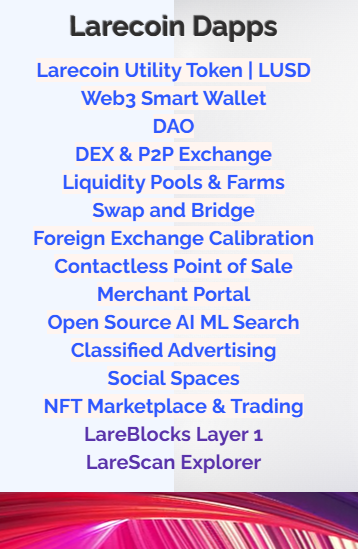
Built specifically for merchants who want more than just payment processing. We're talking full financial sovereignty.
What sets Larecoin apart:
Self-custody merchant accounts (your keys, your funds)
Receivable tokens that unlock working capital
LUSD stablecoin integration for price stability
NFT receipts for bulletproof accounting
Crypto POS system for small business integration
It's not just a payment processor. It's an entire ecosystem.
Step 3: Set Up Self-Custody Merchant Accounts
Here's where traditional processors really fail you.
With legacy systems, your money sits in their accounts. They control the release schedule. They can freeze funds. They dictate terms.
Self-custody changes everything.
With Larecoin's self-custody merchant accounts:
Funds go directly to your wallet
No 3-7 day settlement delays
No reserve requirements holding your cash hostage
Complete control over your treasury
This isn't just about fees. It's about financial sovereignty.
You're running a business. You should own your receivables.
The Receivable Token Advantage
Larecoin's receivable token feature is a game-changer for cash flow.
Traditional model: Wait for settlement. Hope nothing gets held. Cross fingers.
Web3 model: Tokenize receivables. Access liquidity immediately. Use tokens as collateral if needed.
For merchants struggling with cash flow timing, this is massive. Your revenue becomes an asset you can actually use: not a promise sitting in someone else's account.
Step 4: Leverage LUSD Stablecoin for Price Stability
"But crypto is volatile!"
Fair concern. Here's the solution.
LUSD stablecoin benefits:
Pegged to USD (no price swings)
Instant settlement
Near-zero transaction fees
Global acceptance
Customers pay in their preferred crypto. You receive LUSD. Stable. Predictable. Done.
No more worrying about Bitcoin dropping 10% before you convert. The stability is baked in.
Pro tip: Offer customers a small discount (1-2%) for paying in LUSD. You're still saving 50%+ on interchange. They get a deal. Everyone wins.
Going Global Without the Headaches
Traditional international payments are a nightmare.
Currency conversion fees. Wire transfer charges. 3-5 day settlement times. Compliance paperwork.
LUSD and Web3 payments? Borderless by default.
A customer in Tokyo pays the same as a customer in Toronto. Same fees. Same speed. Same simplicity.
For merchants looking to expand globally, this removes massive friction.

Step 5: Implement NFT Receipts for Bulletproof Accounting
This one's underrated. But it's about to become industry standard.
NFT receipts for accounting provide:
Immutable transaction records on blockchain
Automatic timestamping
Zero chance of lost documentation
Simplified audit trails
Every transaction generates a unique NFT receipt. Stored permanently. Verifiable forever.
For tax season? Game-changer.
For disputes? Undeniable proof.
For compliance? Automatic documentation.
Your accountant will thank you. Your auditor will be impressed. Your stress levels will drop.
Integration Is Simpler Than You Think
Most merchants assume Web3 integration requires a complete tech overhaul.
Wrong.
Larecoin's crypto POS system for small business plugs into existing setups. Online stores. Physical retail. Service businesses.
Integration options:
API for custom e-commerce
Plugin for major platforms (WooCommerce, Shopify)
Mobile POS for in-person transactions
Invoice generation for B2B
No need to replace your entire stack. Add Web3 as an option alongside traditional payments. Let customers choose.
Over time, you'll see which payment method actually performs better. (Spoiler: it's not the one charging 3%.)
The Bottom Line: Your 50% Savings Breakdown
Let's run the numbers on a $500K annual revenue business.
Traditional processing (2.75% average):
Annual fees: $13,750
Web3 payments via Larecoin (0.75% average):
Annual fees: $3,750
Annual savings: $10,000
That's a 72% reduction. Not 50%. Even better.
And that's before considering:
Eliminated chargeback fees
Faster settlement improving cash flow
Global reach expanding customer base
Self-custody reducing risk
The math is undeniable.

Ready to Stop Losing Money on Every Transaction?
Interchange fees are a tax on doing business. But it's a tax you can opt out of.
Web3 global payments aren't the future. They're the present. Smart merchants are already making the switch.
Your next steps:
Audit your current processing costs
Explore Larecoin's merchant solutions
Set up a self-custody wallet
Start accepting stablecoin payments
Watch your margins improve
The tools exist. The infrastructure is ready. The only question is whether you'll keep paying 3% or start keeping that money for yourself.
Your competitors are already figuring this out.
Don't get left behind.
Comments