

.png)
7 Mistakes You're Making with Crypto Merchant Accounts (And How Self-Custody Fixes Them)
- [[[Free!!]<<<<]] Watch: 스포르팅 - 토트넘 Live Stream 13 September 2022
- 2 hours ago
- 4 min read
![Writer: [[[Free!!]<<<<]] Watch: 스포르팅 - 토트넘 Live Stream 13 September 2022](https://lh3.googleusercontent.com/a/AItbvmktwQc0wCdd3ZEETSYItRQubwwBzOyjD_dcigRf=s96-c)
You switched to crypto payments to escape banks. Instead, you got banks with blockchain stickers.
NOWPayments, CoinPayments, and similar platforms promised freedom. They delivered the same old control system: approval processes, frozen funds, arbitrary rules. Just centralized gatekeepers wearing decentralized masks.
Self-custody merchant accounts flip this model. Your keys. Your coins. Your business rules.
Here are the seven critical mistakes merchants make with traditional crypto payment processors: and how self-custody fixes every single one.
1. Letting Someone Else Hold Your Money
Custodial processors act like banks. They hold your funds. Control access. Freeze accounts without warning.
You escaped traditional payment rails for this?
When NOWPayments or CoinPayments holds your crypto, you're trusting them to eventually release it. Account reviews. Compliance checks. "Security concerns." All excuses to delay YOUR money.
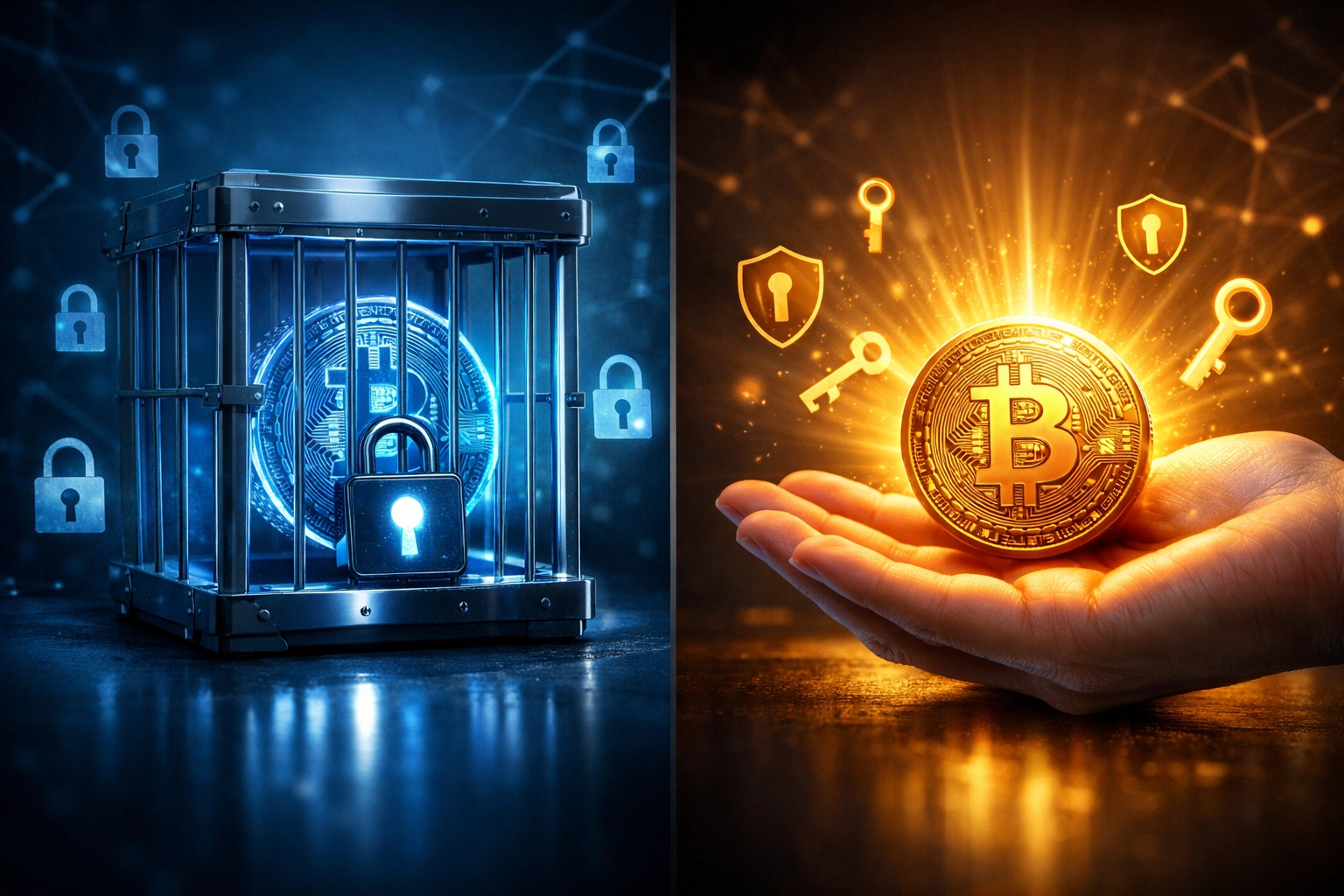
The Self-Custody Fix: Direct wallet control eliminates intermediaries completely. Payments land in your wallet instantly. No permission needed. No waiting for approval to access funds you already earned.
With Larecoin's merchant infrastructure, every transaction settles directly to your self-custody wallet. The payment gateway never touches your funds. Zero custody risk. Complete ownership.
2. Paying Excessive Processing Fees
Traditional processors charge 0.5% to 1% per transaction. Plus withdrawal fees. Plus currency conversion fees. Plus "service" fees nobody asked for.
Those percentages add up fast. A $100,000 monthly revenue stream loses $500 to $1,000 just in processing costs. That's $6,000 to $12,000 annually: money that should be yours.
The Self-Custody Fix: Remove the middleman. Remove most fees.
Gas fees still exist: that's blockchain reality. But you're not paying corporate profit margins on every transaction. Larecoin's payment infrastructure operates on gas-only transfers, cutting processing costs to the bare minimum required by network validators.
Accept payments in LUSD, Larecoin's stablecoin, and transactions become even cheaper. No conversion fees. No volatility risk. Just straightforward, low-cost transfers.
3. Jumping Through Approval Hoops Just to Get Started
Want to accept crypto with CoinPayments? First, submit your business documentation. Then pass KYC verification. Wait for merchant agreement review. Complete credit checks. Hope they approve your industry.
It's the banking application process all over again. Except banks move faster.
You're applying for permission to accept decentralized currency. The irony is painful.
The Self-Custody Fix: No approval needed. Ever.
Self-custody merchant solutions don't require permission. Set up your wallet. Generate a payment address. Start accepting crypto. The entire process takes minutes, not weeks.
Larecoin's merchant portal eliminates gatekeepers completely. Create your account. Configure your payment preferences. Begin accepting LARE, LUSD, and other cryptocurrencies immediately. Zero approval delays.
4. Getting Rejected for Being "High-Risk"
Payment processors love playing morality police. Adult content? Rejected. CBD products? Too risky. Political organizations? Not a chance. Gambling? Forget it.
These platforms replicate traditional payment discrimination. Same arbitrary rules. Same industry blacklists. Just rebranded for crypto.
Your business might be completely legal. Doesn't matter. If processors decide your industry is "high-risk," you're denied service.
The Self-Custody Fix: No risk assessments. No industry discrimination.
Self-custody accounts don't judge your business model. Crypto doesn't care about arbitrary risk categories. If you're operating legally, you can accept payments.
Larecoin's decentralized infrastructure treats all merchants equally. CBD retailer? Welcome. Adult content creator? No problem. Political campaign? Absolutely. The network doesn't discriminate based on industry: it simply processes transactions.
5. Paying Extra for Multiple Locations
Traditional point-of-sale systems charge per-location fees. One store costs $X monthly. Five stores cost $5X. Expanding internationally? Prepare for regional surcharges.
Scaling your business becomes financially punishing. The more successful you are, the more you pay in licensing fees.
The Self-Custody Fix: Unlimited locations. Same cost.
Self-custody wallets don't charge by location. Your wallet address works everywhere. Whether you operate one store or one hundred, costs remain constant.
Larecoin's contactless POS system scales infinitely without per-location penalties. Deploy payment terminals across every location. Each one connects to your single self-custody wallet. No additional licensing fees. No geographic restrictions. Just seamless payments everywhere you operate.
6. Losing Profits to Cross-Border Fees
International sales kill margins with traditional processors. Currency conversion fees eat 3-5%. International transaction surcharges add another 2-3%. Regional payment method fees pile on more.
By the time a foreign customer's payment clears, you've lost 5-10% to fees. Global expansion becomes economically questionable.
The Self-Custody Fix: Borderless payments. Minimal fees.
Cryptocurrency doesn't recognize borders. A payment from Tokyo costs the same as one from Toronto. No conversion fees. No international surcharges. Just straightforward blockchain transactions.
Larecoin's LUSD stablecoin makes cross-border commerce even simpler. Customers worldwide pay in a stable asset. You receive predictable value without forex volatility. No conversion necessary. No hidden fees destroying your margins.
Check out our comprehensive guide to Web3 global payments for deeper insights on eliminating cross-border transaction costs.
7. Dealing with Chargebacks and Dispute Nightmares
Chargebacks destroy profits faster than any other payment issue. Customer disputes transaction. Payment processor freezes funds. You scramble to prove the sale was legitimate. Meanwhile, the money sits in limbo.
Even when you win disputes, the process wastes hours compiling evidence and managing documentation. And you still pay dispute fees.
The Self-Custody Fix: Immutable transactions. Cryptographic proof.
Blockchain transactions can't be reversed. Once settled, they're permanent. No chargeback mechanism exists.
This sounds scary initially. What about legitimate refunds? You control those. Choose to issue refunds when appropriate. But fraudulent chargebacks? Impossible.
Larecoin's NFT receipt system provides additional proof for every transaction. Each payment generates an on-chain receipt as an NFT. Immutable timestamp. Undeniable proof of purchase. Dispute evidence that can't be challenged.
Customers receive verifiable receipts. You get fraud protection. Everyone benefits from transparent, tamper-proof transaction records.
Making the Switch to Self-Custody
Traditional crypto processors aren't the enemy. They're just outdated. Built on centralized thinking. Designed to replicate systems we're trying to escape.
Self-custody merchant accounts represent true crypto adoption. Direct peer-to-peer transactions. Eliminated intermediaries. Complete financial autonomy.
The technology exists now. Larecoin's merchant infrastructure proves self-custody payments work at scale. No compromises. No custody risks. No excessive fees.
Your business. Your payments. Your control.
Ready to stop making these seven mistakes? Explore Larecoin's merchant solutions and experience what crypto payments were meant to be.
The future of merchant payments isn't about trusting better intermediaries. It's about eliminating intermediaries entirely.
That future is here. Time to custody your own success.
Comments