

.png)
Are Brick-and-Mortar Stores Dead? How VR/AR Shopping in the Larecoin Metaverse Creates a B2B2C Revolution
- [[[Free!!]<<<<]] Watch: 스포르팅 - 토트넘 Live Stream 13 September 2022
- 2 hours ago
- 4 min read
![Writer: [[[Free!!]<<<<]] Watch: 스포르팅 - 토트넘 Live Stream 13 September 2022](https://lh3.googleusercontent.com/a/AItbvmktwQc0wCdd3ZEETSYItRQubwwBzOyjD_dcigRf=s96-c)
The "Death of Retail" Myth Just Got Shattered
Physical stores sold $5.93 trillion in the U.S. alone in 2024.
Globally? $24.2 trillion.
That's a 3.63% year-over-year increase.
And by 2030, in-store sales will exceed $28 trillion worldwide.
Here's the truth: Brick-and-mortar isn't dying. It's evolving.
But there's a massive gap in the current omnichannel strategy. Most retailers are just bolting e-commerce onto physical locations. They're not reimagining the shopping experience.
Enter the Larecoin Metaverse.
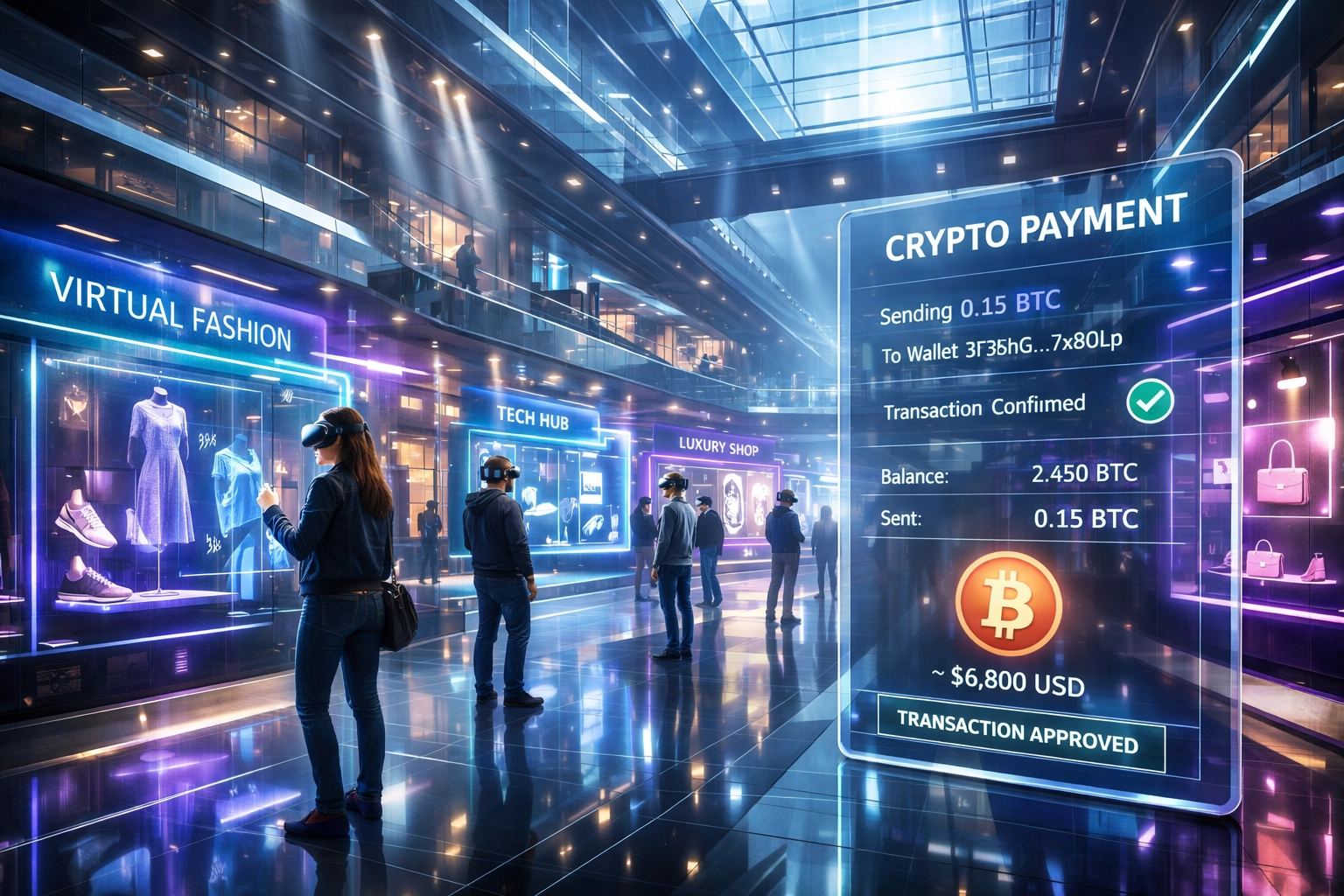
Physical Retail is Thriving: But Missing the Web3 Revolution
U.S. retailers opened 851 net new brick-and-mortar locations in 2024. That's 19.2% more openings than 2023.
For 2026, Coresight Research is tracking 1,118 planned store openings versus only 566 closures.
T.J.Maxx, Burlington, Ross. Grocery chains. Discount retailers. They're all expanding.
Why?
Because consumers still want physical experiences. They want to touch products. See colors in real light. Try before they buy.
But they also want convenience. Personalization. Social interaction. Digital integration.
Current omnichannel fails to bridge this gap.
You shop online OR you shop in-store. Sometimes you pick up online orders at the store.
That's not revolutionary. That's logistics.
The B2B2C Model: Where Larecoin Changes Everything
Here's where most payment processors fail merchants:
High interchange fees (2-3% per transaction)
No social shopping features
Zero metaverse integration
Limited customer engagement tools
NOWPayments? They process crypto. But there's no immersive shopping experience.
CoinPayments? Same story. Checkout integration, nothing more.
Triple-A? Focused on payment rails, not customer experience.
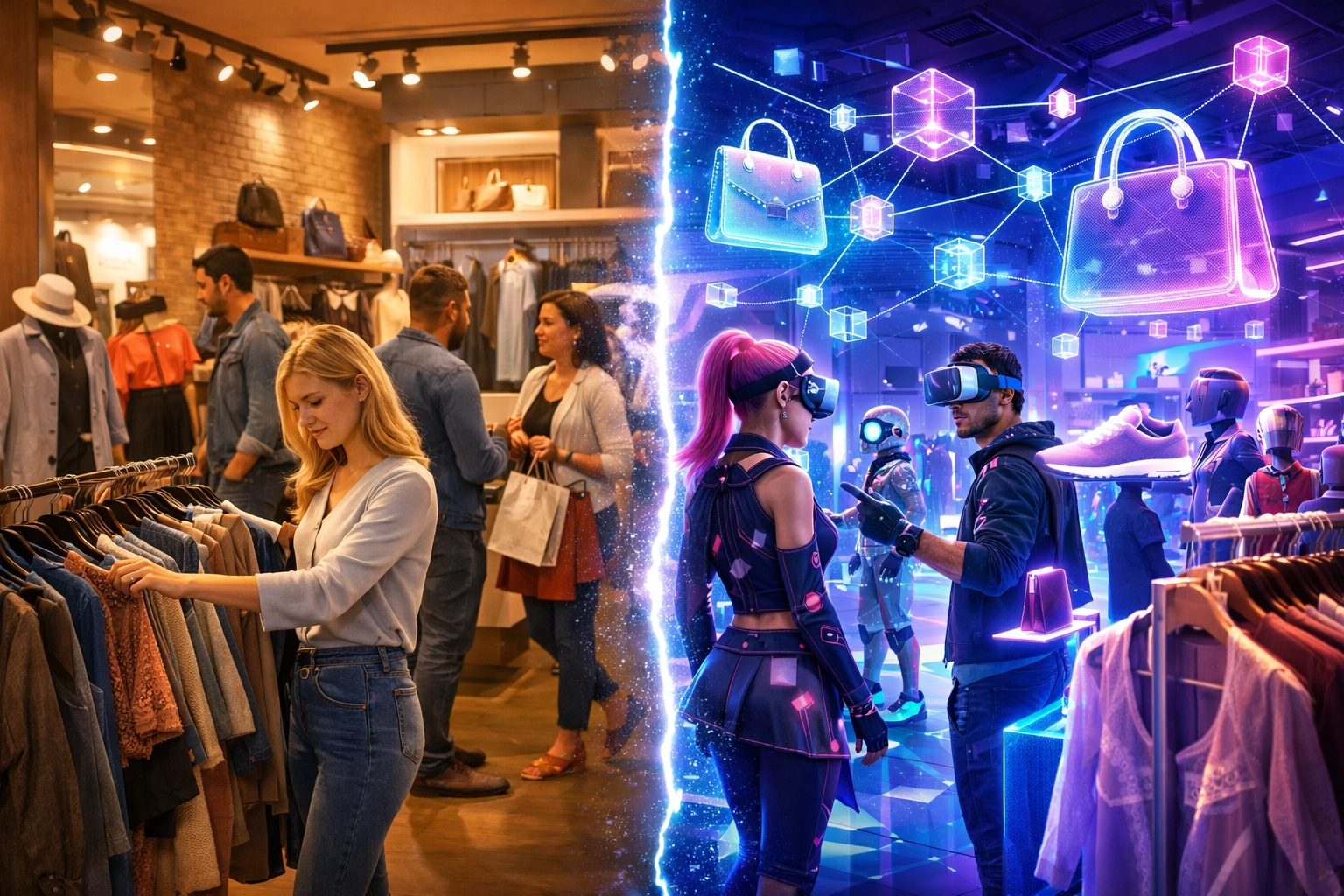
Larecoin takes a different approach.
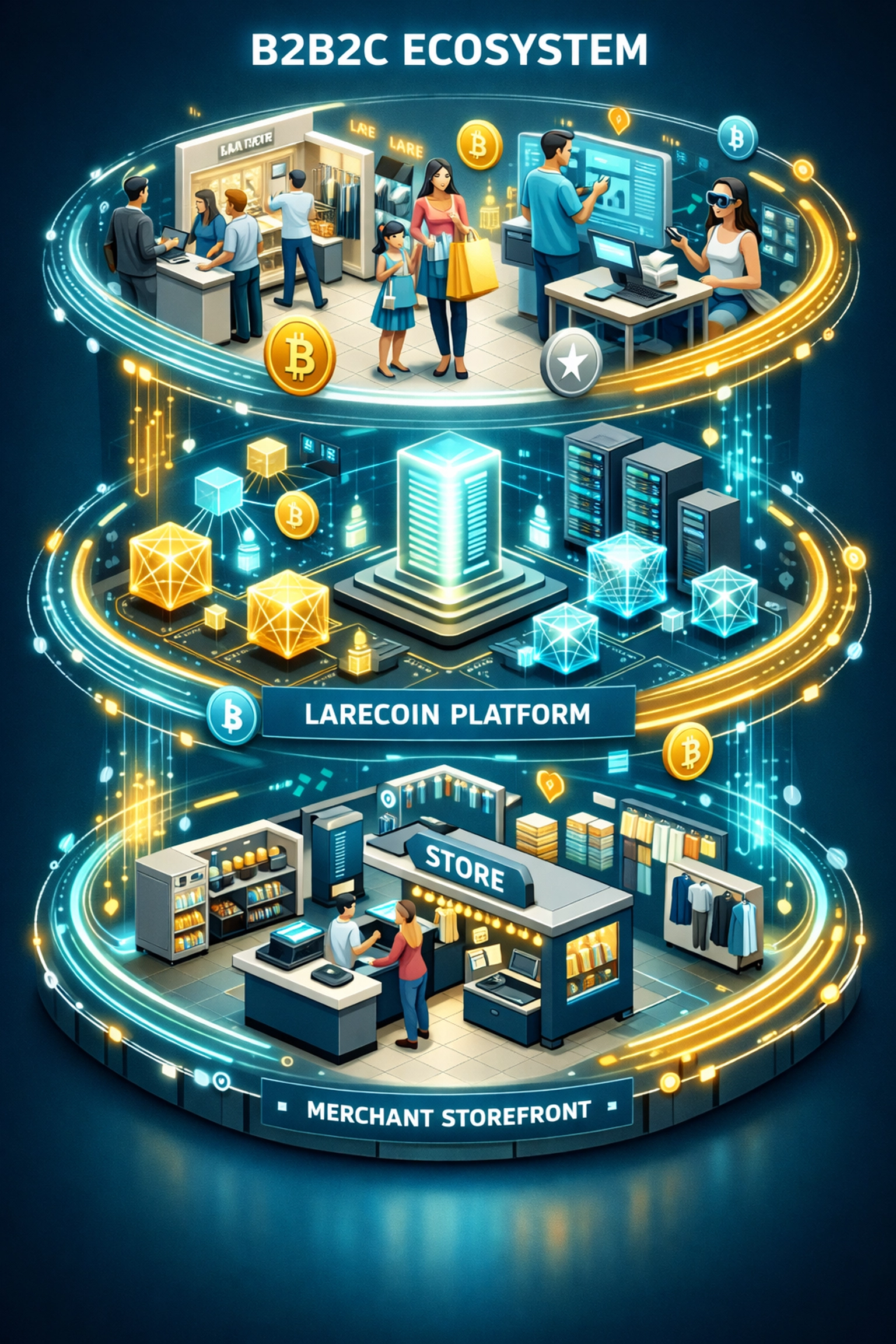
B2B2C means:
Business (Merchant) partners with
Business (Larecoin ecosystem) to serve
Consumer (Shoppers in VR/AR environments)
Merchants get cutting-edge payment infrastructure. Consumers get immersive shopping experiences. Everyone wins.
How VR/AR Shopping in the Larecoin Metaverse Actually Works
Picture this:
You're sitting at home. You put on your VR headset or launch AR mode on your phone.
You enter a virtual shopping mall built on the Larecoin blockchain.
Your favorite clothing store has a virtual storefront. Full inventory. 3D product models you can rotate, zoom, and inspect from every angle.
You grab items. Try on virtual versions using AR body mapping.
Your friend: who lives 3,000 miles away: joins your shopping session. You browse together. She gives fashion advice in real-time.
You checkout with LUSD (Larecoin's stablecoin). No price volatility. No surprise fees.
Transaction cost? Gas-only. That's typically under $0.50.
Compare that to:
Credit cards: 2.9% + $0.30 = $3.20 on a $100 purchase
Traditional crypto processors: 1% = $1.00 on a $100 purchase
Larecoin: Gas-only = $0.40 on a $100 purchase
You instantly receive an NFT receipt. Proof of purchase. Stored in your self-custody wallet forever.
The merchant ships your physical product to your door. Or you pick it up at their brick-and-mortar location.
That's the future. That's B2B2C.
The Technical Edge: Why Merchants Choose Larecoin Over Competitors
NFT Receipts = Permanent Proof + Customer Engagement
Every Larecoin transaction generates an NFT receipt.
This isn't just a digital record. It's a programmable asset.
Merchants can:
Airdrop exclusive offers to NFT receipt holders
Create loyalty programs based on purchase history
Enable resale markets for limited edition items
Verify authenticity for warranty claims
NOWPayments doesn't offer this. Neither does CoinPayments. Triple-A? Not even close.
LUSD Stablecoin = Price Stability Without Middlemen
Merchants hate crypto volatility. Consumers do too.
LUSD solves this. It's pegged to the U.S. dollar. But it's fully decentralized.
No Circle. No Tether. No regulatory risk from centralized stablecoin issuers.
Plus, LUSD lives natively in the Larecoin ecosystem. No bridging fees. No wrapped tokens. No complexity.
Gas-Only Transfers = Fee Savings Over 50%
Merchants already know this truth: Interchange fees are killing margins.
Credit cards charge 2-3%. That's highway robbery.
Larecoin charges gas only. On most transactions, that's $0.30-$0.50.
On a $100 sale:
Visa/Mastercard: $2.90-$3.00 fee
Larecoin: $0.40 fee
That's an 87% reduction.
Scale that across thousands of transactions. Millions in savings.
Self-Custody = True Ownership
When you use traditional processors, your funds sit in their accounts. You wait for payouts. They control your money.
Larecoin merchants use self-custody wallets. You control your private keys. Your funds arrive instantly.
No holds. No freezes. No "account under review" nightmares.
Master wallets for business operations. Sub-wallets for different departments or locations. Full transparency on LareScan.
Social Shopping: The Missing Link in E-Commerce
E-commerce is lonely.
You browse alone. Add to cart alone. Checkout alone.
Physical stores offer social experiences. You shop with friends. Get feedback. Make memories.
Larecoin's metaverse brings social back to online shopping.
Features:
Multi-user shopping sessions
Voice and text chat
Virtual fitting rooms with friends
Shared wishlists and gift registries
Community events and product launches
Influencer-hosted shopping tours
Imagine a sneaker brand launching a limited edition in the metaverse. Hundreds of fans gather in a virtual space. The designer hosts a live Q&A. You buy your pair with LUSD. Receive an NFT receipt that doubles as VIP access to future drops.
That's not science fiction. That's the Larecoin roadmap.
Compliance + Trust: Why Larecoin Wins on Security
Crypto payments scare some merchants. Why?
Regulatory uncertainty. Scam risk. Lack of consumer protection.
Larecoin addresses this head-on.
Federal MSB Registration: Larecoin operates as a registered Money Services Business with FinCEN. Full compliance with federal anti-money laundering regulations.
State-Level MTL Coverage: Money Transmitter Licenses across the U.S. where required. Larecoin meets state-by-state regulatory requirements.
This matters for enterprise merchants. Banks want to see compliance. Auditors want documentation. Larecoin provides both.
Compare that to many crypto payment processors operating in regulatory gray zones. When enforcement comes, merchants get caught in the crossfire.
Not with Larecoin.
The B2B2C Revolution Starts Now
Brick-and-mortar stores aren't dead. They're about to get superpowers.
With Larecoin's VR/AR shopping metaverse, merchants can:
Extend their physical stores into virtual spaces
Reduce payment processing fees by over 50%
Engage customers with NFT receipts and loyalty programs
Accept LUSD for stable, predictable revenue
Own their payment infrastructure with self-custody wallets
Consumers get:
Immersive shopping experiences from anywhere
Social shopping with friends across distances
Lower prices (merchants pass savings along)
Permanent purchase records via NFT receipts
True ownership of digital assets
This is the B2B2C revolution.
Merchants partner with Larecoin. Consumers get the future of shopping. Everyone wins.
Explore the full Larecoin ecosystem and see how your business can join the metaverse revolution.
The question isn't whether brick-and-mortar stores will survive.
The question is: Will YOUR store evolve fast enough to compete?
Comments