

.png)
Are Custodial Payment Processors Bad? Why Self-Custody Merchant Accounts Are the Future of Web3 Global Payments
- [[[Free!!]<<<<]] Watch: 스포르팅 - 토트넘 Live Stream 13 September 2022
- 2 hours ago
- 5 min read
![Writer: [[[Free!!]<<<<]] Watch: 스포르팅 - 토트넘 Live Stream 13 September 2022](https://lh3.googleusercontent.com/a/AItbvmktwQc0wCdd3ZEETSYItRQubwwBzOyjD_dcigRf=s96-c)
Let's cut through the noise.
Custodial payment processors aren't inherently evil. But they're definitely holding your business back.
Here's the deal: every time you accept crypto through platforms like NOWPayments, CoinPayments, or Triple-A, you're trusting a third party with your funds. They hold your keys. They control your money. They decide when you can access it.
Sound familiar? That's because it's literally the same model traditional banks use.
And we're supposed to believe this is innovation?
The Custodial Problem Nobody Talks About
Custodial processors create dependencies that kill the entire purpose of Web3 global payments.
The real risks:
Frozen funds – Your payment processor decides you're "high risk." Boom. Funds locked.
Counterparty bankruptcy – Remember FTX? That could be your payment gateway.
Service fees stacking up – 0.1-0.5% transaction fees, withdrawal charges, currency conversion costs.
Zero transparency – You don't control the keys. You don't own the assets. Period.
Settlement delays – Why wait 2-5 business days when blockchain settles in seconds?
NOWPayments and CoinPayments charge merchants hefty fees to hold their crypto. Then they charge again to withdraw it. Then conversion fees. Then network fees.
It's the interchange fee model dressed up in blockchain clothing.

What Self-Custody Merchant Accounts Actually Mean
Self-custody isn't complicated.
You control your private keys. Your funds hit your wallet directly. No intermediary. No permission needed. No waiting.
For merchants, this translates to:
Instant settlement to your own wallet
No third-party holding your revenue hostage
Complete financial sovereignty
Zero custody fees or withdrawal restrictions
Bank-free business operations
Think about it. Why did we build blockchain? To eliminate middlemen. To create trustless systems. To give individuals control over their own assets.
Custodial crypto processors are the antithesis of that vision.
Why Self-Custody Is the Future (Not Just a Preference)
The shift to self-custody merchant accounts isn't about ideology. It's about economics and survival.
Traditional interchange fees destroy profit margins. Credit cards charge 2-3%. PayPal takes 3.49% plus fees. Custodial crypto processors? Still 0.5-2% depending on volume.
Web3 global payments slash that to gas fees only.
Larecoin takes it further. Self-custody merchant accounts mean you pay blockchain network fees. That's it. No processing fees. No settlement fees. No custody fees.
Let's do the math:
$100,000 monthly revenue via CoinPayments at 0.5% = $500/month in fees
Same revenue via self-custody on Larecoin = ~$50 in gas fees
That's a 90% reduction in payment processing costs.
For small businesses operating on thin margins, that's the difference between profitability and bankruptcy.

How Larecoin Enables True Self-Custody
Larecoin built the infrastructure that makes self-custody merchant accounts practical for everyday businesses.
The technical stack:
1. Receivables Token Technology
Your invoices become tradeable tokens. Instant liquidity. No waiting for customer payments. Sell your receivables on secondary markets if you need immediate cash flow.
2. LUSD Stablecoin Integration
Accept crypto. Settle in LUSD. Avoid volatility without trusting a custodian. Your self-custody wallet holds stable value automatically.
3. NFT Receipts for Accounting
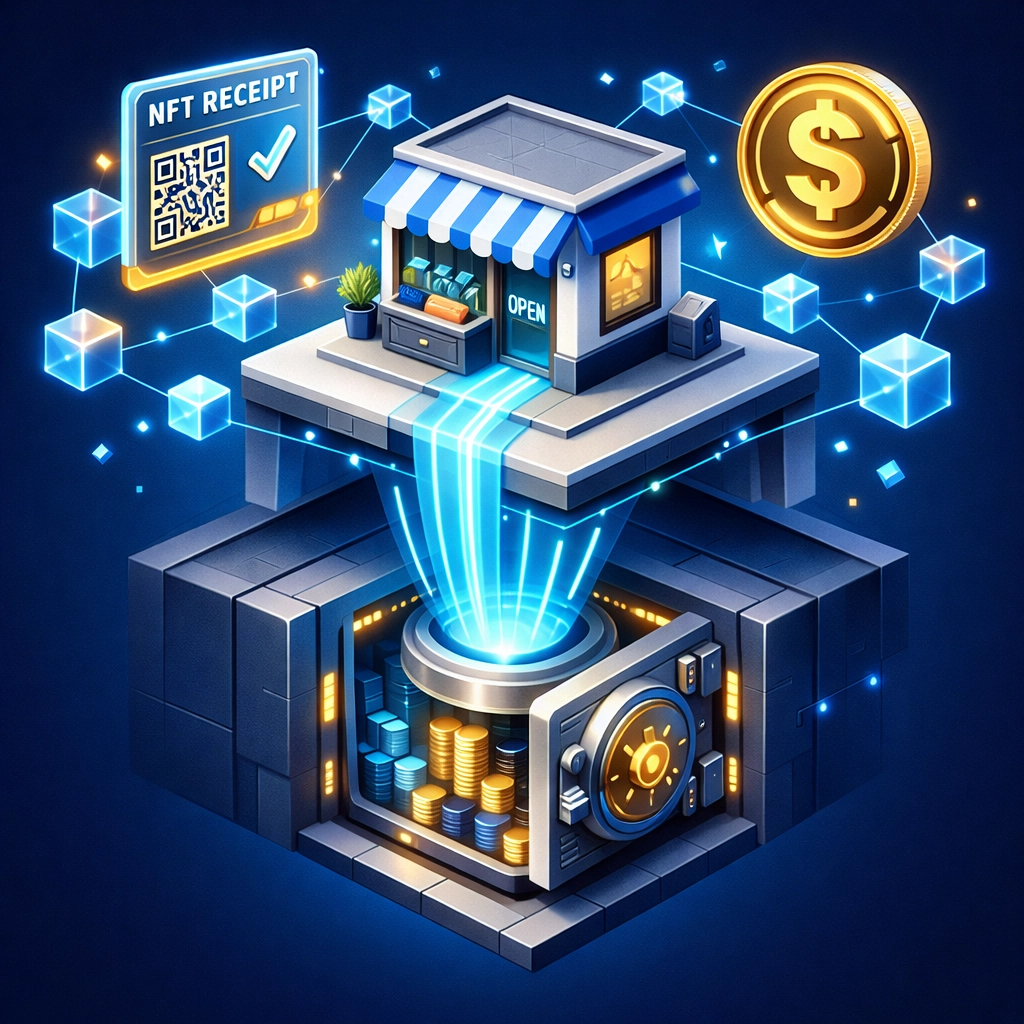
Every transaction generates an immutable NFT receipt. Tax time becomes trivial. Audits become transparent. All without surrendering custody to a processor.
4. Lareblocks Layer 1
Our proprietary blockchain cuts transaction costs by 50%+ compared to Ethereum. Fast finality. Low gas fees. Built specifically for merchant use cases.
5. Contactless POS Integration
Accept crypto in-store with the same ease as credit cards. Funds hit your self-custody wallet instantly. No batching. No delays.
Check out our merchant portal to see how small businesses are implementing self-custody today.
The NOWPayments vs CoinPayments vs Larecoin Reality
Let's compare what you're actually getting.
NOWPayments:
Custodial model (they hold your keys)
0.5% processing fee minimum
50+ crypto supported (good)
KYC required for larger volumes
2-5 business day withdrawals
CoinPayments:
Custodial wallet system
0.5% transaction fee
Withdrawal fees per currency
Settlement delays
Decent API but closed ecosystem
Triple-A:
Fully custodial
1%+ processing fees
Requires business verification
Limited crypto options
Fiat conversion adds complexity
Larecoin:
Self-custody (you control keys)
Gas fees only (0.05-0.1% effective cost)
LUSD stablecoin eliminates volatility risk
Instant settlement
NFT receipts for seamless accounting
Receivables token for liquidity
The choice is obvious if you care about margins.
The Global Payments Advantage
Self-custody merchant accounts unlock truly global operations.
No more:
Cross-border wire fees
Currency conversion losses
International payment processor restrictions
Regional banking limitations
Your customers pay from anywhere. You receive in your self-custody wallet anywhere. Blockchain handles the settlement. No banks involved.
For e-commerce businesses selling globally, this is transformative. Accept payments from 195 countries without opening 195 bank accounts.
Security Without Custody Trade-offs
The biggest objection to self-custody is usually security.
"What if I lose my keys?"
Valid concern. Here's how modern self-custody solves it:
Multi-signature wallets – Require 2-of-3 or 3-of-5 signatures for transactions. Distribute keys across devices and trusted partners.
Hardware wallet integration – Ledger, Trezor, or similar. Your keys never touch internet-connected devices.
Smart contract insurance – Decentralized insurance protocols cover lost or stolen funds up to policy limits.
Recovery phrases – Standard 12-24 word backup. Store properly and you're protected.
Larecoin's merchant portal supports all these methods. You choose your security model. Not a one-size-fits-all custody trap.
The Regulatory Clarity Advantage
The Clarity Act passed. Crypto regulation is maturing.
Self-custody puts you in the clear. You're not a money transmitter. You're not holding customer funds. You're simply receiving payments directly to your own wallet.
Custodial processors face increasing regulatory scrutiny. Licensing requirements. Reporting obligations. Capital requirements.
That compliance cost gets passed to merchants as higher fees.
Self-custody? You're just a business accepting payment. No different than accepting cash or checks. The blockchain handles compliance at the protocol level.
Implementation Is Easier Than You Think
"This sounds complicated."
It's not.
5-minute setup:
Create your Larecoin merchant account
Generate your self-custody wallet (or connect existing)
Integrate payment button/API
Start accepting crypto payments
Funds settle directly to your wallet
No technical expertise required. No blockchain degree needed. Our AI-powered merchant portal walks you through everything.
Small businesses are doing this right now. Coffee shops. E-commerce stores. Freelancers. Service providers.
If you can set up a PayPal account, you can implement self-custody merchant payments.
The Bottom Line
Custodial payment processors served a purpose. They made crypto accessible when wallets were clunky and confusing.
That era is over.
Modern self-custody solutions like Larecoin combine convenience with control. You get the user experience of traditional processors with the sovereignty of true crypto ownership.
The math is simple:
90% lower fees
Instant settlement
Complete financial control
Global reach without banks
Tax compliance via NFT receipts
Every day you wait is money left on the table.
Traditional merchant accounts are dying. Self-custody is taking over. Not because it's ideologically pure. Because it's economically superior.
The question isn't whether self-custody merchant accounts are the future.
The question is: when will your business join that future?
Ready to slash your merchant fees by 50%+? Check out Larecoin's merchant solutions and see what actual financial sovereignty looks like.
Comments