

.png)
Are Traditional Payment Processors Dead? How LareBlocks Layer 1 and LUSD Stablecoin Are Replacing Visa's 3% Fees
- [[[Free!!]<<<<]] Watch: 스포르팅 - 토트넘 Live Stream 13 September 2022
- 2 hours ago
- 5 min read
![Writer: [[[Free!!]<<<<]] Watch: 스포르팅 - 토트넘 Live Stream 13 September 2022](https://lh3.googleusercontent.com/a/AItbvmktwQc0wCdd3ZEETSYItRQubwwBzOyjD_dcigRf=s96-c)
The 3% Tax Is Killing Your Margins
Visa isn't dead. But they're bleeding merchant loyalty.
Every swipe costs you 2.9% to 3.5%. That's not a fee: it's a business model built on legacy infrastructure from the 1970s. Your coffee shop, online store, or SaaS platform loses thousands monthly to processing fees that haven't innovated in decades.
LareBlocks Layer 1 and LUSD stablecoin flip this equation. Merchants save 50% on transaction costs. Settlement happens in minutes, not days. Self-custody eliminates chargebacks.
Traditional processors aren't dead. They're just overpriced.
Why Legacy Systems Can't Compete with Blockchain Settlement
Visa and Mastercard operate on authorization-first, settlement-later networks. Your customer pays instantly. You wait 1-3 business days for funds. Banks take their cut. Processors take their cut. Card networks take their cut.
LareBlocks Layer 1 removes the middlemen.
Settlement speed: Cryptographic finality in under 10 minutes versus T+1 to T+3 with traditional rails.
Fee structure: Flat network fees replace percentage-based processing. A $10,000 transaction costs the same as a $10 transaction.
Cross-border reality: No correspondent banks. No hidden forex markups. No 6%+ international fees reported by the World Bank.
LUSD stablecoin adds price stability without volatility. Accept payments in LUSD. Settle in LUSD. Hold in self-custody or convert instantly. Your choice.
CLARITY Act Makes Larecoin a Digital Commodity, Not a Security
H.R. 3633: the CLARITY Act: classifies properly decentralized digital assets as commodities under CFTC oversight.
Larecoin qualifies. LareBlocks Layer 1 operates as a decentralized blockchain. No central issuer. No pre-mine scheme. No securities registration required.
This matters for merchants.
Regulatory clarity: Accept LARE and LUSD without SEC compliance headaches that plague centralized payment tokens.
Tax treatment: Digital commodity status means clearer tax reporting versus securities categorization.
Banking access: Traditional banks block crypto businesses. Commodity classification opens institutional payment rails.
NOWPayments and CoinPayments still process payments through wrapped tokens and custodial wallets. LareBlocks gives you Layer 1 ownership. True decentralization. True self-custody.
The CLARITY Act future-proofs your payment infrastructure.
How NFT Receipts Replace Paper Trails and Prevent Fraud
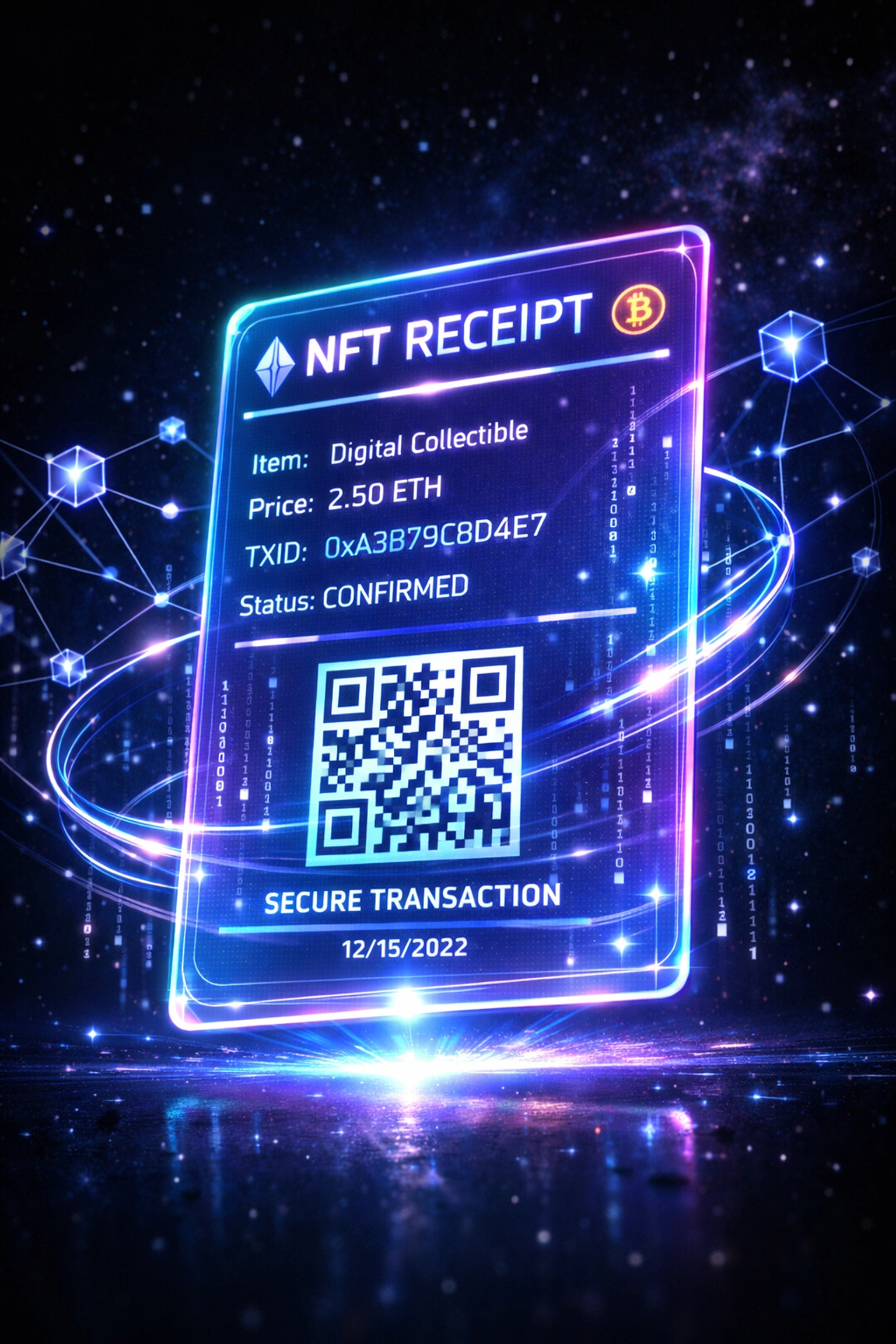
Every transaction on LareBlocks generates an NFT receipt.
Not a JPEG. A cryptographic proof of purchase stored on-chain with metadata:
Transaction amount in LUSD
Merchant wallet address
Customer wallet address
Timestamp with block confirmation
Product/service details
Warranty information
For merchants: No more lost receipts. No more fraudulent return claims. Every sale has immutable proof.
For customers: Digital receipts live in your wallet forever. Transfer ownership of warranties. Prove authenticity for resale.
For accountants: Export transaction history with one click. Every receipt verifiable on LareBlocks Explorer. Tax season becomes data export, not shoebox archaeology.
CoinPayments emails you a PDF. NOWPayments gives you a dashboard entry. LareBlocks gives you blockchain permanence.
LUSD Stablecoin: The Merchant-First Alternative to Volatile Crypto
Price volatility kills crypto adoption for everyday commerce.
Accept Bitcoin today at $95,000. Wake up tomorrow to $88,000. Your margin just evaporated.
LUSD stablecoin solves this. Pegged 1:1 to USD. Backed by over-collateralization on LareBlocks Layer 1. Redeemable 24/7 without bank approval.

Instant conversion: Customer pays in LARE. Your POS auto-converts to LUSD. Zero volatility risk.
Treasury management: Hold operating expenses in LUSD. Move to bank account when needed. Earn yield through Larecoin liquidity pools while you wait.
International pricing: No more multi-currency headaches. Price everything in LUSD. Customers pay from any blockchain. Settlement happens in one asset.
Traditional processors force you into their ecosystem. LUSD works across wallets. MetaMask. Trust Wallet. Larecoin Smart Wallet. Your choice.
Self-Custody Security Beats Custodial Payment Processors
NOWPayments holds your crypto. CoinPayments controls your private keys. You're trusting them not to get hacked. Not to freeze your account. Not to impose new terms.
LareBlocks Layer 1 gives you the keys.
Non-custodial by design: Your wallet. Your private keys. Your funds. No one can freeze your account.
Multi-signature security: Enterprise merchants use multi-sig wallets. Require 2-of-3 signatures for withdrawals. Employee can't drain treasury alone.
Hardware wallet integration: Connect Ledger or Trezor directly to merchant portal. Hot wallet for daily operations. Cold storage for reserves.
Mt. Gox taught us the risk of custodial services. FTX reinforced the lesson. Not your keys, not your crypto applies to payment processors too.
Self-custody is non-negotiable in 2026.
AI-Powered Metaverse Shopping Integrates with Layer 1 Payments
Physical retail is transitioning. Online shopping is table stakes. Metaverse commerce is the next frontier.
Larecoin's AI-powered metaverse shopping connects directly to LareBlocks Layer 1 payments.

Virtual storefronts: Set up 3D product displays. Customers browse with VR headsets or desktop browsers. Pay with LUSD in one click.
AI shopping assistants: Natural language processing helps customers find products. "Show me winter jackets under 50 LUSD." AI curates. Customer buys. Transaction settles on-chain.
Interoperable NFTs: Sell digital wearables for avatars. Customers use them across multiple metaverse platforms. Proof of ownership lives on LareBlocks Layer 1.
Check out our guide: 15 Metaverse Shopping Features to Future-Proof Your Small Business in 2026
Traditional payment processors can't process metaverse transactions. They don't understand NFT commerce. They're not built for virtual goods.
LareBlocks is.
The Real Comparison: LareBlocks vs. NOWPayments vs. CoinPayments
Let's get specific.
Transaction fees:
Visa/Mastercard: 2.9% + $0.30 per transaction
NOWPayments: 0.4% - 0.5% (still percentage-based)
CoinPayments: 0.5% (plus network fees)
LareBlocks Layer 1: Flat network fee (~$0.02 average)
Settlement time:
Traditional cards: 1-3 business days
NOWPayments: Instant to wallet, but custodial
CoinPayments: Instant to wallet, but custodial
LareBlocks: 10 minutes to self-custody wallet
Regulatory status:
Traditional: Heavily regulated, compliance costs high
NOWPayments: Operates in gray areas, varying by jurisdiction
CoinPayments: Similar regulatory uncertainty
LareBlocks: CLARITY Act commodity classification
Self-custody:
Traditional: N/A (fiat only)
NOWPayments: No (custodial service)
CoinPayments: No (custodial service)
LareBlocks: Yes (true self-custody)
The math is simple. 50% fee savings adds up fast.
Traditional Processors Aren't Dead: They're Adapting Too Slowly
Stripe acquired Bridge for $1.1 billion in February 2025. Visa settles with PayPal's PYUSD across 40+ markets. Mastercard's Multi-Token Network hit $2 billion in annualized volume.
Legacy players recognize the threat. They're building crypto capabilities.
But they're doing it wrong.
They're adding blockchain as a back-end settlement layer while keeping the same front-end fees. They're integrating stablecoins while maintaining custodial control. They're calling it "innovation" while preserving their profit margins.
LareBlocks Layer 1 was built crypto-native from day one. No legacy infrastructure to protect. No shareholder expectations to maintain 3% fees. No banking partnerships to preserve.
Pure blockchain architecture. Pure merchant savings. Pure self-custody security.
The Future Is Already Here
Traditional payment processors aren't dead. But their monopoly is.
Merchants now have options. 50% fee savings. 10-minute settlements. Self-custody security. NFT receipts. LUSD stability. CLARITY Act compliance.
The question isn't whether blockchain will disrupt payments. It already has.
The question is when you're switching.
Explore Larecoin's ecosystem and see what 2026's payment infrastructure looks like. No more 3% taxes on your revenue. No more waiting for settlements. No more custodial risk.
LareBlocks Layer 1 and LUSD stablecoin are operational today. Traditional processors are adapting. You don't have to wait for them.
The future of payments is decentralized. The future is now.
Comments