

.png)
Are You Ready for Metaverse Shopping? 10 Things Small Businesses Should Know About VR/AR Payments
- [[[Free!!]<<<<]] Watch: 스포르팅 - 토트넘 Live Stream 13 September 2022
- Feb 14
- 4 min read
![Writer: [[[Free!!]<<<<]] Watch: 스포르팅 - 토트넘 Live Stream 13 September 2022](https://lh3.googleusercontent.com/a/AItbvmktwQc0wCdd3ZEETSYItRQubwwBzOyjD_dcigRf=s96-c)
The metaverse isn't coming. It's here. And your customers are already shopping there.
46% of consumers say they're ready to make purchases in virtual environments right now. Not next year. Today.
Small businesses face a critical decision point in 2026. Establish your metaverse presence now, or watch competitors dominate your category by 2027.
Here's everything you need to know about VR/AR payments before your competition figures it out.
1. Your Payment Infrastructure Is Your Foundation
Legacy payment processors can't handle metaverse commerce. Period.
Traditional systems like NOWPayments and CoinPayments charge 0.5-1% per transaction plus network fees. Triple-A adds another layer of currency conversion costs.
Larecoin cuts payment processing costs by over 50%.
A business processing $100,000 monthly loses $3,200+ to traditional crypto gateways. With gas-only transfers and LUSD stablecoin integration, those same transactions cost under $1,500.
That's $20,000+ back in your pocket annually. Money you can reinvest in metaverse expansion, inventory, or staffing.

The technical advantages matter:
Gas-only transfers eliminate percentage-based fees entirely
LUSD stablecoin removes volatility risk from crypto acceptance
Self-custody wallets mean you control your funds 24/7
NFT receipts create automated loyalty programs and proof-of-purchase
Set up takes under 30 minutes. Generate a QR code. Accept payments in-store, online, and in the metaverse with identical infrastructure.
No blockchain expertise required.
2. The First-Mover Window Is Closing Fast
Remember early e-commerce adopters from 2010? They captured market share that latecomers spent years trying to recover.
Metaverse commerce follows the same pattern. But moves faster.
Competitors are researching implementation right now. The businesses establishing metaverse storefronts in 2026 will own their categories by 2027.
Your choice: Lead or follow.
3. Consumer Demand Already Exists
51% of metaverse shoppers want to buy both physical and virtual goods. They're not waiting for technology to improve. They're ready to spend today.
Real numbers from real brands:
Vans received 100+ million visits to their Roblox skate park
Sephora achieved 112% conversion rate increases with virtual artist tools
Nike, Gucci, Balenciaga already operate metaverse storefronts
The infrastructure is proven. The audience is active. The revenue is real.
4. Platform Selection Determines Customer Access
Not all metaverse platforms serve the same audience.
Roblox: Gaming-focused, younger demographics. Fashion brands thrive here.
Decentraland: Crypto-native, NFT-friendly customers. Perfect for tech products and digital collectibles.
The Sandbox: Established infrastructure, major brand partnerships. Ideal for mainstream adoption.
Choose based on your target customer, not platform hype.
5. VR/AR Technology Cuts Returns by 40%
"Didn't match expectations" is the #1 return reason for online purchases.
Augmented reality product views solve this problem. Customers inspect items from every angle. Visualize products in their actual space. Try on virtually before buying physically.
The result? 40% fewer returns. Higher customer satisfaction. Lower reverse logistics costs.
Your bottom line improves immediately.
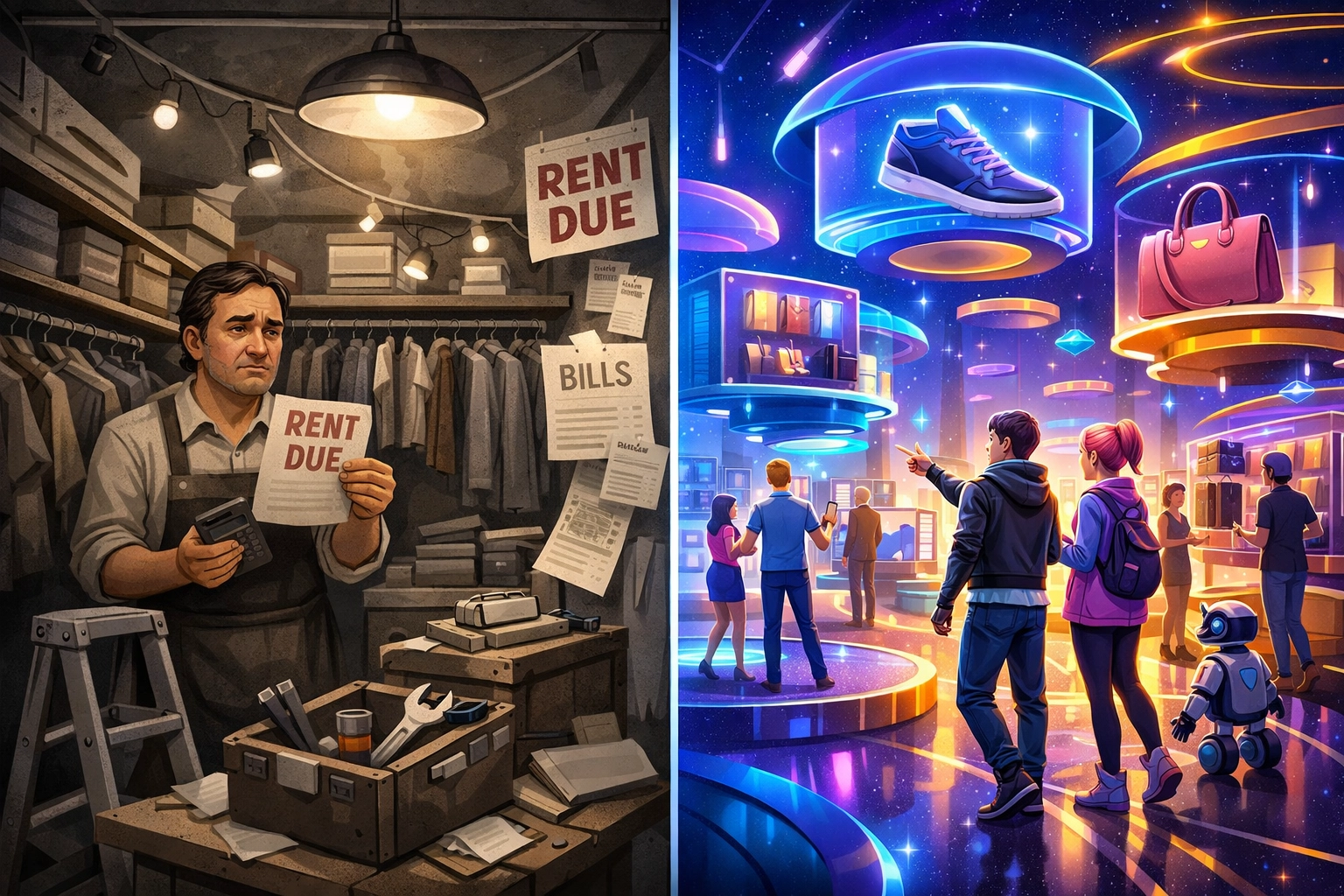
6. Overhead Costs Vanish Completely
Metaverse storefronts eliminate:
Rent payments
Utility bills
Maintenance costs
Geographic limitations
Global accessibility without physical constraints. Anyone worldwide can visit your virtual store. No shipping timeline determines purchase decisions.
Your store never closes. Never floods. Never needs renovation.
7. Master/Sub-Wallet Architecture Scales Your Business
Traditional crypto processors force you into single-wallet limitations. One business, one wallet, one point of failure.
Larecoin's master/sub-wallet system lets you:
Create separate wallets for different product lines
Track revenue by location or category
Delegate payment acceptance without compromising security
Scale operations without infrastructure changes
Your payment system grows with your metaverse presence.
NOWPayments and CoinPayments can't match this flexibility. You're locked into their architecture limitations.

8. Compliance Isn't Optional: It's Competitive Advantage
Federal MSB registration and state-level MTL coverage across the U.S. isn't just legal protection. It's customer trust.
When businesses ask "Is this legitimate?" you point to regulatory compliance. When customers worry about security, you reference federal oversight.
Your competitors using unregistered crypto processors? They're gambling with legal exposure.
You're building on solid regulatory foundation.
9. NFT Receipts Create Automatic Loyalty Programs
Every purchase generates an NFT receipt. Permanent. Verifiable. Tradeable.
This isn't gimmick technology. It's practical business infrastructure:
Proof of purchase that can't be lost or faked
Automatic rewards tiers based on purchase history
Resale tracking for royalty payments
Access passes to exclusive products or virtual events
Your loyalty program administers itself. No manual tracking. No database maintenance. Blockchain handles everything.
10. The Larecoin B2B2C Metaverse Combines Everything
Social shopping isn't browsing products alone. It's bringing friends. Getting opinions in real-time. Making purchase decisions together.
The Larecoin metaverse creates this environment. Virtual storefronts where you control product display. Interactive spaces where customers explore together. Direct merchant-customer interaction without platform intermediaries.
Your brand experience extends beyond transaction completion. Customers return for community, not just products.
Start Small, Scale Smart
You don't need massive upfront investment.
Begin with basic crypto acceptance. Add QR-generated POS for in-store transactions. Expand to VR showroom when customer demand warrants it.
The payment infrastructure remains identical across all channels. Your setup work happens once.
According to Gartner, 30% of businesses worldwide will offer metaverse products or services by 2026. The question isn't whether metaverse commerce becomes mainstream.
The question is whether you're positioned to capture that market when it arrives.

Implementation Starts Today
Traditional payment processors evolved for 2D e-commerce. They're built for websites, not virtual worlds.
VR/AR commerce requires infrastructure designed for spatial environments. Self-custody wallets. Cross-platform functionality. Zero percentage-based fees.
Reduce your interchange fees while building metaverse presence.
Competitors researching options right now will implement in Q3 2026. Early adopters setting up today own Q2 advantage.
The window closes fast. The opportunity compounds daily.
Your move.
Comments