

.png)
Can Crypto Really Help You Fight Global Hunger? Here's How Larecoin's 1.5% Tax Works
- [[[Free!!]<<<<]] Watch: 스포르팅 - 토트넘 Live Stream 13 September 2022
- 2 hours ago
- 4 min read
![Writer: [[[Free!!]<<<<]] Watch: 스포르팅 - 토트넘 Live Stream 13 September 2022](https://lh3.googleusercontent.com/a/AItbvmktwQc0wCdd3ZEETSYItRQubwwBzOyjD_dcigRf=s96-c)
Every Transaction Feeds Someone. Automatically.
You buy coffee. Someone eats.
You pay for groceries. A child gets clean water.
That's not a fantasy. It's protocol-level reality with Larecoin.
Most crypto projects talk about changing the world. Larecoin's doing it, one transaction at a time. No extra steps. No donation buttons. No guilt trips.
Just built-in impact.
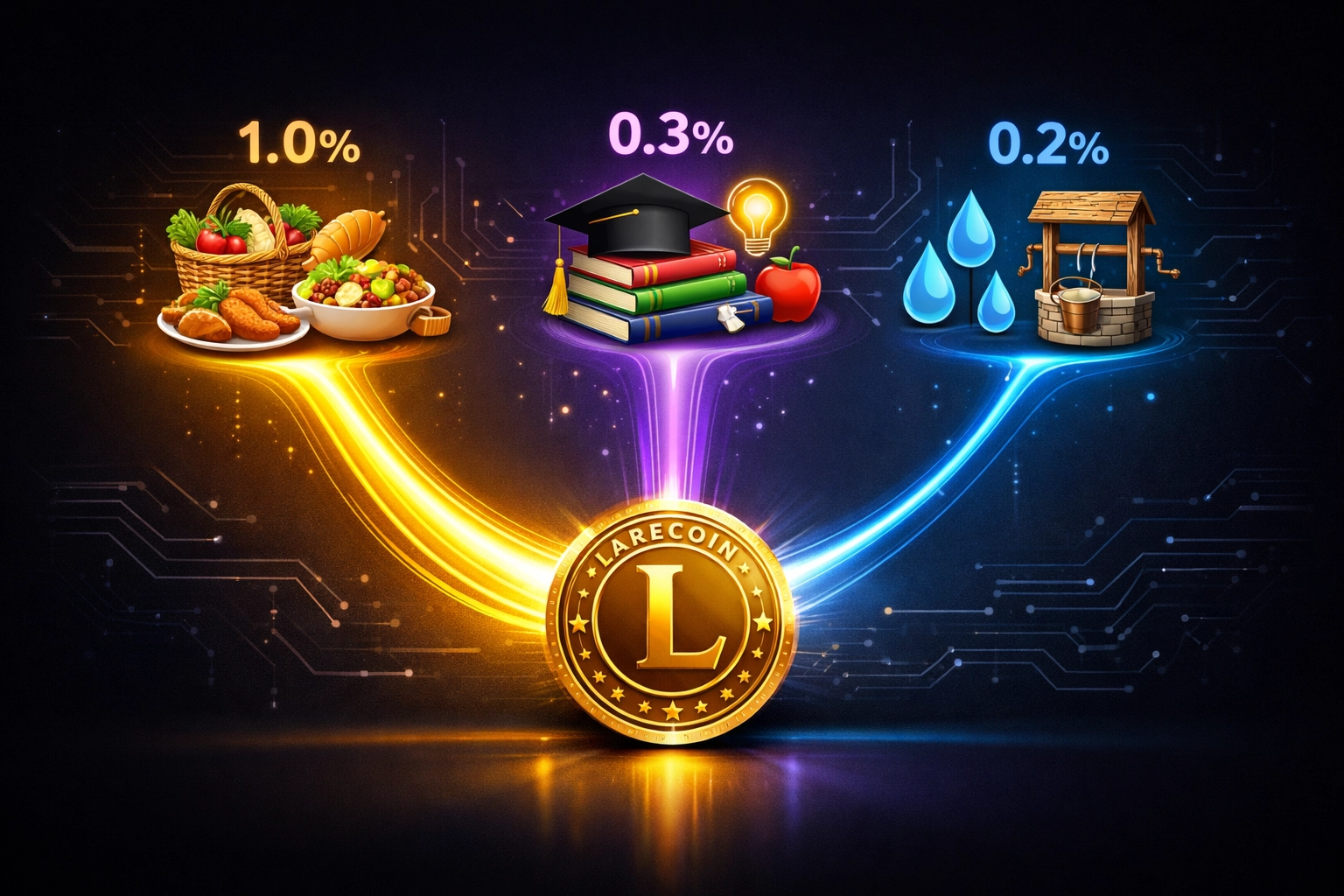
The 1.5% Breakdown: Where Your Payments Go
Every Larecoin transaction automatically allocates 1.5% through smart contracts. Zero human intervention. Zero opportunity for corruption.
Here's the split:
1.0% → Global hunger relief programs
0.3% → Education and literacy initiatives
0.2% → Clean water infrastructure

This isn't charity. It's architecture.
The allocation happens at the protocol level. Immutable. Transparent. Automatic.
You don't need to remember to donate. You don't need to trust a middleman. The blockchain handles it.
Real Numbers. Real Impact.
Since launch, Larecoin's automated system has delivered:
2.3 million meals through global emergency food programs
47 community social hubs across five continents
Educational resources reaching 12+ countries
Ongoing water infrastructure projects in underserved regions
These aren't projections. They're blockchain-verified results.
Every meal. Every hub. Every drop of clean water, traceable on-chain.
Compare that to traditional charity models. Donation fatigue. Administrative overhead. Opaque reporting.
Larecoin eliminates all of it.
Why Traditional Payment Rails Fail Social Impact
Visa and Mastercard charge merchants 2-3.5% in interchange fees.
That money goes to banks. Card networks. Processing middlemen.
Zero goes to hunger relief.
Larecoin's total fees? Under 50% of traditional card networks.
And 1.5% goes directly to social impact. Built-in. Non-negotiable.
The math is brutal for traditional finance:
Higher merchant costs
Zero social contribution
Centralized control
Opaque fee structures
Web3 payments flip the model. Lower costs. Built-in impact. Full transparency.
How Automation Changes Everything
The World Food Programme now accepts 80+ cryptocurrencies. Their Building Blocks program uses blockchain to deliver aid directly to refugees.
Result? Transaction costs down 98%. Fraud eliminated.
But that's reactive. Organizations waiting for donations.
Larecoin's proactive. Every payment generates impact. No additional effort required.
Think about scale:
More merchants accept Larecoin
More transactions flow through the network
More automatic funding for hunger relief
More meals delivered globally
It's a growth engine for social good. The bigger Larecoin gets, the bigger the impact.
No separate fundraising campaigns. No charity drives. No donation matching.
Just exponential social impact through network effects.
The Transparency Advantage: See Where Every Cent Goes
Traditional charities operate in shadows. Annual reports. Aggregated numbers. "Administrative costs."
Larecoin operates on Solana. Public blockchain. Complete transparency.
You can verify:
Total social impact fund accumulation
Distribution to partner organizations
Final delivery to beneficiaries
Every transaction generates an NFT receipt. Proof of payment. Proof of impact.
Want to see how your coffee purchase contributed to hunger relief? Check the blockchain.
Want to verify fund allocation? Audit the smart contract.
Trustless charity. Verifiable impact.

This matters because donor trust is broken. Only 19% of Americans have "a great deal" of confidence in charities.
Blockchain fixes that. Code doesn't lie. Numbers don't hide.
Beyond Hunger: The Full Ecosystem Play
Larecoin's social impact connects to a broader Web3 payments infrastructure:
LUSD Stablecoin → Price stability for merchants who need predictability
LareBlocks/LareScan → Full blockchain explorer and verification tools
Master/Sub-Wallet Management → Enterprise-grade custody for businesses
Gift Card Crypto Purchases → Convert crypto to mainstream spending power
AI-Driven Shopping → Smart recommendations and automated payment routing
The 1.5% tax works across all of these. Gift card purchase? Impact. Stablecoin swap? Impact. AI-powered checkout? Impact.
It's not a feature. It's foundation-level design.
Gas-Only Transfers: Maximum Impact, Minimal Cost
Larecoin transactions cost only gas fees. No platform percentage. No payment processor taking their cut.
That means more of your payment goes to the actual recipient. Whether that's a merchant or a hunger relief program.
Compare to traditional payment apps:
Venmo: 3% for credit cards
PayPal: 2.9% + $0.30
CoinPayments: 0.5% platform fee
Larecoin: Gas only.
The 1.5% social impact? That's separate. Transparent. Not a hidden fee.
You know exactly what you're paying. You know exactly where it goes.
How Merchants Win While Doing Good
Accepting Larecoin gives merchants three advantages:
1. Lower Costs → Under 50% of Visa/Mastercard interchange fees
2. Built-In Marketing → "We fight hunger with every transaction"
3. Crypto-Native Customers → Access the fastest-growing payment demographic
You're not asking merchants to donate. You're offering them a better payment rail that happens to do good.
No guilt. No pressure. Just superior economics.
The social impact becomes a competitive advantage. Customers increasingly care where their money goes.
Larecoin lets merchants say: "Your purchase fed someone today."
That's marketing gold.
Decentralization Means It Can't Be Stopped
Centralized charities get shut down. Bank accounts frozen. Operations suspended.
Larecoin's social impact runs on smart contracts. No CEO to pressure. No board to override.
The protocol keeps running. The impact keeps flowing.
Even if every Larecoin team member disappeared tomorrow, the 1.5% allocation would continue. Automatically. Permanently.
That's the power of decentralization.
Traditional charity depends on institutional continuity. Blockchain charity depends on code.
Code is more reliable.
Join the 10-Year Marathon
This post is part of Larecoin's commitment to 100 posts covering real-world Web3 solutions.
Not theory. Not hype. Actual impact.
We're building:
Master/sub-wallet systems for enterprise custody
AI shopping tools that reduce decision fatigue
Community social hubs across continents
Infrastructure that makes crypto payments as easy as swiping a card
The 1.5% tax isn't charity. It's embedded value. It's what happens when you design financial systems from first principles instead of copying legacy rails.
Want to see the full roadmap? Check out the 100-post marathon overview.
Want to start making impact with every purchase? Explore Larecoin's payment solutions.
The Bottom Line
Can crypto fight global hunger?
Yes. Provably. Right now.
Larecoin's 1.5% tax has funded 2.3 million meals. That's not a white paper promise. That's blockchain-verified reality.
And it scales. Every new merchant. Every new transaction. Every new user.
More impact. Automatically.
You don't need to change your behavior. You don't need to remember to donate. You just need to pay with Larecoin.
The system handles the rest.
Traditional payment networks take your money and give you nothing but convenience.
Larecoin gives you convenience and impact.
Lower fees than credit cards. Built-in social good. Complete transparency.
That's what Web3 payments look like when you design them right.
Comments