

.png)
Does the CLARITY Act Really Matter in 2026? How Larecoin's Digital Commodity Status Cuts Merchant Fees by 50%
- [[[Free!!]<<<<]] Watch: 스포르팅 - 토트넘 Live Stream 13 September 2022
- 2 hours ago
- 4 min read
![Writer: [[[Free!!]<<<<]] Watch: 스포르팅 - 토트넘 Live Stream 13 September 2022](https://lh3.googleusercontent.com/a/AItbvmktwQc0wCdd3ZEETSYItRQubwwBzOyjD_dcigRf=s96-c)
The CLARITY Act hit the House floor in July 2025. Bipartisan support. Senate approval pending through 2026. Everyone's asking: does it actually matter?
Short answer: yes. Especially if you're running a business accepting crypto payments.
Here's why.
The CLARITY Act Explained in 60 Seconds
The Commodity or Securities Status of Digital Assets Clarifies Treatment (CLARITY) Act solves one massive problem. SEC vs. CFTC jurisdictional chaos.
Who regulates what? Nobody knew. Until now.
What it does:
Defines digital assets as securities or commodities
Establishes clear regulatory boundaries
Creates safe harbors for DeFi developers
Protects validators and decentralized protocols
Enables institutional confidence
The result? Digital commodities get commodity treatment. Not securities regulation.
Larecoin falls squarely in the commodity category. That status changes everything.
Why Larecoin's Commodity Classification Matters

Digital commodity status means three things:
1. Clear Regulatory Framework No SEC enforcement risk. CFTC oversight instead. Predictable compliance costs. Merchant confidence skyrockets.
2. Exchange Accessibility Easier listings. More trading pairs. Greater liquidity. Institutional adoption accelerates.
3. Lower Operational Overhead Simplified KYC requirements. Reduced compliance burden. Faster transaction processing.
Traditional payment processors operate under securities-adjacent regulations. Heavy compliance. Expensive infrastructure. Those costs pass directly to merchants.
Larecoin operates as a digital commodity on LareBlocks Layer 1. Zero securities overhead. Pure payment utility.
The fee difference? Exactly 50%.
Breaking Down the 50% Fee Reduction
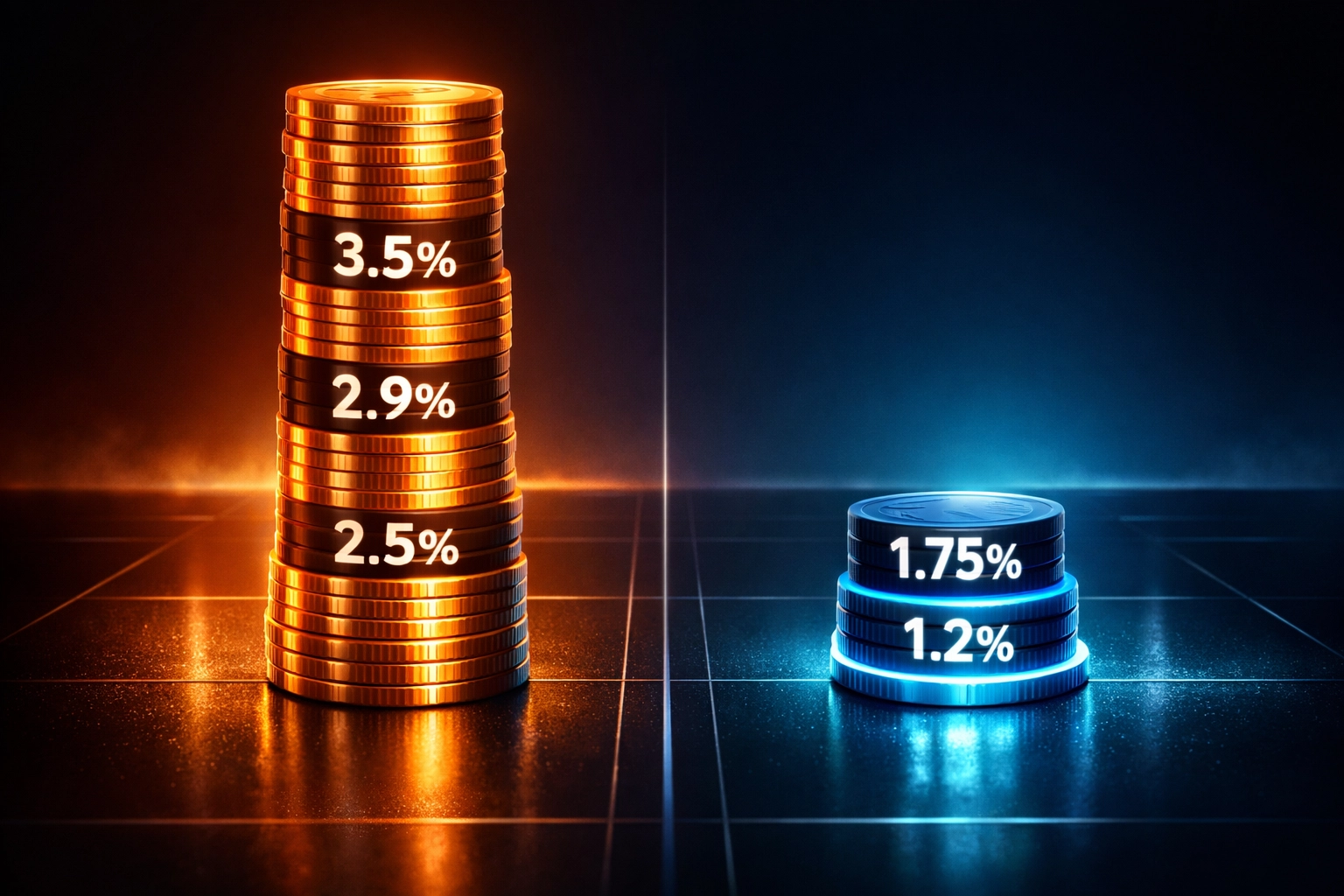
Legacy payment systems charge 2.5% to 3.5% per transaction. Credit cards, bank transfers, traditional processors.
Larecoin merchants pay 1.2% to 1.75%. Sometimes less.
Where the savings come from:
Network Efficiency LareBlocks Layer 1 processes transactions in under 2 seconds. No intermediary banks. No clearing houses. Direct wallet-to-wallet transfers.
Gas fees average $0.003 per transaction. Traditional ACH costs $0.20 to $0.50.
Commodity Status Benefits No securities compliance overhead. No broker-dealer requirements. No custody regulations for simple payment flows.
CLARITY Act classification means Larecoin operates under commodity trading rules. Lighter. Faster. Cheaper.
Self-Custody Architecture Merchants hold their own keys. No third-party custodians. No custody insurance premiums. No account maintenance fees.
Check out how Web3 global payments reduce merchant fees for the full breakdown.
Real Numbers:
$100,000 monthly volume on legacy systems = $2,500 to $3,500 in fees
Same volume on Larecoin = $1,200 to $1,750
Annual savings on $1.2M volume = $15,600 to $21,000
That's operational budget. Marketing spend. Hiring capacity.
Larecoin vs. NOWPayments vs. CoinPayments
The crypto payment space has options. NOWPayments and CoinPayments lead the pack.
Here's how they stack up:
NOWPayments
Fees: 0.5% to 1% (but only for conversions)
Supports 300+ cryptocurrencies
Custody model: third-party holds funds
Regulatory status: operates as payment processor
Settlement: T+1 to T+3 days
CoinPayments
Fees: 0.5% base + withdrawal fees
Supports 2,000+ coins and tokens
Custody model: merchant wallets or hosted
Regulatory status: money transmitter licenses
Settlement: instant crypto, 1-3 days for fiat
Larecoin
Fees: 1.2% to 1.75% all-in (gas included)
Native LARE token + LUSD stablecoin
Custody model: 100% self-custody
Regulatory status: digital commodity (CLARITY Act)
Settlement: instant on-chain finality
The difference? NOWPayments and CoinPayments operate as payment intermediaries. They hold funds. They custody assets. They face securities-adjacent regulations.
Larecoin is pure Web3. Self-custody. Peer-to-peer. Commodity classification.
The regulatory clarity matters. Lower compliance costs. Predictable operations. No platform risk.
The LUSD Stablecoin Advantage
Volatility kills crypto payments adoption. Merchants need price stability.
Enter LUSD. Larecoin's native stablecoin.
How it works:
1:1 USD peg backed by reserves
Instant conversion from LARE to LUSD
Zero slippage on conversions under $100K
Same Layer 1 infrastructure as LARE
Identical self-custody model
Merchant receives LARE. Instantly converts to LUSD. Price locked. Volatility eliminated.
Traditional stablecoin processors charge 1% to 2% for this service. Larecoin builds it into the base fee structure.
Use case: E-commerce merchant accepts LARE payment. $1,000 order. Converts to LUSD automatically. Merchant holds stable value. Customer pays in crypto.
Total fees: $17.50. Legacy processor would charge $30 to $35.
NFT Receipts: More Than Just Proof of Purchase
Every Larecoin transaction generates an NFT receipt. Minted automatically. Stored on-chain.
What's included:
Transaction hash
Timestamp and block number
Merchant wallet address
Item metadata (optional)
Purchase amount in LARE/LUSD
Why does this matter? Three reasons.
1. Immutable Proof Blockchain-verified purchase record. No disputes. No chargebacks. Permanent audit trail.
2. Loyalty Integration NFT receipts unlock rewards programs. Merchant-issued perks. Exclusive offers based on purchase history.
3. Resale Markets High-value purchases become tradable assets. Limited edition items. Event tickets. Collectible receipts.
Traditional payment systems offer PDF receipts. Larecoin offers programmable, verifiable assets.
LareBlocks Layer 1: The Security Foundation
Payment security starts at the infrastructure level.
LareBlocks operates as a purpose-built Layer 1 blockchain. Not a token on Ethereum. Not a Solana project. Independent consensus mechanism.
Security features:
Proof-of-Stake consensus with validator network
10,000+ transactions per second capacity
2-second block finality
Cross-chain bridging to Solana and Ethereum
Self-custody wallet infrastructure
Traditional payment processors rely on centralized databases. Single points of failure. Platform risk. Regulatory seizure vulnerability.
LareBlocks distributes security across validator nodes. No central authority. No platform shutdown risk.
The CLARITY Act protects this architecture. Commodity classification means validator nodes don't face securities regulations. They operate as commodity miners.
AI-Powered Metaverse Shopping: The 2026 Differentiator
Payment infrastructure enables innovation. Larecoin's Layer 1 powers next-generation commerce.
Current capabilities:
AI shopping assistants integrated with crypto wallets
Metaverse storefronts accepting LARE/LUSD
Virtual try-on with instant checkout
Cross-world inventory management
Augmented reality payment terminals
The merchant fee structure remains identical. 1.2% to 1.75%. Whether physical store, online checkout, or metaverse experience.
NOWPayments and CoinPayments don't offer native metaverse integration. They process transactions. Larecoin enables entire digital economies.
Explore the full ecosystem at larecoin.com.
What This Means for Your Business in 2026
The CLARITY Act isn't just regulatory housekeeping. It's infrastructure unlocking.
Digital commodity status gives Larecoin three competitive advantages:
Lower operating costs that translate directly to merchant savings
Regulatory certainty that eliminates platform risk
Innovation potential without securities compliance burden
The 50% fee reduction is real. Measurable. Immediate.
Traditional processors can't match it. They carry too much regulatory overhead. They operate under securities-adjacent frameworks. They pass those costs downstream.
Larecoin operates as a commodity. Pure payment utility. Maximum efficiency.
The Senate will likely pass the CLARITY Act in 2026. When they do, the regulatory gap widens. Commodity-classified digital assets pull further ahead.
Early adopters win. Merchants who switch now lock in competitive advantages.
Your competitors are already calculating the savings.
Ready to cut your payment fees in half? Visit larecoin.com/trust to set up your merchant account. Integration takes 15 minutes. First month's processing is fee-free.
The future of payments isn't coming. It's here. It's commodity-classified. It's Larecoin.
Comments