

.png)
How the CLARITY Act Turns Larecoin Into Your Merchant Account's Secret Weapon (And Why Traditional Processors Are Sweating)
- [[[Free!!]<<<<]] Watch: 스포르팅 - 토트넘 Live Stream 13 September 2022
- 2 hours ago
- 4 min read
![Writer: [[[Free!!]<<<<]] Watch: 스포르팅 - 토트넘 Live Stream 13 September 2022](https://lh3.googleusercontent.com/a/AItbvmktwQc0wCdd3ZEETSYItRQubwwBzOyjD_dcigRf=s96-c)
The Payment Processor World Just Got Flipped Upside Down
February 2026 hits different.
The CLARITY Act (H.R. 3633) passed. Larecoin got classified as a commodity under CFTC jurisdiction. Traditional payment processors? They're watching their merchant fees get undercut by 50%.
Here's what nobody's talking about: regulatory clarity isn't just about compliance: it's about weaponizing your merchant account.
What the CLARITY Act Actually Did (The Short Version)
The Crypto CLARITY Act isn't some boring regulatory framework. It's a permission slip for Web3 payments to dominate.
What changed:
Digital assets get clear commodity classification
CFTC handles oversight (not the SEC)
Stablecoin frameworks get legitimized
DeFi developers get safe harbor protections
Enforcement risk drops to near-zero for compliant platforms
Translation: Larecoin merchants operate with legal certainty traditional processors can't touch.
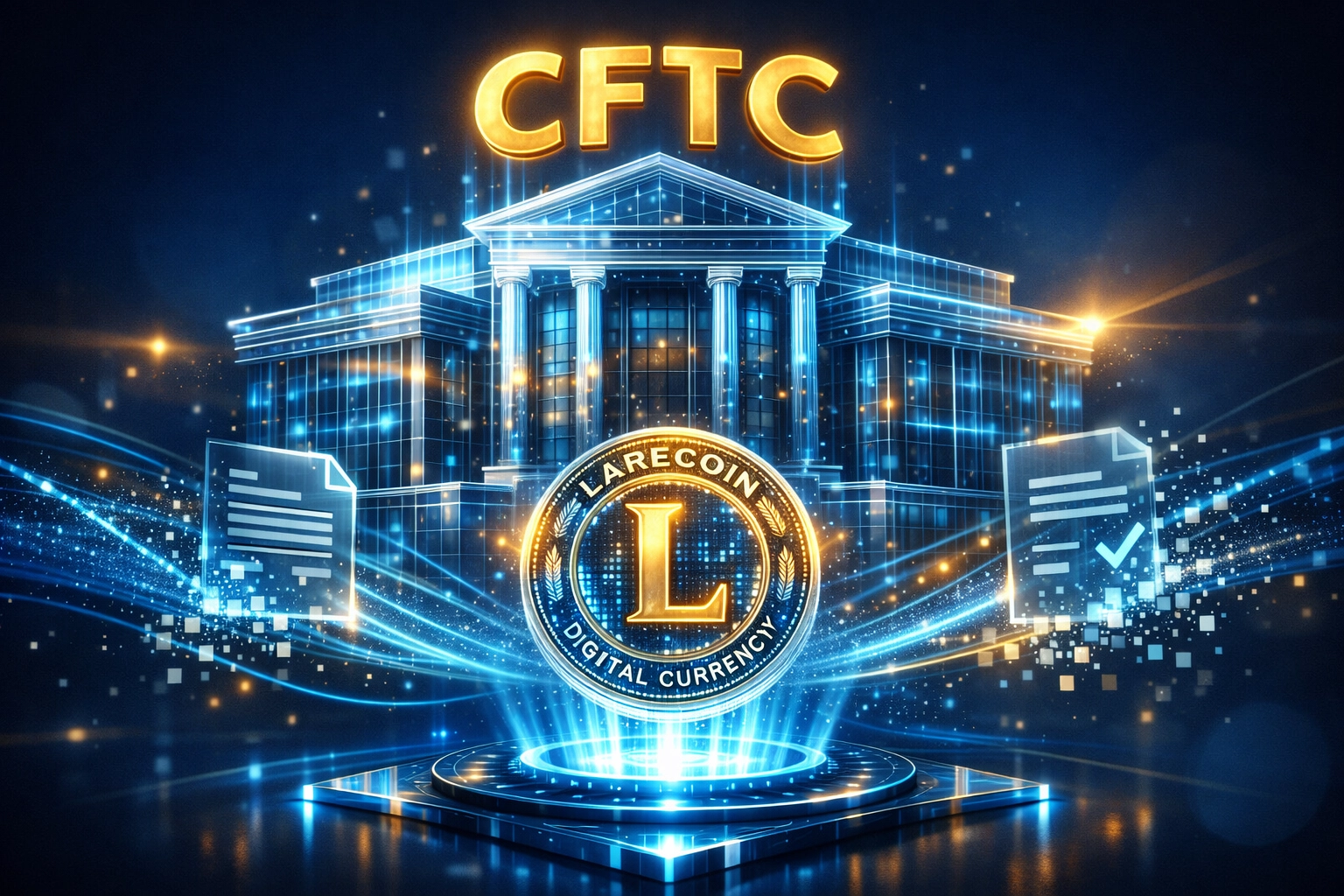
Why Commodity Classification Makes Your Merchant Account Unstoppable
Larecoin's commodity status under the CLARITY Act isn't just regulatory theater.
It's a competitive moat.
Here's the breakdown:
Traditional processors: Subject to banking regulations, card network rules, chargebacks, and 2.9%+ fees that eat your margins.
Larecoin: Commodity-backed settlement. No chargebacks. No card network middlemen. 50% lower fees than NOWPayments, CoinPayments, and Triple-A.
Your merchant account goes from cost center to profit driver.
The LUSD Advantage (Stablecoins Without the Regulatory Gray Zone)
The CLARITY Act legitimized stablecoin commerce.
Larecoin's LUSD stablecoin operates inside that framework. Zero volatility. Full regulatory coverage. Instant settlement.
The merchant playbook:
Accept crypto payments through Larecoin
Auto-convert to LUSD for price stability
Push-to-Card in 24 hours or keep in LUSD
Skip the 3-day ACH wait traditional processors force on you
Real scenario: A merchant processes $100K monthly. Traditional processors charge $2,900+ in fees. Larecoin with LUSD? Under $1,450. That's $17,400 saved annually.
Your accountant will ask why you waited.
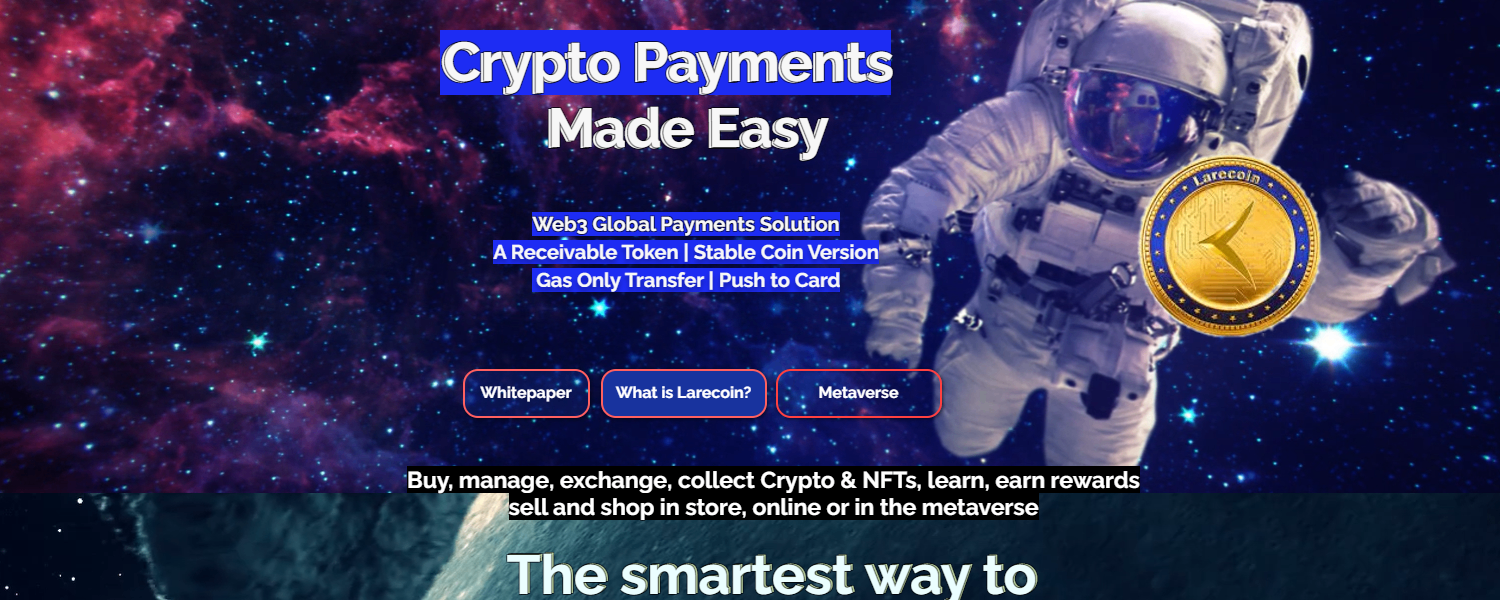
NFT Receipts: The Feature Nobody Saw Coming
Traditional receipts? Paper or email. Boring. Disposable.
Larecoin's NFT receipts? Permanent. Verifiable. Tradeable.
Every transaction generates an on-chain receipt. Customers hold proof of purchase as an NFT. Merchants gain:
Zero-knowledge verification of transactions
Immutable audit trails for compliance
Customer engagement tools (redeemable NFTs, loyalty perks)
Anti-fraud protection traditional receipts can't match
The CLARITY Act's commodity framework means these NFTs carry legal weight. They're not securities. They're utility tokens proving commercial transactions.
Use case: A luxury retailer issues NFT receipts with embedded authenticity certificates. Resale markets verify provenance instantly. Counterfeits? Eliminated.
Master/Sub-Wallet Architecture (Enterprise-Grade Control)
Traditional processors give merchants one account. One login. One point of failure.
Larecoin's Master/Sub-Wallet system? Built for scale.
How it works:
Master wallet controls permissions
Sub-wallets handle departments, locations, or product lines
Real-time visibility across entire operation
Granular control over fund flows
The enterprise edge: Multi-location retailers manage hundreds of payment points from one dashboard. Accounting teams track revenue streams without reconciliation nightmares.
Traditional processors charge extra for multi-location management. Larecoin? Built-in.

The Social Impact Multiplier (1.5% That Changes Everything)
Here's where Larecoin separates from every competitor.
Every transaction automatically contributes 1.5% to verified charities.
Not as a fee. As a feature.
The CLARITY Act's commodity classification means this tax structure operates transparently. Merchants show customers real-time impact. Receipts display charitable contributions. Marketing writes itself.
Customer psychology shift: Paying with Larecoin becomes values-aligned commerce. Your merchant account becomes a force for good.
Traditional processors? They take fees and run. Larecoin redirects profits to causes that matter.
LareBlocks & LareScan: The Layer 1 Infrastructure Nobody's Talking About
Larecoin doesn't rent blockchain space. We built our own.
LareBlocks Layer 1 blockchain handles transaction processing. LareScan provides transparent, real-time visibility.
Why merchants care:
Sub-second settlement finality
Gas fees measured in cents, not dollars
100% uptime guaranteed by decentralized validator network
Full transaction history via LareScan explorer
The NOWPayments comparison: They route through third-party chains. Larecoin processes natively. Result? Faster settlements. Lower costs. Better reliability.
Traditional processors hide their infrastructure. Larecoin opens it up. Check LareScan. Verify every transaction. Zero trust required.
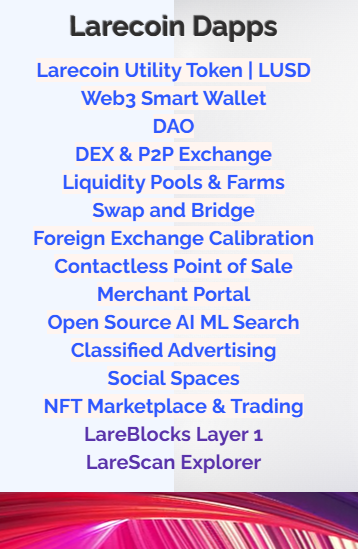
AI-Powered Shopping Meets B2B2C Metaverse Commerce
The CLARITY Act cleared regulatory fog for Web3 commerce.
Larecoin capitalized with AI-driven shopping experiences and metaverse integration.
Merchant capabilities:
AI-powered product recommendations based on on-chain purchase history
Metaverse storefronts with crypto-native checkout
B2B2C marketplace connections (wholesale to retail in one ecosystem)
Smart contract automation for inventory, pricing, and fulfillment
Real application: A B2B supplier lists products in Larecoin's metaverse marketplace. Retailers browse virtual showrooms. Transactions settle instantly. No invoices. No NET-30 terms. Pure crypto efficiency.
Traditional e-commerce platforms? Still processing credit cards and waiting for bank transfers.
Push-to-Card: The Bridge Between Crypto and Traditional Banking
Merchants love crypto efficiency. They need fiat liquidity.
Larecoin's Push-to-Card service solves this tension.
The flow:
Accept Larecoin or LUSD payments
Trigger Push-to-Card payout
Funds hit business debit card in 24 hours
Spend like normal fiat
No exchange hassles. No multiple platforms. No complexity.
The CLARITY Act's commodity framework ensures these conversions operate under clear regulatory guidelines. Banks can't freeze accounts for "suspicious crypto activity" when you're operating inside established legal structures.
Traditional processors lock merchants into their ecosystems. Larecoin gives you exit liquidity whenever you want it.

Why Traditional Processors Are Actually Sweating
Let's stop pretending this is theoretical.
Traditional payment processors built empires on:
Information asymmetry (merchants don't understand fees)
Network effects (everyone uses Visa/Mastercard)
Regulatory capture (compliance costs create barriers)
The CLARITY Act demolished those advantages.
Now merchants can:
Compare costs transparently (Larecoin wins by 50%+)
Access global payment networks without card networks
Operate with regulatory certainty crypto never had before
The existential threat: Merchants realize they're overpaying for outdated infrastructure.
Larecoin offers better rates, faster settlement, social impact, NFT receipts, stablecoin stability, and Layer 1 reliability.
Traditional processors offer... brand recognition?
That's not a competitive advantage. That's a death spiral.
The Merchant Account Revolution Starts Here
The CLARITY Act didn't just regulate crypto.
It liberated merchant payments from decades of extractive fees and slow settlement.
Larecoin positioned itself perfectly. Commodity classification. LUSD stablecoin. 50% lower fees. NFT receipts. Master/Sub-Wallets. Social impact. Layer 1 infrastructure.
Traditional processors had their run.
Now merchants have a choice.
Choose disruption. Choose efficiency. Choose Larecoin.
Ready to weaponize your merchant account? Explore Larecoin's payment solutions and join the Web3 payments revolution.
The CLARITY Act opened the door. Larecoin walked through it.
Your move.
Comments