

.png)
Is Metaverse Shopping the Future? Here's How VR/AR B2B2C Experiences Will Transform Your Business in 2026
- [[[Free!!]<<<<]] Watch: 스포르팅 - 토트넘 Live Stream 13 September 2022
- 2 hours ago
- 5 min read
![Writer: [[[Free!!]<<<<]] Watch: 스포르팅 - 토트넘 Live Stream 13 September 2022](https://lh3.googleusercontent.com/a/AItbvmktwQc0wCdd3ZEETSYItRQubwwBzOyjD_dcigRf=s96-c)
The Metaverse Isn't Coming. It's Here.
25% of people now spend at least one hour daily in the metaverse.
That's not a prediction. That's February 2026.
Virtual storefronts are replacing physical retail at record pace. AR try-ons eliminate returns. VR showrooms slash overhead costs.
But here's the problem: Your payment infrastructure wasn't built for this.
Why Traditional Payment Rails Break in Virtual Environments
Stripe, PayPal, and legacy processors charge 2.9% + $0.30 per transaction.
In a metaverse economy where customers buy $3 virtual accessories and $5 NFT collectibles? Those fees destroy margins.
Worse: Settlement takes 2-3 business days. Try explaining to a Gen Z customer why their virtual item won't appear for 72 hours.
Credit card companies weren't designed for:
Instant cross-border transactions
Micropayments under $1
Digital-native goods with zero fulfillment costs
Self-custody asset ownership
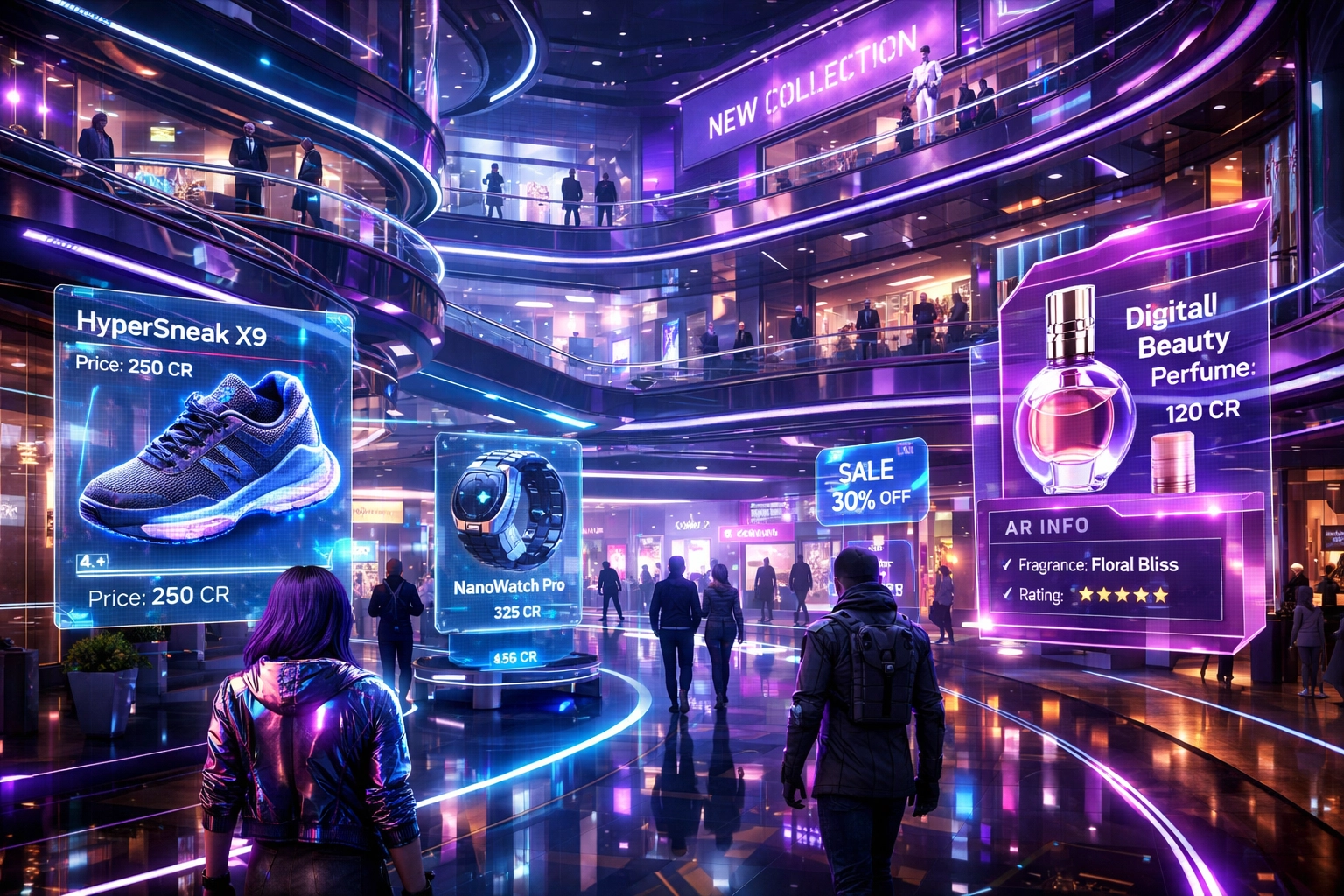
The B2B2C Metaverse Shopping Revolution
Traditional e-commerce is linear: Merchant → Customer.
The metaverse operates in layers.
B2B2C unlocks multi-dimensional commerce:
Brands create virtual flagship stores
Influencers host shopping events inside those stores
Customers shop together in real-time social spaces
NFT collectibles gain value through community engagement
Think of it like this: Instead of browsing a website alone, you're walking through a virtual mall with friends, attending a product launch hosted by your favorite creator, trying on items using AR, and checking out instantly.
That's not shopping. That's an experience economy.
And experiences require infrastructure that moves at the speed of attention spans: not at the speed of ACH transfers.
How Larecoin Powers Metaverse Commerce
Gas-Only Transfers: The Real Innovation
Most crypto payment processors charge percentage-based fees.
Larecoin charges only network gas fees. No markup. No hidden costs.
For a $5 metaverse purchase, you pay $0.02 in gas instead of $0.17 in credit card fees.
That's 91% savings.
NFT Receipts: Proof of Purchase Meets Collectibility
Every transaction generates an NFT receipt on-chain.
Why does this matter?
Receipts become assets. Your proof of purchase for limited-edition virtual sneakers? That receipt NFT verifies authenticity and ownership history.
Reselling on secondary markets requires verifiable provenance. NFT receipts provide that automatically.
No more fake products. No more disputed chargebacks.
LUSD Stablecoin: Volatility Solved
Metaverse shoppers don't want price fluctuation between clicking "buy" and checkout.
Larecoin offers LUSD stablecoin integration: pegged 1:1 to USD.
Customers pay in stable value. Merchants receive stable value. No conversion spreads.
Competitors like NOWPayments and CoinPayments force merchants to absorb volatility risk or pay conversion fees.
Larecoin eliminates both.
Self-Custody: Ownership Without Intermediaries
Traditional processors hold your funds. They can freeze accounts, delay payouts, or impose arbitrary limits.
Larecoin operates on self-custody architecture. You control your wallet. You control your private keys.
No bank account required. No underwriting process. No arbitrary holds.
Set up a wallet in 90 seconds and start accepting payments in virtual storefronts immediately.
Master/Sub-Wallet Infrastructure for Complex Operations
Operating multiple metaverse locations? Running franchises in VR?
Larecoin's master/sub-wallet system lets you:
Create unlimited sub-wallets for different virtual stores
Track revenue by location, product category, or sales rep
Maintain unified treasury management
Set permission levels for staff wallets
Triple-A and CoinPayments require manual reconciliation across multiple merchant accounts.
Larecoin automates it at the wallet level.
QR-Generated POS: Instant Checkout Anywhere
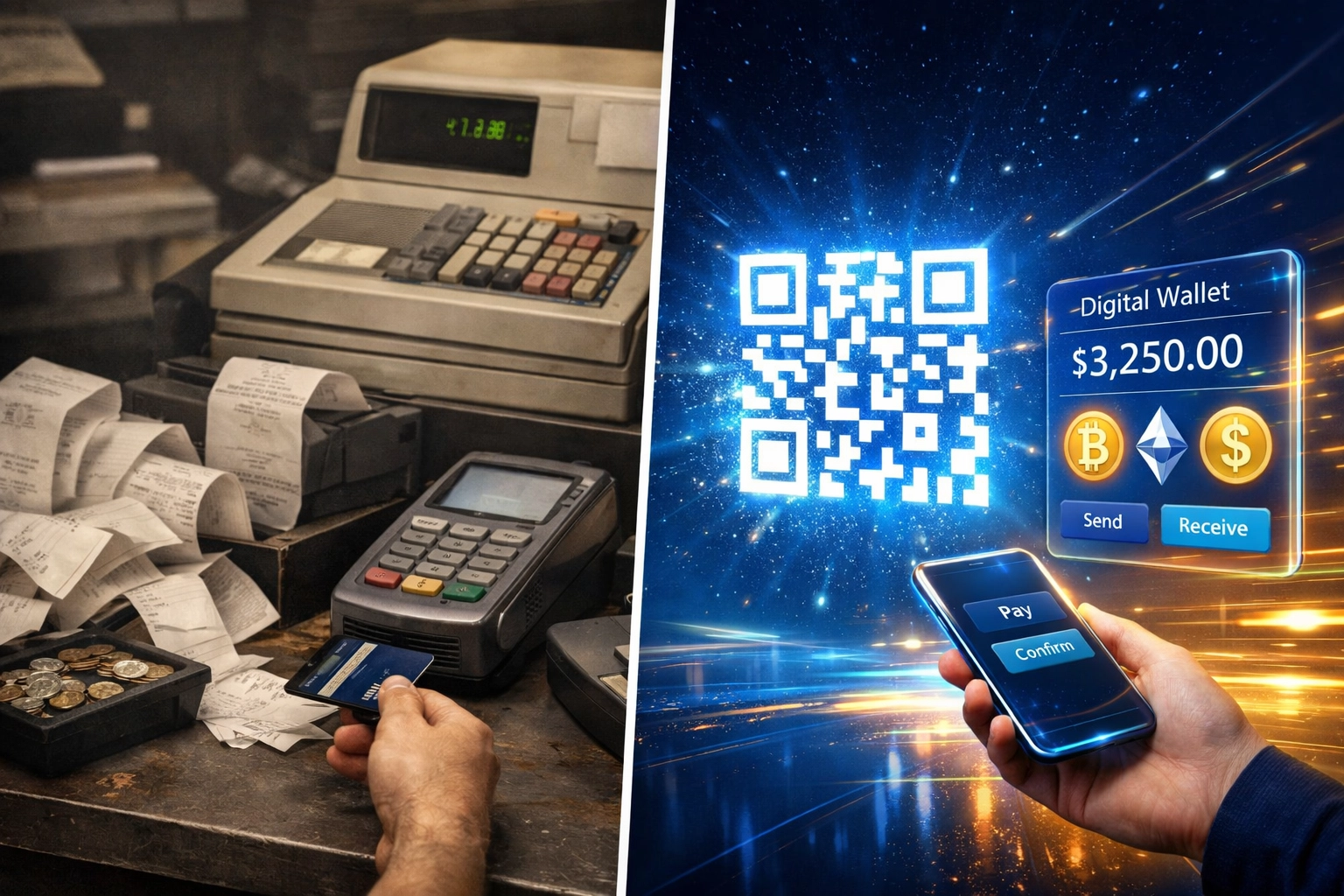
Physical retail needed bulky terminals. Metaverse retail needs instant QR checkout.
Larecoin generates dynamic QR codes that:
Work in VR headsets and AR overlays
Encode payment amount, merchant ID, and product data
Settle in 3-5 seconds
Generate NFT receipts automatically
Your avatar customer scans. Funds transfer. Receipt mints. Purchase completes.
No terminals. No integrations. No delays.
Fee Savings That Actually Matter
Let's compare payment scenarios for a metaverse boutique selling $50 virtual fashion items:
Credit Card Processing (Stripe):
Fee: 2.9% + $0.30 = $1.75 per transaction
1,000 monthly sales = $1,750 in fees
NOWPayments (Crypto):
Fee: 0.5% = $0.25 per transaction
1,000 monthly sales = $250 in fees
CoinPayments (Crypto):
Fee: 0.5% = $0.25 per transaction
1,000 monthly sales = $250 in fees
Larecoin (Gas-Only):
Fee: ~$0.02 per transaction
1,000 monthly sales = $20 in fees
You save $1,730/month compared to credit cards.
You save $230/month compared to competing crypto processors.
That's >88% savings versus traditional rails and 92% savings versus crypto competitors.
Scale that across multiple metaverse locations and you're talking 5-figure monthly savings.

Compliance: The Advantage Nobody Talks About
Crypto payment processors love talking about innovation.
Few talk about regulatory compliance.
Larecoin holds:
Federal MSB registration
State-level MTL licenses across the U.S.
That means you're accepting payments from a fully compliant, registered entity: not a gray-market processor.
For metaverse businesses operating across state lines and international borders? Compliance isn't optional.
It's the foundation that prevents regulatory shutdown.
Check our Trust page for full licensing documentation.
Social Shopping: The Missing Layer
Here's what makes B2B2C metaverse commerce different:
Scenario 1: Traditional E-Commerce Customer browses alone → Adds to cart → Checks out
Scenario 2: Larecoin Metaverse Commerce Customer enters virtual store with friends → Avatar tries on products using AR → Creator host recommends exclusive items → Friends vote on choices → Group purchases together → NFT receipts unlock VIP community access
Social dynamics drive purchasing decisions.
The metaverse restores those dynamics digitally.
And Larecoin's infrastructure enables instant group payments, split transactions, and community reward mechanisms that traditional processors can't handle.
Learn more about metaverse shopping features transforming retail.

Implementation: Faster Than You Think
Setting up metaverse payments with traditional processors takes weeks:
Application review
Bank account verification
API integration
PCI compliance documentation
Larecoin setup takes 10 minutes:
Create wallet at larecoin.com
Generate QR code for your virtual storefront
Embed checkout widget in your VR/AR environment
Start accepting payments
No approval process. No waiting period. No gatekeepers.
The Competitive Landscape in 2026
NOWPayments offers decent cryptocurrency acceptance but:
Charges 0.5% per transaction
Requires custodial wallet setup
Limited metaverse-specific features
No NFT receipt generation
CoinPayments provides multi-currency support but:
0.5% transaction fees
Complex dashboard for VR commerce tracking
No native stablecoin pegging
Limited compliance transparency
Triple-A focuses on enterprise merchants but:
Higher fees for smaller transactions
Lengthy onboarding process
Not optimized for metaverse QR checkout
Requires business verification
Larecoin delivers:
Gas-only pricing (~$0.02 vs. $0.25+)
Self-custody architecture
NFT receipt automation
LUSD stablecoin stability
Instant setup
Full U.S. compliance
For merchants exploring Web3 global payments, the choice is increasingly clear.
What Happens Next
The metaverse won't replace physical retail.
But it's creating a parallel economy worth hundreds of billions.
Brands that build immersive VR/AR experiences now will dominate their categories.
But experiences mean nothing if checkout friction destroys conversion.
Payment infrastructure is the foundation everything else builds on.
You can accept metaverse payments through legacy processors and lose 3% per transaction.
Or you can use infrastructure purpose-built for virtual commerce.
Join the Larecoin Community to see how merchants are implementing metaverse checkout.
The future of shopping isn't coming in 2030.
It's here in 2026.
Your payment infrastructure should be too.
Comments