

.png)
The CLARITY Act: Why Larecoin Merchants Can Finally Breathe Easier
- [[[Free!!]<<<<]] Watch: 스포르팅 - 토트넘 Live Stream 13 September 2022
- 2 hours ago
- 4 min read
![Writer: [[[Free!!]<<<<]] Watch: 스포르팅 - 토트넘 Live Stream 13 September 2022](https://lh3.googleusercontent.com/a/AItbvmktwQc0wCdd3ZEETSYItRQubwwBzOyjD_dcigRf=s96-c)
For years, crypto merchants operated in a fog.
One day you're compliant. The next day, you're facing an enforcement action from a regulator you didn't even know had jurisdiction.
That nightmare just ended.
The CLARITY Act Changes Everything
The CLARITY for Payment Stablecoins Act (H.R. 3633) passed the House in July 2025 with bipartisan support. And it's not just another piece of crypto legislation that sounds good on paper.
This is the regulatory framework the industry has been begging for since 2017.
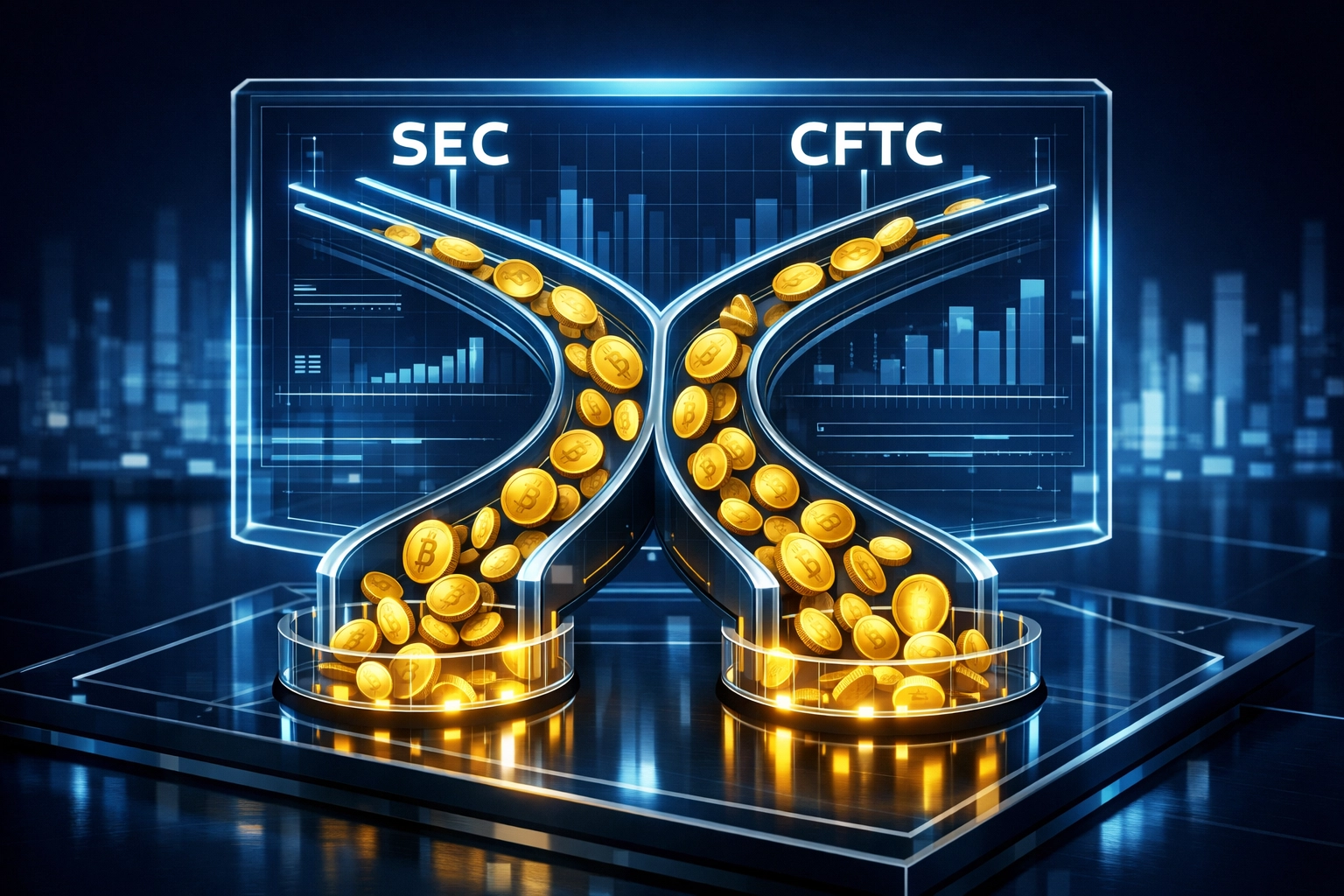
Here's what actually changed: The SEC now has clear jurisdiction over digital assets that function as securities. The CFTC handles everything else, commodities, derivatives, and most crypto assets used for payments and utility.
No more guessing games. No more surprise lawsuits. No more "regulation by enforcement."
For Larecoin merchants, this is a total game-changer.

From Regulatory Chaos to Crystal Clear Rules
Remember the enforcement-first approach?
Crypto companies would build products, launch them, gain traction, and then, BAM, hit with an enforcement action claiming they violated rules that were never clearly defined in the first place.
The CLARITY Act flips this model completely.
Clear definitions. The legislation establishes specific criteria for what constitutes a security versus a commodity in the digital asset space.
Predictable compliance paths. Exchanges, brokers, and payment processors now have documented requirements instead of vague guidelines subject to interpretation.
Safe harbors for DeFi. Developers and validators working on decentralized projects get legal protection when they follow the framework.
This isn't theoretical. It's operational clarity that businesses can actually use to make decisions.
LARE Token: Officially a Commodity
Here's the big one for Larecoin merchants.
Under the CLARITY Act framework, LARE tokens are classified as commodities, not securities. This puts them under CFTC jurisdiction, which means lighter regulatory burden and clearer rules for payment use cases.
What does commodity classification actually mean?
Lower compliance costs. Securities regulations require extensive disclosure, registration, and ongoing reporting. Commodity regulations for payment tokens? Far more streamlined.
Easier merchant adoption. Businesses can accept LARE without worrying about inadvertently becoming securities dealers.
Global payments without friction. Commodity status makes cross-border transactions cleaner from a regulatory standpoint.
More exchange listings. Exchanges can list LARE with confidence, knowing the regulatory status won't suddenly shift.
This classification removes the single biggest barrier to merchant adoption: regulatory uncertainty.

The Merchant Risk Profile Just Dropped to Zero
Let's talk about what this means for your business.
Before the CLARITY Act, accepting crypto payments carried hidden risks. You could be compliant today and non-compliant tomorrow based on a regulatory interpretation you had no control over.
Insurance was expensive. Legal advice was contradictory. And the threat of enforcement action was always lurking in the background.
Now? That risk evaporates.
Compliance is straightforward. Follow the CFTC commodity guidelines for payment processing. Done.
Legal liability is defined. You know exactly what you're responsible for and what you're not.
Insurance costs drop. Lower risk means lower premiums for business interruption and regulatory coverage.
Investor confidence increases. If you're seeking funding or partnerships, regulatory clarity makes due diligence simple.
The risk-reward calculation for accepting LARE payments just became a no-brainer.
Liquidity Explosion Across the Ecosystem
Here's what happens when regulatory fog lifts.
Institutional capital that was sitting on the sidelines starts flowing. Market makers can operate with confidence. Exchanges add more trading pairs. Payment processors integrate faster.
The CLARITY Act creates a liquidity cascade:
More exchanges list LARE. Every major platform can now evaluate LARE on its technical and market merits without regulatory ambiguity.
Market makers enter aggressively. Professional trading firms provide tighter spreads and deeper order books.
Merchant adoption accelerates. Businesses that were waiting for clarity start implementing crypto payment solutions.
Payment volume grows. Higher liquidity means lower price volatility, which means more merchants feel comfortable holding LARE.
This isn't speculation. We're already seeing trading volume increases across platforms as the market prices in regulatory stability.
Stablecoin Support: LUSD Gets the Green Light
The CLARITY Act doesn't just cover LARE.
Through provisions complementing the GENIUS Act, the legislation creates a framework for payment stablecoins. This directly benefits LUSD, Larecoin's stablecoin offering.
Regulatory approval pathway. Issuers can now obtain clear authorization to operate payment stablecoins under specific conditions.
Reserve requirements defined. The guesswork around backing and reserves is gone. Follow the rules, maintain compliance.
Banking integration easier. Banks can partner with stablecoin issuers without fear of sudden regulatory changes.
For merchants using LUSD for settlements or treasury management, this means stability backed by actual regulatory approval, not just promises.
Check out how we're reducing merchant interchange fees with this dual-token approach.
Why Now Is the Time to Switch to Crypto Payments
The pieces are finally in place.
Regulatory clarity? Check.
Established liquidity? Check.
Clear commodity classification? Check.
Stablecoin framework? Check.
If you've been waiting for the "right time" to accept crypto payments, this is it.
Traditional payment processors charge 2-3% per transaction. Larecoin's Web3 infrastructure cuts that to fractions of a percent.
Cross-border fees eat 5-7% of international payments. LARE transactions move globally with minimal friction.
Settlement takes 2-5 business days with legacy systems. Crypto settles in seconds.
The technology was always better. Now the regulatory environment finally matches the innovation.
The 10-Year Vision Just Got Clearer
At Larecoin, we've always operated with a long-term mindset.
Building a global payments ecosystem requires patience, infrastructure, and, critically, regulatory stability.
The CLARITY Act gives us that foundation.
Merchants can now plan multi-year crypto payment strategies without worrying about regulatory whiplash. Developers can build on the Larecoin ecosystem knowing the rules won't shift overnight. Users can transact with confidence.
This is what mature markets look like. And we're just getting started.

What Merchants Should Do Right Now
Don't wait for everyone else to figure this out.
Evaluate your payment stack. Compare your current processing costs against crypto alternatives.
Test small implementations. Start accepting LARE for a portion of transactions to understand the workflow.
Educate your team. Regulatory clarity makes training and compliance documentation straightforward.
Calculate the savings. Run the numbers on interchange fees, cross-border costs, and settlement speed.
The early movers will capture the advantage. The fast followers will scramble to catch up.
Join the Larecoin ecosystem and position your business at the forefront of the Web3 payments revolution.
The Fog Has Lifted
For the first time in crypto history, merchants have regulatory certainty.
The CLARITY Act isn't perfect. But it's real, it's operational, and it fundamentally changes the risk profile for crypto payments.
Larecoin merchants can finally breathe easier.
Now let's build.
Comments