

.png)
Why the CLARITY Act Will Change the Way You Accept Crypto Payments (And What It Means for Larecoin in 2026)
- [[[Free!!]<<<<]] Watch: 스포르팅 - 토트넘 Live Stream 13 September 2022
- 2 hours ago
- 5 min read
![Writer: [[[Free!!]<<<<]] Watch: 스포르팅 - 토트넘 Live Stream 13 September 2022](https://lh3.googleusercontent.com/a/AItbvmktwQc0wCdd3ZEETSYItRQubwwBzOyjD_dcigRf=s96-c)
The Regulatory Game Just Changed
February 2026. The CLARITY Act (H.R. 3633) is reshaping crypto payments.
Businesses accepting digital assets no longer operate in regulatory fog. The act splits jurisdiction cleanly: SEC handles securities, CFTC oversees commodities.
Larecoin falls squarely into commodity territory. That matters more than you think.
What CLARITY Actually Does for Payment Processors
Clear compliance pathways. No more guessing which regulator shows up at your door.
Protected infrastructure. Developers building wallets and validators running nodes aren't classified as financial intermediaries. They can operate without registration burdens.
Predictable enforcement. The surprise crackdowns that plagued crypto businesses from 2022-2025 are over. You know the rules. Follow them. Done.
For Larecoin merchants, this translates to reduced legal risk when accepting LARE tokens. Your business isn't gambling on regulatory interpretation anymore.

Why Commodity Classification Wins for Larecoin
The CFTC route gives Larecoin distinct advantages over security-classified tokens.
Liquidity access. Commodities can trade on futures markets and derivatives platforms. Larecoin can integrate with mainstream financial products.
Institutional adoption. Banks and payment processors are more comfortable handling commodity-based digital assets. Lower compliance overhead. Faster partnerships.
Stablecoin integration. LUSD, Larecoin's native stablecoin, benefits from explicit CFTC frameworks. The GENIUS Act complements CLARITY by establishing clear stablecoin rules: no interest for issuers, but reward structures for platforms remain viable.
Compare this to NOWPayments or CoinPayments. They process multiple tokens, many caught in SEC gray zones. Merchants using those platforms carry regulatory uncertainty for every transaction.
Larecoin offers clean commodity status. One regulatory framework. Zero ambiguity.
The 50% Fee Savings Nobody's Talking About
Legacy payment processors extract 2.5-3.5% per transaction. Credit cards add another layer of fees.
Larecoin's LareBlocks Layer 1 operates on gas-only transfers. Merchants pay blockchain fees. Nothing else.
Typical breakdown:
Traditional processor: 2.9% + $0.30 per transaction
Larecoin: Gas fees averaging $0.02-0.05 per transaction
For a $100 transaction, you're saving $2.85. Scale that across 10,000 monthly transactions. That's $28,500 back in your business annually.
NOWPayments charges 0.5-1% per crypto transaction. Better than cards. Still bleeding margin.
CoinPayments takes 0.5% plus network fees. Again, an improvement. But not revolutionary.
Larecoin cuts the middleman completely. Self-custody. Your keys. Your coins. Zero platform fees.

LUSD Stablecoin: The Compliance-Ready Payment Rail
LUSD operates under the new stablecoin framework established by CLARITY's companion legislation.
Key features:
1:1 USD backing with transparent reserves
Instant settlement on LareBlocks Layer 1
No interest paid to holders (compliant with GENIUS Act restrictions)
Compatible with push-to-card services for immediate fiat conversion
Merchants accepting LUSD eliminate volatility risk. Customers pay with stable value. You receive stable value. The blockchain handles settlement in seconds.
Platforms like NOWPayments offer stablecoin processing. But they rely on third-party stablecoins: USDT, USDC, others. Each carries separate regulatory profiles. Multiple compliance frameworks.
Larecoin's LUSD is purpose-built for the post-CLARITY environment. One coin. One framework. Native integration.
NFT Receipts: Web3-Native Transaction Records
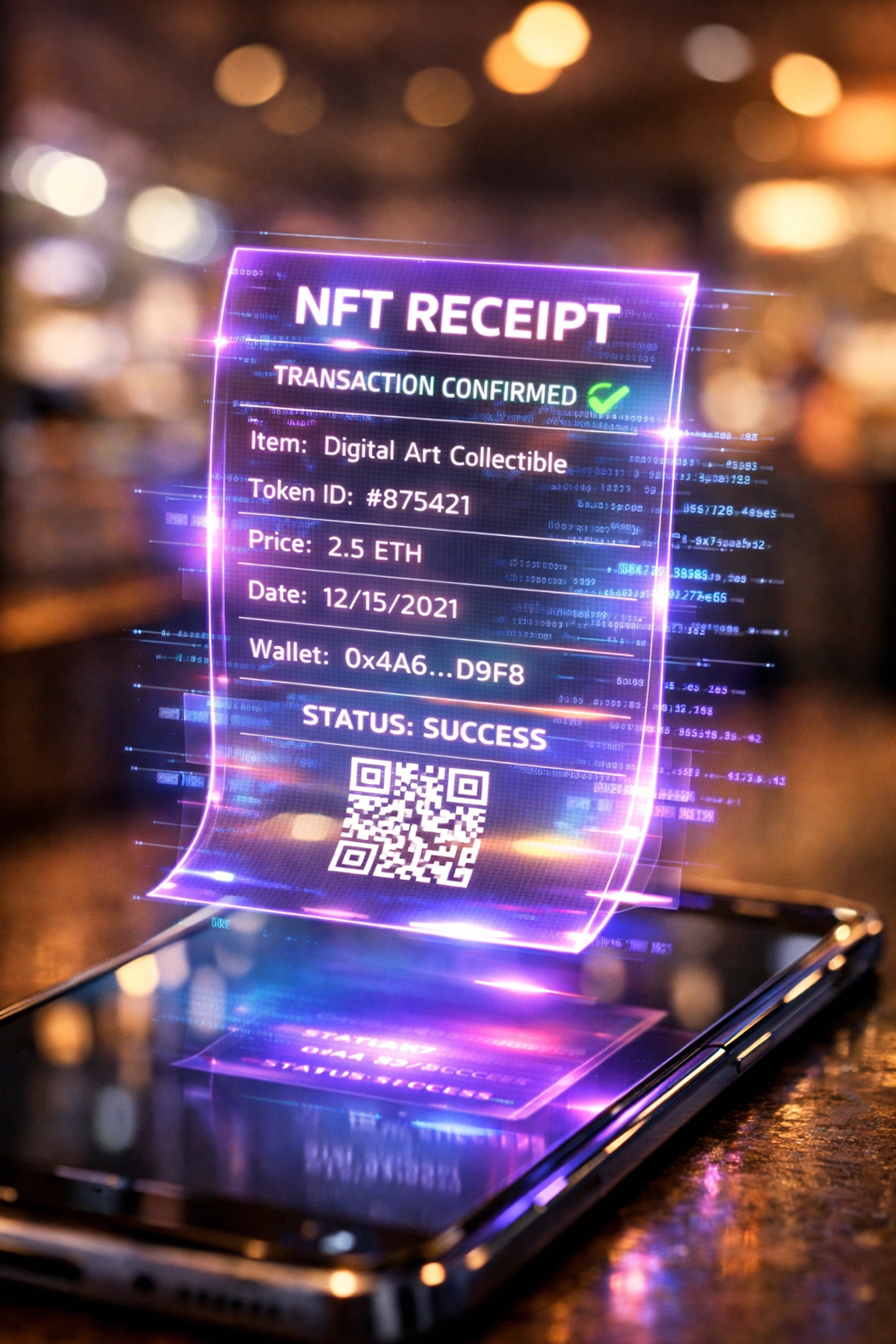
Every Larecoin payment generates an optional NFT receipt minted on LareBlocks.
Why this matters:
Permanent, immutable transaction records
Customer loyalty integration via NFT collections
Proof of purchase for warranty claims or returns
Secondary market potential for limited-edition receipts
Traditional payment processors store transaction data on centralized servers. Vulnerable to breaches. Subject to data retention policies.
NFT receipts live on-chain. You control access. Customers control their records. Nobody can alter history.

LareBlocks Layer 1: Security Without Compromise
Self-custody isn't just a philosophy. It's a regulatory shield.
Under CLARITY, businesses maintaining custody of customer assets face heightened reporting requirements. Custodial exchanges must register. Compliance costs spike.
LareBlocks enables non-custodial payment flows. Merchants receive funds directly to their wallets. No intermediary holds assets. No custodial liability.
Security advantages:
Multi-signature wallet support
Hardware wallet compatibility
Smart contract audit trails
Real-time blockchain validation
CoinPayments operates as a custodial service. They hold funds during processing. That's convenient. It's also a regulatory burden post-CLARITY.
NOWPayments offers both custodial and non-custodial options. Better. But their non-custodial flows require API integration complexity.
Larecoin defaults to self-custody. Simple setup. Maximum security. Minimum compliance friction.
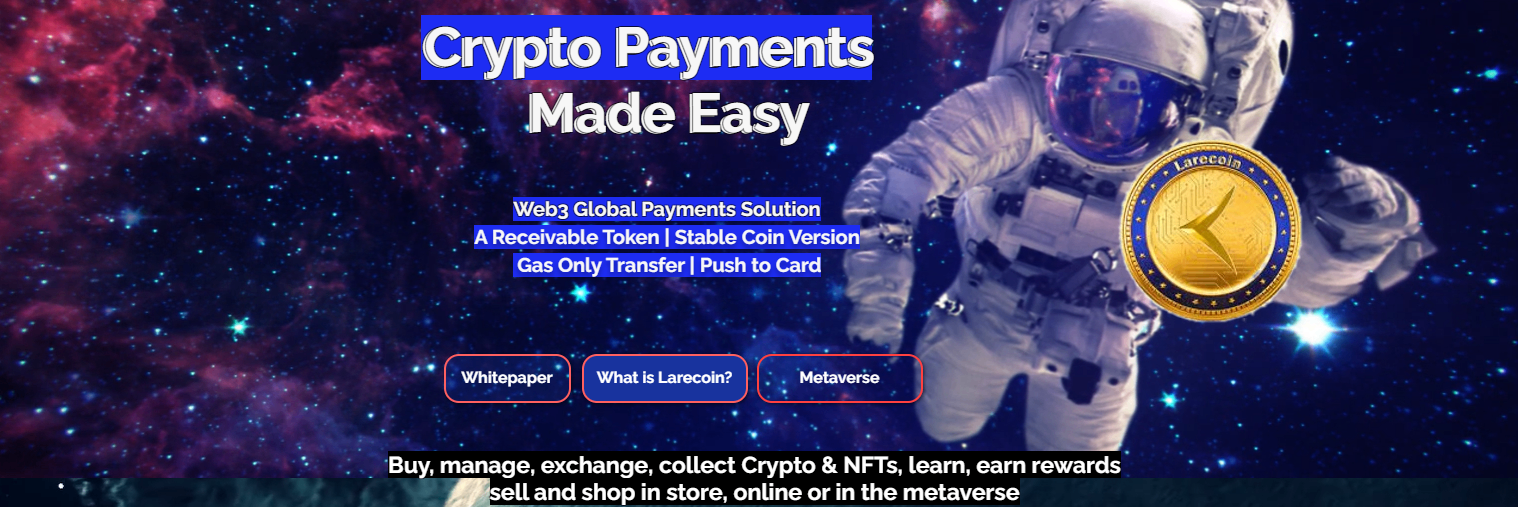
AI-Powered Metaverse Shopping: The 2026 Differentiator
CLARITY doesn't just affect traditional e-commerce. It establishes frameworks for virtual world transactions.
Larecoin's AI shopping assistant operates inside metaverse environments. Customers browse virtual stores. The AI handles payment routing, currency conversion, and NFT minting automatically.
Real-world application:
Virtual storefront accepts LARE or LUSD
Customer selects products via avatar
AI assistant processes payment through LareBlocks
NFT receipt mints automatically
Physical product ships to customer's address
No other payment processor offers native metaverse integration. NOWPayments requires custom SDK development. CoinPayments lacks virtual world APIs entirely.
Larecoin built for Web3 from day one. Metaverse commerce isn't a future feature. It's live infrastructure.
The Developer Protection Nobody Saw Coming
CLARITY's Digital Commodity Intermediaries Act (DCIA) component protects software builders.
Publishing wallet code isn't regulated activity. Running a validator node doesn't trigger registration requirements. Contributing to blockchain core development is explicitly protected speech.
For Larecoin's open-source ecosystem, this is massive.
What it enables:
Third-party wallet developers can build on LareBlocks freely
Payment plugin developers aren't liable for merchant compliance
Community validators operate without licensing burdens
API integrations don't classify as money transmission
This protection accelerates ecosystem growth. More developers building. More tools launching. More merchant integrations going live.
Competing platforms operating under older regulatory interpretations can't match this velocity.
Setting Up Larecoin Payments in 2026
Step 1: Generate LareBlocks wallet address at larecoin.com
Step 2: Install payment gateway plugin (WooCommerce, Shopify, custom API)
Step 3: Configure LARE or LUSD acceptance
Step 4: Enable optional NFT receipt minting
Step 5: Connect push-to-card service for instant fiat conversion
Total setup time: Under 30 minutes.
Compare to NOWPayments: Account verification, KYC documentation, API key management, webhook configuration. Timeline: 3-5 business days.
CoinPayments: Similar process. Additional merchant verification for higher limits.
Larecoin's non-custodial approach eliminates verification bottlenecks. You control the wallet. You're immediately operational.
The Competitive Edge for Merchants
Cost structure:
Larecoin: Gas fees only (avg $0.02-0.05 per transaction)
NOWPayments: 0.5-1% per transaction
CoinPayments: 0.5% plus network fees
Settlement speed:
Larecoin: Instant (LareBlocks confirmation in 2-3 seconds)
NOWPayments: Varies by blockchain (2-60 minutes)
CoinPayments: Blockchain dependent (5-120 minutes)
Regulatory clarity:
Larecoin: CFTC commodity classification under CLARITY Act
NOWPayments: Multi-token compliance complexity
CoinPayments: Mixed regulatory profiles across supported assets
Innovation features:
Larecoin: NFT receipts, AI shopping, metaverse native
NOWPayments: Standard crypto processing
CoinPayments: Standard crypto processing with custodial wallets
The math is straightforward. Lower fees. Faster settlement. Clearer compliance. Native Web3 features.
What Happens Next
The CLARITY Act passed. Regulatory fog lifted.
Larecoin positioned perfectly as commodity-classified payment infrastructure. Merchants save 50% on fees. Customers transact with confidence. Developers build without regulatory fear.
LUSD provides stablecoin rails. NFT receipts create permanent records. LareBlocks ensures self-custody security. AI shopping powers metaverse commerce.
Legacy processors are scrambling to adapt. Larecoin already compliant. Already operational. Already scaling.
Ready to accept crypto payments the right way? Start at larecoin.com.
The regulatory framework finally matches the technology. Time to capitalize.
Comments