

.png)
Why Everyone Is Talking About Metaverse Shopping (And How Larecoin's VR/AR Stores Work)
- [[[Free!!]<<<<]] Watch: 스포르팅 - 토트넘 Live Stream 13 September 2022
- 2 hours ago
- 5 min read
![Writer: [[[Free!!]<<<<]] Watch: 스포르팅 - 토트넘 Live Stream 13 September 2022](https://lh3.googleusercontent.com/a/AItbvmktwQc0wCdd3ZEETSYItRQubwwBzOyjD_dcigRf=s96-c)
The $1 Trillion Opportunity Everyone's Chasing
Metaverse shopping isn't hype anymore. It's reality.
The global metaverse market is projected to hit $1 trillion by 2030. Gucci already sold a digital bag on Roblox for over $4,000: more than the physical version. In 2020 alone, consumers spent $54 billion on in-game content.
Traditional e-commerce is flat. Two-dimensional. Boring.
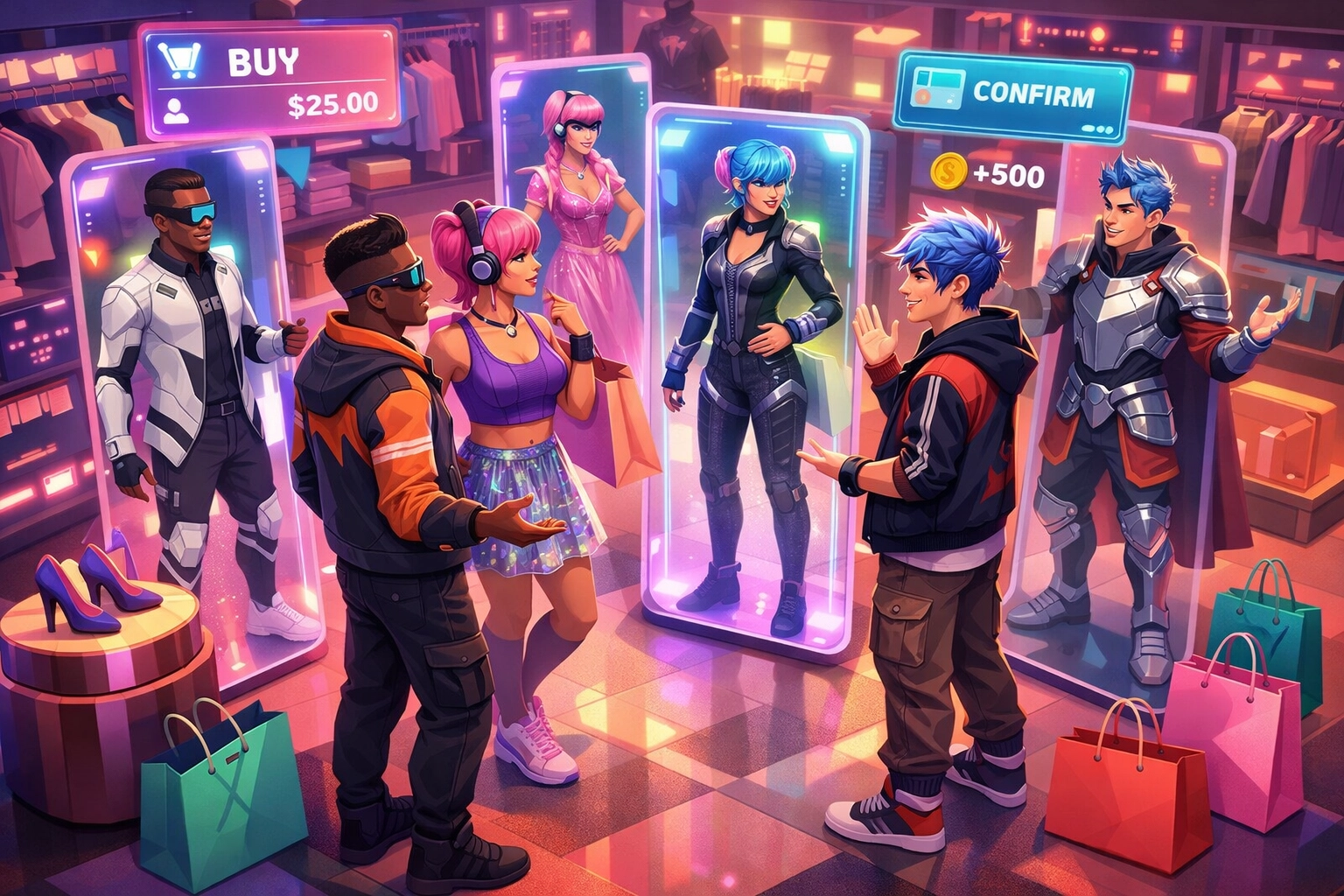
Metaverse shopping changes everything. You're not scrolling through product photos. You're walking through virtual stores, trying on digital clothes with your avatar, and buying with crypto: all without leaving your couch.
And here's where it gets interesting for merchants: Web3 payments infrastructure makes it all possible.

Why Traditional Payment Rails Break in the Metaverse
Credit cards weren't built for virtual worlds.
High fees. Geographic restrictions. Chargebacks. Settlement delays.
When a customer in Tokyo wants to buy a virtual sneaker from a merchant in Miami, Visa takes 2.9% + $0.30. Add currency conversion fees. Wait 3-5 business days for settlement.
The metaverse operates 24/7 across borders. Traditional payment systems can't keep up.
Web3 payments solve this. Instant settlement. Global reach. No intermediaries taking cuts.
Larecoin's infrastructure was designed specifically for this new commerce model.
How Larecoin's VR/AR Payment System Actually Works
Here's what makes Larecoin different from legacy payment processors and other crypto solutions:
Immersive Virtual Storefronts
Merchants can create VR stores where customers browse products in 3D environments. The payment layer is embedded directly into the virtual experience.
Click to buy. Transaction settles in seconds. No checkout page redirect. No breaking immersion.
NFT Receipts as Proof of Purchase
Every transaction generates an NFT receipt. This isn't just a digital record: it's programmable proof of ownership stored on-chain.
Return a virtual item? The NFT receipt handles the refund logic automatically through smart contracts.
Want to resell that limited-edition digital jacket? The NFT receipt proves authenticity and transfers ownership seamlessly.
Traditional payment processors can't do this. They're stuck in Web2.
LUSD Stablecoin for Price Stability
Metaverse merchants face a unique challenge: crypto price volatility.
A customer sees a virtual couch for $500. By the time they check out, crypto prices swing 5%. Now the merchant receives less value.
Larecoin's LUSD stablecoin solves this. Pegged 1:1 to USD. Zero volatility. Merchants get predictable revenue.
Customers can pay with LARE tokens, Bitcoin, Ethereum: doesn't matter. The system auto-converts to LUSD if the merchant prefers stability.
Gas-Only Transfer Model
Most crypto payment systems charge percentage-based fees plus gas fees. Double-dipping on merchants.
Larecoin charges only network gas fees. No platform percentage. No hidden markups.
For a $100 virtual item purchase, you're paying cents in gas instead of $2.90+ to traditional processors.
That's a 95%+ reduction in payment processing costs.
The Self-Custody Advantage in Virtual Commerce
Here's something most people miss: in the metaverse, you actually own what you buy.
Traditional e-commerce? You're licensing access. The company can revoke it anytime.
With Larecoin's self-custody model:
Your digital assets live in your wallet
No platform can freeze or seize them
You control the private keys
You decide what to do with your purchases
Buy a virtual painting? It's yours. Forever. Sell it peer-to-peer. Display it in multiple metaverses. Transfer it to your kids.
This is true digital ownership. And it only works with Web3 payments infrastructure.

Social Shopping: The Killer Feature Nobody Expected
Shopping in the metaverse isn't solitary. It's social.
Imagine this:
You and three friends meet in a virtual mall
Your avatars browse stores together
You try on outfits and get real-time feedback
You split the payment for a shared virtual apartment
Larecoin's master/sub-wallet architecture makes group payments seamless. One checkout. Multiple participants. Instant settlement.
Traditional payment processors require separate transactions, multiple authorization holds, complex refund logic.
Web3 native payments handle this natively through smart contracts.
Compliance That Actually Matters
Metaverse commerce needs regulatory clarity. Especially when real money crosses borders.
Larecoin operates with:
Federal MSB registration for money transmission
State-level MTL coverage across the United States
Full KYC/AML compliance protocols
This isn't optional. It's critical for merchants who want to operate legally in the metaverse.
Many crypto payment startups skip this step. Then they face enforcement actions.
Larecoin built compliance into the foundation. Check our trust credentials directly.

AR Shopping: Bringing Virtual Commerce to Physical Spaces
The metaverse isn't just VR headsets. It's also AR overlays on the real world.
Point your phone at a wall. See virtual furniture appear through AR. Like it? Buy it with crypto. Instant settlement.
Larecoin's QR-generated POS system makes this work:
Merchants generate dynamic QR codes
Customers scan with any Web3 wallet
Payment settles on-chain
NFT receipt auto-generates
No specialized hardware. No expensive terminals. Just a smartphone and internet connection.
Merchants in developing markets can compete globally. No legacy banking infrastructure required.
Comparing Larecoin to Traditional Crypto Payment Processors
Let's be direct about how this stacks up against alternatives like NOWPayments and CoinPayments:
NOWPayments
Charges 0.5% platform fee
Limited metaverse integration
No native stablecoin
No NFT receipt functionality
CoinPayments
Charges 0.5% platform fee
No VR/AR-optimized checkout
Custodial model (they hold funds)
Legacy UX design
Larecoin
Gas-only fees (no platform percentage)
Built for metaverse commerce from day one
Native LUSD stablecoin
Self-custody throughout
NFT receipts as standard
Federal and state compliance
The difference isn't incremental. It's architectural.
What Merchants Are Building Right Now
The early adopters are already here:
Virtual real estate agencies selling metaverse land parcels with instant crypto settlement.
Digital fashion brands launching avatar clothing lines with programmable NFT receipts that track ownership and enable resale royalties.
Virtual event spaces accepting ticket payments in LUSD with automatic refunds coded into smart contracts if events cancel.
AR furniture stores letting customers preview products in their actual living rooms before buying with crypto.
These use cases didn't exist three years ago. They're standard today.
The Next Wave: AI-Powered Metaverse Commerce
Here's what's coming next:
AI shopping assistants that understand your style preferences and guide you through virtual stores. Payments happen through conversational interfaces.
Predictive inventory where merchants mint digital goods on-demand based on AI-forecasted demand patterns.
Cross-metaverse commerce where you buy an item in Decentraland and use it automatically in The Sandbox, with blockchain receipts verifying authenticity.
Larecoin's infrastructure is built to support all of this. The rails are ready.
Why This Matters More Than You Think
Metaverse shopping isn't replacing physical retail. It's adding a new dimension to commerce.
Just like e-commerce didn't kill stores: it expanded the total market.
The metaverse does the same thing. New products. New experiences. New revenue streams.
And all of it needs payment infrastructure that works at internet speed, not banking speed.
That's why Larecoin exists.
Getting Started Is Simple
Want to enable metaverse payments for your business?
For Merchants:
Sign up at larecoin.com
Generate your merchant wallet
Integrate the QR code or API
Start accepting payments in VR/AR environments
For Developers: Check our documentation for VR/AR commerce APIs. Full metaverse payment stack available.
For Everyone Else: Join the conversation. Share ideas. Shape the future of commerce.
The metaverse is here. The payment rails are ready. The only question is whether you're building on them yet.
Comments